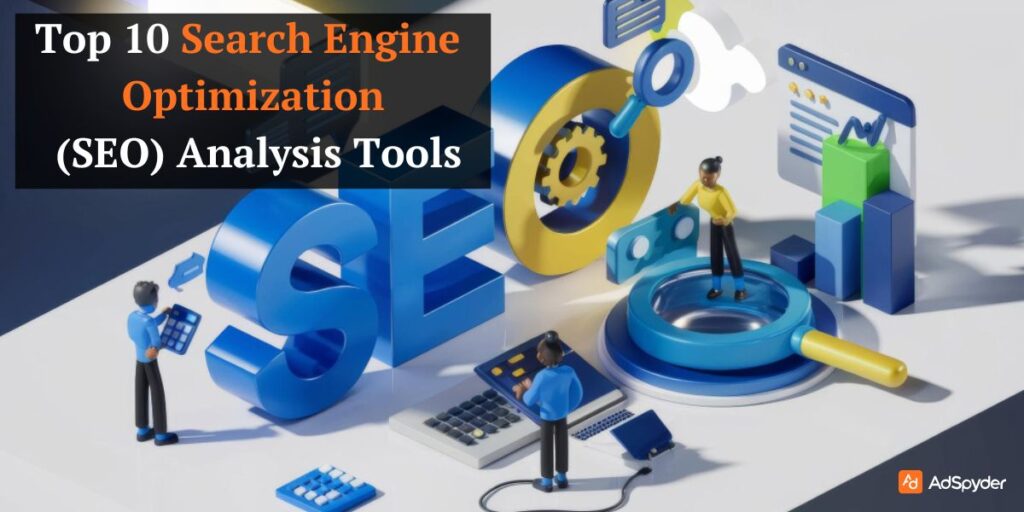
SEO in 2026 isn’t what it was three years ago. You’re no longer competing just for the ten blue links—you’re fighting for visibility in AI Overviews, featured snippets, video carousels, local packs, and dozens of other SERP features. Google’s algorithm has become more sophisticated, user expectations have risen, and the cost of guessing wrong has never been higher. That’s why the right SEO analysis tools are non-negotiable. They help you understand what’s working, what’s broken, and—most importantly—what your competitors are doing that you’re not.
This guide walks through the best SEO analysis tools for 2026, covering everything from technical audits and keyword research to backlink analysis and performance monitoring. You’ll learn which tools solve which problems, how to build an efficient SEO stack without overspending, and how to integrate SEO audit tools into a workflow that actually drives results. Whether you’re a solo marketer, an in-house team, or an agency managing dozens of clients, this breakdown will help you choose the tools worth your budget and time.
Why Top SEO Analysis Tools Matter More in 2026 Than Ever Before
A decade ago, SEO was simpler—rank for a handful of keywords, build some backlinks, and watch traffic grow. Today, search is fragmented across platforms (Google, YouTube, TikTok, ChatGPT, Perplexity), formats (text, video, audio, images), and surfaces (traditional web results, AI summaries, maps, shopping). Best SEO analysis tools help you navigate this complexity by showing you what’s actually happening across these dimensions, not just what you hope is happening.
The stakes are higher now because visibility is harder to achieve and easier to lose. Google’s algorithm updates roll out constantly—sometimes announced, often not. Core Web Vitals, E-E-A-T signals, entity understanding, and user experience metrics all factor into rankings. Without tools that monitor these elements continuously, you’re essentially flying blind. By the time you notice a traffic drop in Google Analytics, you’ve already lost weeks of potential revenue.
- Scale: Manually checking 100 competitor pages for keyword gaps would take days. Tools do it in minutes.
- Speed: Technical issues get flagged immediately through automated crawls, not months later during a manual review.
- Depth: Tools access index data, backlink databases, and SERP histories that no human could compile manually.
- Context: They show you not just what’s happening, but why—connecting ranking changes to algorithm updates, competitor moves, or technical problems.
The best SEO teams don’t treat tools as optional—they treat them as infrastructure. Just like you wouldn’t run a business without accounting software or CRM, you can’t run competitive SEO without proper analysis tools. The question isn’t whether to invest, but which tools solve your specific bottlenecks and how to integrate them into a workflow that compounds results over time.
SEO Software Market Growth Stats (Why Investment Is Accelerating)
SEO Tool Categories Explained (What Each Type Solves)
Not all SEO tools do the same thing, and understanding the categories helps you avoid overlap and gaps in your stack. Here’s the taxonomy that matters for building an efficient, non-redundant toolkit.
| Category | What it solves | Example tools | Essential or nice-to-have? |
|---|---|---|---|
| Technical audit | Crawl errors, broken links, canonicalization, indexability | Screaming Frog, Sitebulb | Essential |
| Keyword research | Search volume, difficulty, intent, SERP features | Ahrefs, Semrush, Google Keyword Planner | Essential |
| Backlink analysis | Link profiles, anchor text, toxic links, competitor gaps | Ahrefs, Moz, Majestic | Essential |
| On-page optimization | Content scoring, entity coverage, competitive benchmarks | Surfer SEO, Clearscope, MarketMuse | Nice-to-have |
| Rank tracking | Position monitoring, SERP feature tracking, volatility alerts | SEMrush, Ahrefs, AccuRanker | Essential |
| Performance & CWV | Page speed, Core Web Vitals, mobile usability | PageSpeed Insights, Lighthouse, WebPageTest | Essential |
| PPC + SEO intelligence | Competitor paid keywords, ad creatives, landing pages | AdSpyder, SpyFu | High-value (often overlooked) |
The smartest SEO stacks don’t try to do everything with one tool. Instead, they use specialized tools for each category and connect them through workflows and dashboards. For example, you might use Screaming Frog to find technical issues, Ahrefs to identify which competitors are ranking for keywords you’re missing, and Surfer SEO to optimize the content you create to target those gaps.
One criminally underutilized category is PPC + SEO intelligence. Most marketers treat paid and organic as separate channels, but they’re actually complementary data sources. If a competitor is spending money on a keyword for six months straight, that’s a strong signal of commercial value—and you should probably be targeting it organically too. That’s where tools like AdSpyder become invaluable, bridging the gap between paid and organic strategy.
Top 10 SEO Analysis Tools for 2026

These aren’t ranked by popularity—they’re organized by the role they play in a complete SEO workflow. The goal isn’t to pick just one, but to understand which combination solves your specific bottlenecks.
1) AdSpyder – PPC intelligence that makes your SEO smarter
AdSpyder is the only tool on this list that starts from paid search data and uses it to inform organic strategy. It shows you which keywords competitors are bidding on, how long they’ve been running ads, what landing pages they’re pushing, and what creative hooks they’re testing. That information is gold for SEO because paid campaigns reveal intent and commercial value in ways that organic data alone can’t.
Why it matters for SEO: If a competitor has been spending on a keyword for months, that keyword converts. You should be targeting it organically. AdSpyder lets you reverse-engineer high-intent keywords from competitor ad spend, then build content strategies around proven demand signals rather than guessing based on search volume alone.
- Enter competitor domain → see their top paid keywords
- Export keywords with long run durations (high commercial value)
- Check which of those keywords you’re not ranking for organically
- Create content targeting those gaps, using ad headlines as inspiration for meta titles
2) Semrush – The all-in-one SEO command center
Semrush is what most teams mean when they say “SEO tool”—it does keyword research, site audits, rank tracking, backlink analysis, and competitive intelligence all in one platform. The breadth is the selling point: you can diagnose a problem, understand its context, and track your fix—all without switching tools.
Best for: Agencies and in-house teams that need one centralized platform for multiple SEO functions. Semrush’s reporting tools also make it easy to show clients or leadership exactly what’s improving and why.
3) Ahrefs – Backlink database and competitive organic research
Ahrefs is known for having the most comprehensive backlink index, but it’s also excellent for reverse-engineering competitor content strategies. You can see which pages on a competitor’s site drive the most traffic, which keywords they rank for, and how much estimated search traffic they’re capturing.
Best for: Link-building campaigns, competitive content analysis, and identifying “quick win” keyword opportunities where you’re ranking on page 2 but could reach page 1 with minor optimization.
4) Google Search Console – Free, essential, and often underused
Google Search Console (GSC) is the only tool that shows you exactly how Google sees your site—indexing status, crawl errors, Core Web Vitals, and actual search queries driving impressions and clicks. It’s free, it’s authoritative, and it’s the foundation every other SEO tool builds on top of.
Best for: Everyone. If you’re not using GSC, you’re missing the most direct signal from Google about what’s broken and what’s working.
5) Screaming Frog SEO Spider – Technical audit powerhouse
Screaming Frog crawls your site like a search engine bot would, flagging issues like broken links, redirect chains, duplicate content, missing meta tags, and orphaned pages. It’s fast, flexible, and indispensable for technical SEO audits.
Best for: Technical SEOs working on large or complex sites. The free version crawls up to 500 URLs, which is enough for small sites. Paid licenses unlock unlimited crawls and advanced features like log file analysis.
6) Surfer SEO – Content optimization based on SERP analysis
Surfer SEO analyzes the top-ranking pages for a target keyword and gives you specific recommendations—word count, headings, entities to include, internal links to add. It doesn’t replace strategic thinking, but it’s excellent for fine-tuning content to match competitive benchmarks.
Best for: Content teams that want data-driven optimization guidance without doing manual SERP analysis for every article.
7) Moz Pro – Beginner-friendly SEO suite with clean UX – Top SEO Analysis Tools
Moz Pro offers keyword research, rank tracking, site audits, and backlink analysis in a more approachable interface than Semrush or Ahrefs. It’s not as deep in some areas, but for small teams or solo marketers, it’s often easier to adopt and actually use consistently.
Best for: Small businesses, freelancers, and marketers new to SEO who want solid tools without overwhelming complexity.
8) SERP volatility trackers – Spotting algorithm updates early
Tools like Semrush Sensor and Rank Ranger monitor how much SERPs are fluctuating across thousands of keywords. When volatility spikes, it usually means Google is rolling out an algorithm update. Knowing this helps you avoid panicking over temporary ranking changes.
Best for: Anyone managing SEO at scale who needs to separate signal from noise during ranking fluctuations.
9) Google PageSpeed Insights & Lighthouse – Performance and Core Web Vitals
Page speed and Core Web Vitals are ranking factors, but more importantly, they impact user experience and conversion rates. PageSpeed Insights and Lighthouse give you actionable recommendations for improving load times, interactivity, and visual stability.
Best for: Collaboration between SEO and dev teams. These tools provide specific technical fixes that both sides can agree on as priorities.
10) AnswerThePublic – Question-based keyword research
AnswerThePublic visualizes search queries as questions, comparisons, and prepositions. It’s excellent for finding long-tail content ideas, FAQ section topics, and variations you might miss with traditional keyword tools. Pairing question research with commercial intent signals from AdSpyder creates a powerful content strategy where you answer the questions users ask while targeting the topics that actually convert.
Building Your Top SEO Analysis Tools Stack by Budget and Team Size

You don’t need every tool on day one. Here’s how to build a stack that matches your resources without overspending or leaving critical gaps.
Budget: $0–50/month (Bootstrapped solo marketer)
Core tools: Google Search Console, Google Analytics, PageSpeed Insights, Screaming Frog (free tier), Google Keyword Planner. Supplement with free trials and limited freemium plans from Ahrefs Webmaster Tools and Moz.
Strategy: Focus on technical health and fixing obvious issues. Use manual competitive research (searching your target keywords and analyzing what ranks) combined with free tools to identify opportunities.
Budget: $50–200/month (Small business or growing startup)
Core tools: All of the above, plus AdSpyder (for PPC-informed keyword strategy) and one all-in-one platform like Semrush or Moz Pro. This gives you keyword research, backlink analysis, and rank tracking in one subscription.
Strategy: Use AdSpyder to identify high-value keywords from competitor paid campaigns, then validate and prioritize them in Semrush. This combo lets you punch above your weight by targeting proven money terms before larger competitors notice them.
Budget: $200+/month (Agency or established in-house team)
Core tools: AdSpyder, Semrush or Ahrefs (or both), Screaming Frog Pro, Surfer SEO, rank tracking tools, and custom reporting dashboards. Layer in automation for data collection and alert systems for ranking drops or technical issues.
Strategy: Build integrated workflows where tools feed each other. For example, AdSpyder identifies new keyword opportunities, Semrush validates volume and difficulty, Surfer optimizes the content, Screaming Frog ensures technical correctness, and rank trackers monitor results. Multi-channel acquisition optimization patterns demonstrated through top cold email marketing tools show how revenue teams combine outbound email intelligence with SEO data to identify which content topics drive not just traffic, but qualified pipeline conversations.
Workflow Integration: How to Actually Use These SEO Analysis Tools Together
Tools are useless if they sit in browser tabs collecting dust. The difference between good SEO teams and great ones is workflow integration—connecting tool outputs to create repeatable processes that compound over time.
Monthly technical health workflow
First Monday of every month: Run Screaming Frog crawl → Review GSC coverage report → Check PageSpeed Insights for any new Core Web Vitals issues → Create prioritized fix list based on impact (high-traffic pages first) → Assign to dev team with clear context on why each fix matters for rankings and user experience.
Quarterly keyword expansion workflow
Use AdSpyder to export competitor paid keywords from last 90 days → Filter for keywords with sustained spend (indicates commercial value) → Cross-reference with Semrush to check organic difficulty and search volume → Identify gaps where competitors are paying but you’re not ranking organically → Create content calendar targeting those gaps, prioritized by estimated traffic value and competitive difficulty.
Weekly content optimization workflow
Pull GSC data for pages ranking positions 5-15 (highest potential for quick wins) → Analyze what top 3 results have that these pages don’t (use Surfer or manual SERP analysis) → Update content with missing elements: better title tags, additional sections, internal links, entities → Monitor rank movement over next 2-4 weeks → Repeat for next batch of underperforming pages. Systematic content refreshment strategies explored through top email outreach tools demonstrate how outreach teams use SEO content insights to personalize cold campaigns around topics prospects are already researching organically.
Real-time monitoring and alerting workflow
Set up rank tracking for your core keywords (50-100 most important terms) → Configure alerts for drops of 5+ positions → When alerts fire, check SERP volatility tools to see if it’s algorithm-related or site-specific → If site-specific, investigate technical issues, competitor moves, or content freshness → Document findings and response actions for future reference. Integrated workflow automation principles illustrated in top content automation tools reveal how teams connect SEO insights to content production pipelines, ensuring strategy translates to execution without manual bottlenecks.
FAQs: Top SEO Analysis Tools
Do I need paid SEO tools to rank?
Which is better: Semrush or Ahrefs?
How often should I run technical SEO audits?
Can I use AdSpyder for SEO if I’m not running PPC?
What metrics actually matter in 2026?
Conclusion for Top SEO Analysis Tools
SEO in 2026 isn’t about choosing the perfect tool—it’s about building the right stack for your specific challenges and integrating it into workflows that actually drive results. The best teams use technical crawlers to find and fix issues, competitive intelligence tools to identify opportunities, content optimization platforms to close gaps, and performance monitors to track progress. They don’t treat tools as magic solutions; they treat them as infrastructure that makes smart strategy executable at scale.
If you’re starting from scratch, begin with the free essentials—Google Search Console, PageSpeed Insights, and Screaming Frog’s free tier. Layer in one paid platform (Semrush or Ahrefs) as you grow. Add AdSpyder when you’re ready to leverage PPC data for smarter keyword targeting. As your SEO maturity increases, you’ll naturally identify which specialized tools solve your specific bottlenecks, whether that’s content optimization, backlink analysis, or rank tracking.
The SEO software market is growing 21% annually because organic search remains the highest-ROI acquisition channel for most businesses. Companies investing in the right tools aren’t just getting better rankings—they’re building competitive moats through better data, faster execution, and more informed strategy. Choose your stack carefully, integrate it into repeatable workflows, and use the insights to build content and technical infrastructure that compounds over time. That’s how you dominate search rankings in 2026.