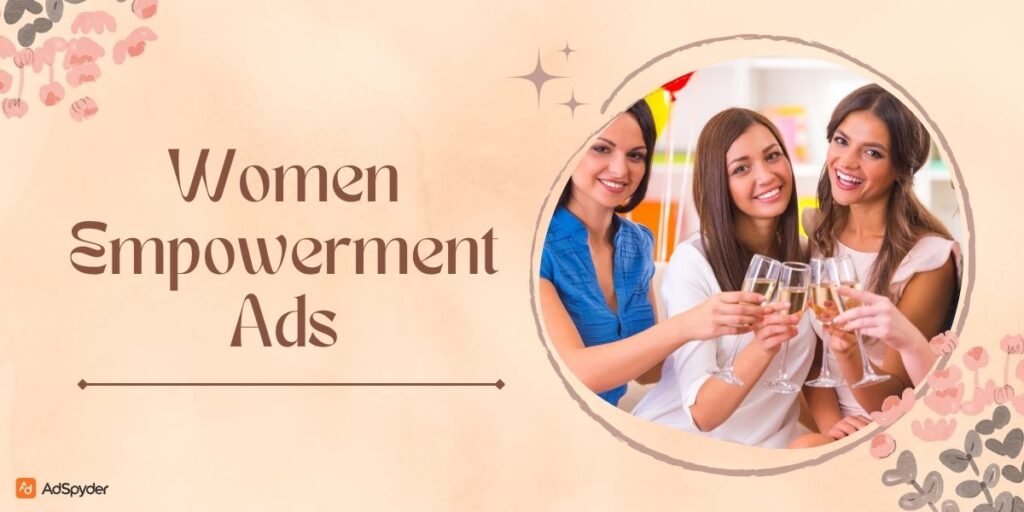
The best women empowerment ads don’t just “celebrate women”—they change how women are seen, heard, and valued in everyday life. They replace clichés with truth: ambition, agency, capability, choice, and dignity. And when the message is honest, it doesn’t feel like a seasonal campaign—it feels like a brand taking a stand on what kind of world it wants to build.
This guide breaks down female empowerment ads as a repeatable strategy: what purpose-driven work looks like, how to avoid performative messaging, how to design a strong women empowerment campaign, and how to measure impact beyond vanity metrics. You’ll also find frameworks, creative angles, and 7 quick FAQs you can reuse across categories—from FMCG to jewelry to retail.
What Are Women Empowerment Ads?
Women empowerment ads are campaigns designed to challenge limiting stereotypes, amplify women’s agency, and portray women as full humans—leaders, workers, caregivers, athletes, entrepreneurs, creators, and decision-makers. A strong gender empowerment advertisement doesn’t “add women” as decoration; it changes the narrative and the power dynamic.
- Agency: women make choices, solve problems, lead outcomes.
- Realism: ambition and vulnerability can both exist—without stereotypes.
- Respect: avoid objectification and tokenism.
- Representation: diverse ages, body types, skin tones, regions, roles, abilities.
Importantly, empowerment is not limited to a single day or month. Brands that win long-term trust treat it like a brand behavior, not a calendar moment.
That’s why many “festival” and “seasonal” creative playbooks can also be adapted into empowerment storytelling—think how emotional narratives show up in Cadbury Easter ads or how cultural context is handled in best Easter adverts.
Purpose-Driven Marketing Examples: Why Empowerment Campaigns Work (When They’re Real)
People don’t remember “ads.” They remember how a brand made them feel—and whether it felt honest. That’s why purpose driven marketing examples can outperform purely promotional campaigns: they offer meaning + identity, not just a discount.
- Higher attention: stories beat slogans—especially in crowded feeds.
- Stronger brand memory: meaning creates recall and preference.
- Community effect: people share what represents them.
- Long-term loyalty: trust compounds when actions match messaging.
This is especially true for categories like jewelry, where cultural and emotional meaning matters. You can see how brands often structure seasonal storytelling in
Women’s day jewellery ads and how empowerment themes show up in Women’s day creative ads. Similar structure can be adapted into year-round empowerment messaging—without sounding repetitive.
Key Women Empowerment Advertising Statistics (Quick Snapshot)
A Simple Framework for Women Empowerment Ads (Truth → Action → Proof → Distribution)

A powerful women empowerment ads needs more than a strong script. It needs a credible chain from insight to action. Use this framework to build campaigns that are hard to criticize and easy to believe.
| Layer | What it means | How to execute |
|---|---|---|
| Truth | A real tension women face | Start from lived reality, not a slogan |
| Action | What the brand does | Policy, program, product design, partnerships |
| Proof | Evidence beyond emotion | Real stories, outcomes, transparency, metrics |
| Portrayal | How women are depicted | Agency, respect, diversity, non-stereotypes |
| Distribution | Where it shows up | Creators, communities, PR, paid, retail, events |
If you only build the “emotion layer” and skip action + proof, audiences will call it performative. But if you connect the full chain, your message becomes resilient—even when people disagree.
Creative Angles & Story Templates for Women Empowerment Ads
The best women empowerment ads aren’t all the same tone. Some are quiet and intimate, some are bold and punchy, and some are documentary-style. What matters is the story structure and the portrayal standard. Here are 10 angles you can adapt.
1) The “unseen labor” flip
Show the invisible work women do (at home, at work, emotionally) and reframe it as skill, leadership, and competence—not obligation. End with a simple truth: respect isn’t optional.
2) The “permission” story (breaking a rule)
The hero isn’t the brand. The hero is a woman choosing herself: returning to education, starting a business, playing a sport, applying for a role, moving cities, or saying “no.”
3) The “mentor” bridge
Use a cross-generation arc: grandmother to mother to daughter, coach to athlete, manager to intern. It’s powerful because it shows empowerment as a transferable resource.
4) The “product as enabler” (not savior)
If your product or service supports women (safety, education, employment, health, finance), show it in use without turning the woman into a helpless character. The brand enables; she leads.
5) The “pay gap / value” reality (done respectfully)
Use truth to start a conversation: equal pay, promotions, opportunities. Keep it grounded and avoid shaming the audience—invite them to act instead.
6) The “everyday champion” documentary
Short documentary edits featuring real women are often the most believable. Keep production simple: real environments, real dialogue, real context.
7) The “language rewrite” (reclaim words)
Show how common labels can limit women (“bossy,” “too ambitious,” “too emotional”), then reclaim them with better words. This format is great for short reels and carousels.
8) The “community ripple” (women supporting women)
Empowerment isn’t only individual. Show systems: friends, teams, workplaces, families shifting behavior. Use the brand’s role as “infrastructure,” not spotlight.
9) The “culture moment” (festival storytelling with purpose)
In India, empowerment themes often intersect with cultural seasons and gift moments. If you operate in jewelry or retail, you can borrow the “meaning + tradition + aspiration” approach from Akshaya Tritiya ads and Akshaya Tritiya Jewellery ads, while keeping women’s agency central (not only “recipient” positioning).
10) The “future letter” (aspirational, not preachy)
Use an emotional voiceover (“Dear future me…”) that highlights freedom, safety, respect, and opportunity. It works because it stays personal and human.
Avoiding Performative Empowerment: What to Do (and What to Stop)
Empowerment campaigns get criticized when they feel like “brand theatre.” The fix isn’t to avoid the topic—it’s to build credibility and portray women with depth.
- Start with a real insight: a tension women recognize instantly.
- Show action: scholarships, hiring programs, safer design, partnerships, training, policy changes.
- Use real voices: creators, customers, employees, founders, athletes, entrepreneurs.
- Keep the brand secondary: women should not feel like props for your logo.
- Be consistent: if you talk about empowerment once a year, audiences notice.
- Stock “smiling women” montages with generic quotes.
- Empowerment without context: no barrier, no tension, no truth.
- Over-polished “inspiration” that feels disconnected from real lives.
- One-dimensional heroes: women can be strong and tired, ambitious and afraid.
- Using empowerment to distract from brand behaviors that contradict the message.
A simple test: if someone asked “what did the brand actually do?” can you answer in one sentence with evidence? If not, strengthen the action + proof layer.
Measurement & Reporting for Women Empowerment Ads

Empowerment campaigns should be measured like a full-funnel system: cultural impact and business impact together. Don’t choose one—connect both.
- Attention quality: video completion, saves, shares, meaningful comments.
- Brand lift signals: recall, favorability, “brand I trust,” “brand that represents me.”
- Conversion paths: click-to-site, add-to-cart, lead, purchase (where relevant).
- Community action: signups, program participation, event attendance, partnership outcomes.
- Long-term indicators: repeat purchase, retention, organic search lift for brand terms.
FAQs: Women Empowerment Ads
What are women empowerment ads?
What makes a female empowerment ad feel authentic?
What is a women empowerment campaign?
Can purpose-driven marketing improve sales?
How do I avoid performative empowerment messaging?
What channels work best for empowerment ads?
What should I measure for a gender empowerment advertisement?
Conclusion
The strongest women empowerment ads are built on a simple promise: portray women with dignity and agency—and back the message with real action. When you connect truth → action → proof → distribution, you create campaigns that earn trust, spark conversation, and drive long-term brand preference. Use seasonal inspiration responsibly (from cultural moments to retail storytelling), but make empowerment consistent, not occasional. That’s how a women empowerment campaign becomes more than marketing—it becomes brand character.