
It often is a struggle to capture the consumers’ attention in the era of high numbers and the Internet. Due to the fact that people and consumers do not have time to spare, businesses require enthralling and compelling marketing communication. Online video advertising can be concluded as an effective strategy and approach for brands and marketers to increase their audience reach and meet their advertising goals. This post gives you an all-encompassing understanding of the art of Video advertising and the whats and hows of creating good video ads. When implemented, the aforementioned strategies will help you convert your video advertisements into engagement machines and connect with your target audience better while guiding your brand toward success.
Video ads expand the possibilities of an image ad with the help of motion and sound as well as narration, making the user’s experience more effective and engaging. This emotional connection with viewers creates awareness of the brand, leads to generation of demand, and, therefore, sales. However, it is not sufficient to just create a video ad. To have the right impact and achieve your overall marketing goals, there is a need to adopt the right plan.
What Is Video Advertising & Why It Matters
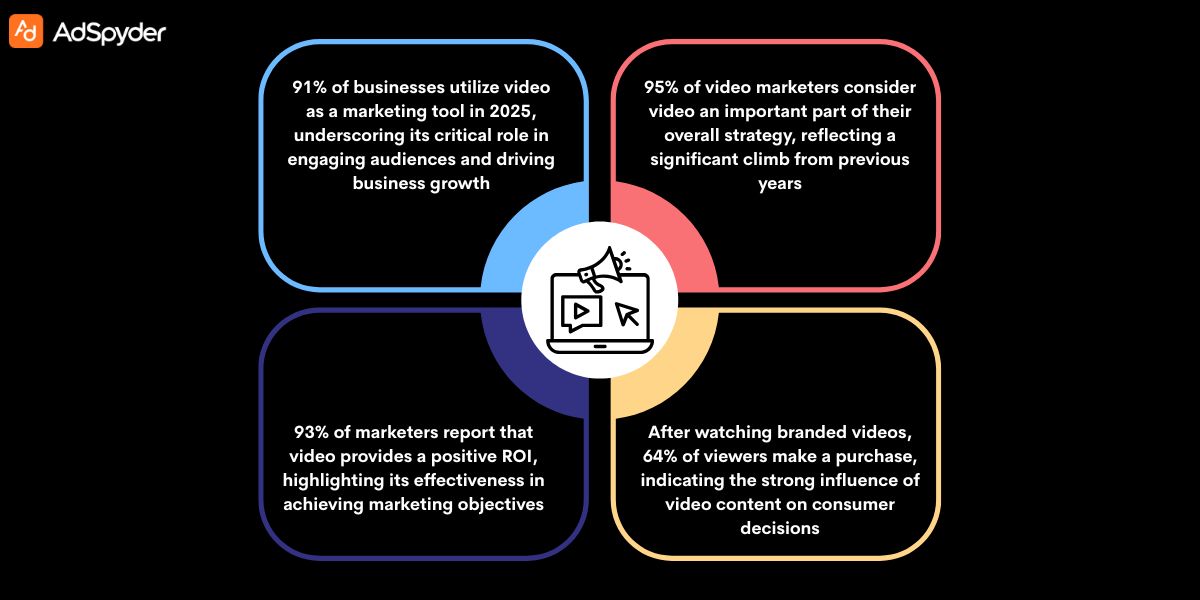
Video advertising is the use of video content — short-form, long-form, animated, live-action, or UGC — to promote a product, service, or brand across digital platforms.
Why video ads matter more than ever
-
Humans process visuals 60,000x faster than text, making video naturally persuasive.
-
Social platforms like TikTok and Instagram Reels are built for video-first consumption.
-
Video ads drive higher engagement, better recall, and stronger emotional connection.
-
Video supports both awareness (storytelling) and performance (conversion-focused CTAs).
-
Video fits into every stage of the funnel — including video in email marketing, where embedded or thumbnail videos can dramatically increase click-through rates.
For brands competing in a crowded digital world, video isn’t optional — it’s essential.
Types of Video Ads — Choosing the Right Format for the Job
Different objectives demand different ad formats. Here’s a breakdown of the most effective ones:
1. In-Stream Ads (Pre-Roll, Mid-Roll, Post-Roll)
These appear before, during, or after online video content, such as YouTube or streaming platforms.
Best for:
-
Strong brand storytelling
-
Building awareness
-
Longer messaging (10–30 seconds)
Why they work:
Users are already in “watch mode,” so engagement is naturally higher.
2. Social Feed Video Ads
Found on TikTok, Instagram Reels, Facebook, Snapchat, and LinkedIn.
Best for:
-
Short, attention-grabbing ads
-
UGC-style formats
-
Mobile-first audiences
Why they work:
They match the native browsing experience — fast, vertical, and tightly edited.
3. Explainer or Product Demo Ads
These clearly show how your product works and why it matters.
Best for:
-
Consideration stage
-
SaaS, tech, gaming, beauty, fitness
-
Complex features or benefits that require clarity
4. Testimonial & User-Generated Content (UGC) Ads
Real people talking about real experiences.
Best for:
-
Trust building
-
Conversion-focused campaigns
-
DTC and eCommerce brands
5. Rewarded / In-App Video Ads
Users receive rewards (game points, bonuses, coupons) for watching.
Best for:
-
Gaming apps
-
Mobile-first audiences
6. Interactive & Shoppable Videos
Viewers can tap to explore or purchase.
Best for:
-
eCommerce
-
Fashion, beauty, lifestyle
-
Re-engaging high-intent audiences
7. Long-Form Storytelling Video Ads
These resemble branded mini-documentaries or cinematic campaigns.
Best for:
-
Brand awareness
-
Emotional storytelling
-
Values-based messaging tied to video marketing ethics
Creative & Technical Best Practices for High-Impact Video Ads
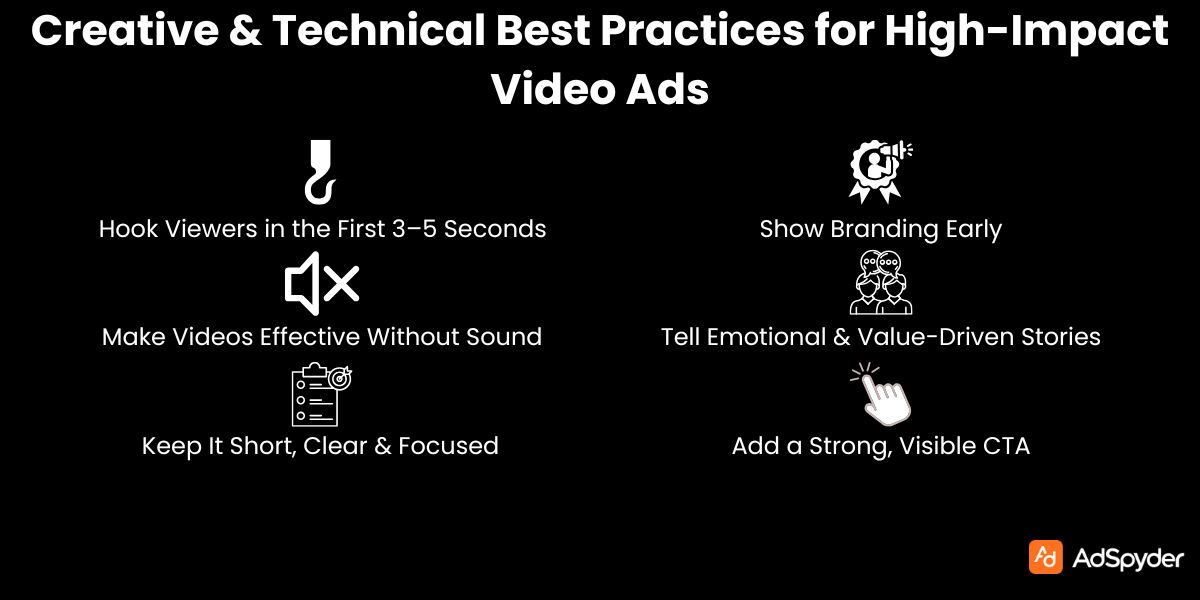
Winning video ads follow patterns. Here are the most important creative principles:
1. Hook Viewers in the First 3–5 Seconds
Your beginning determines whether viewers keep watching or skip.
Use:
-
A bold statement
-
A problem to solve
-
A strong visual movement
-
A surprising line of dialogue
Short attention spans mean your hook is everything.
2. Make Videos Effective Without Sound
Up to 85% of mobile videos are watched on silent, making captions essential.
Use:
-
Subtitles
-
On-screen text
-
Motion graphics
-
Visual storytelling
Your ad should communicate its message even if the viewer never turns on sound.
3. Keep It Short, Clear & Focused
Different platforms reward different lengths:
-
TikTok / Reels: 6–15 seconds
-
YouTube skippable: 15–30 seconds
-
YouTube bumper ads: 6 seconds
Shorter ads perform better when the message is clear and sharply defined.
4. Show Branding Early
Don’t hide your brand until the final frame.
Include:
-
Logo
-
Packaging
-
Brand colors
-
Signature music or tone
Early branding supports awareness and strengthens recall.
5. Tell Emotional & Value-Driven Stories
People remember stories more than products.
Use narratives based on:
-
Humor
-
Inspiration
-
Empathy
-
Transformation
-
Real-life customer challenges
And do so responsibly, in line with video marketing ethics, ensuring you never manipulate or misrepresent.
6. Add a Strong, Visible CTA
Examples:
-
“Shop Now”
-
“Get Started”
-
“Try Free Today”
-
“Learn More”
CTAs should appear visually — not just verbally.
Video Ad Formats & Placement — What Works on Each Platform
Each platform has unique behaviors, optimal lengths, and creative expectations.
Social Platforms (TikTok, Instagram, Facebook, Snapchat)
-
Vertical 9:16 format
-
Fast pacing
-
UGC-style authenticity
-
Strong hooks
-
Creative transitions
These platforms reward creativity, personality, and relatability.
YouTube
-
Ideal for longer narrative arcs
-
Best for tutorials, testimonials, reviews, and deep storytelling
-
Effective for both skippable and non-skippable formats
OTT / Connected TV
-
TV-like cinematic formats
-
High-impact visuals
-
Premium audiences with higher perceived credibility
Programmatic Video & In-App Networks
-
Great for retargeting
-
Strong for gaming, news, and lifestyle categories
-
Flexible targeting based on interests, demographics, and behavior
Matching Video Types to Campaign Goals
Choosing the right video type depends on your funnel objective.
| Goal | Recommended Video Types | Why It Works |
|---|---|---|
| Awareness | Storytelling, UGC, brand videos | High emotional resonance |
| Consideration | Explainer videos, product demos | Educate & clarify value |
| Conversion | Short CTA-driven ads, testimonials | Push immediate action |
| Retention | Tutorials, how-to videos | Encourage long-term engagement |
This is also where personalisation in video marketing matters — segment your audience and deliver tailored messages that speak directly to their needs.
Production & Optimization Workflow in Video Advertising
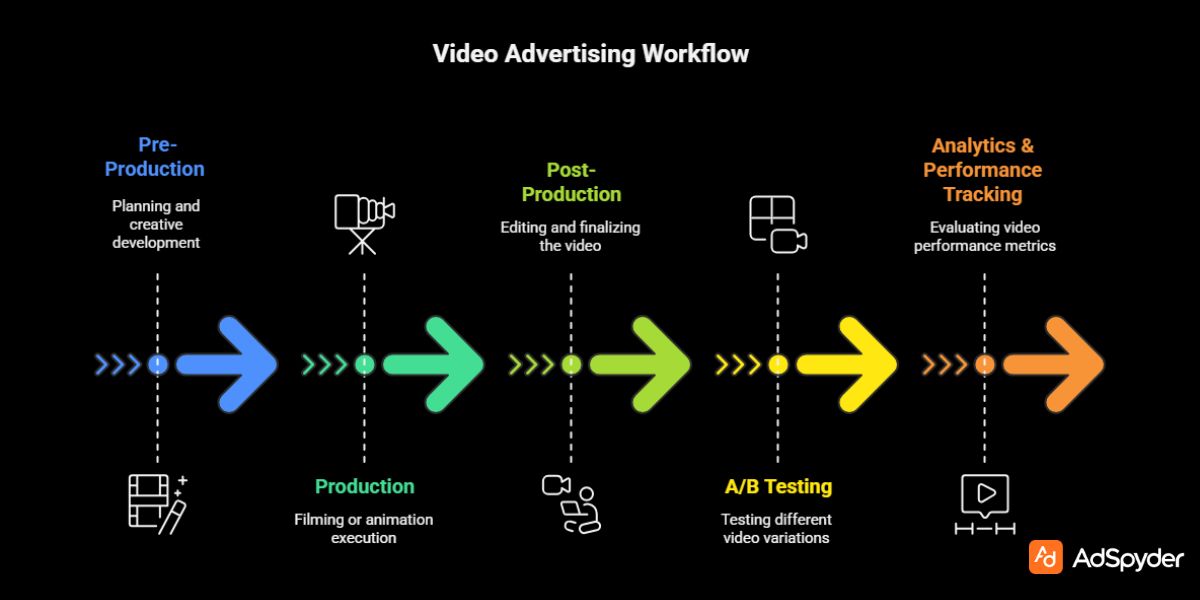
A structured workflow ensures video ads stay consistent, creative, and effective.
1. Pre-Production
-
Audience analysis
-
Script development
-
Storyboarding
-
Creative direction
-
Animation vs. live-action decisions
-
Legal considerations around copyright in video advertising
This is where you determine brand tone, message clarity, and visual style.
2. Production
-
Filming or animation
-
Audio capture
-
Lighting setup
-
Mobile-first framing
Focus on crisp visuals and expressive body language for silent playback.
3. Post-Production
-
Editing scenes for pacing
-
Adding motion graphics
-
Captions & subtitles
-
Exporting different aspect ratios
-
Placing CTAs in key frames
You may also need platform-specific edits (e.g., 6-second bumper vs. 30-second skippable).
4. A/B Testing
Test variations in:
-
Opening hook
-
CTA wording
-
Video length
-
Voiceover vs. no voiceover
-
Caption style
-
Color grading
Optimization is continuous — not a one-time process.
5. Analytics & Performance Tracking
Key metrics to evaluate:
-
View-through rate (VTR)
-
Watch time
-
Click-through rate
-
Conversions
-
Engagement (shares, saves, comments)
-
Drop-off points
Analytics show exactly where your story captures or loses attention.
Common Mistakes to Avoid in Video Advertising
Even good brands make avoidable errors:
-
Weak intro that fails to hook viewers
-
No captions → reduced engagement
-
Overly complex visuals or messaging
-
Not optimizing for mobile-first consumption
-
Disregarding accessibility or ethical concerns
-
Using unlicensed footage or music (risking copyright in video advertising violations)
-
Ignoring audience segmentation → one video for everyone
Checklist for High-Impact Video Advertising
-
Compelling hook in first 3 seconds
-
Mobile-friendly vertical versions
-
Clear, sound-free storytelling
-
Early and repeated branding
-
Emotionally meaningful narrative
-
Visible CTA
-
A/B tested variants
-
Optimized for each platform
-
Ethical messaging aligned with video marketing ethics
FAQs — Video Advertising
What makes a video ad effective?
A strong hook, clear message, audience relevance, emotional appeal, and a visible CTA.
How long should my video ad be?
Most high-performing ads fall between 6–20 seconds, but YouTube allows successful long-form storytelling too.
Should video ads include captions?
Yes — most users watch without sound, making captions essential for comprehension and accessibility.
Which platforms are best for video advertising?
TikTok, Instagram, Facebook, YouTube, OTT/CTV, and programmatic video networks.
Do video ads work in email marketing?
Yes. Using video in email marketing can increase clicks and engagement significantly.
What KPIs should I track?
Watch time, view-through rate, click-through rate, conversions, and engagement.
How can personalization improve video performance?
Through personalisation in video marketing, you can deliver tailored messages based on audience behavior, significantly increasing relevance and conversions.
Conclusion — Why Video Ads Still Dominate
Video advertising blends storytelling, visual energy, and data-driven targeting into one powerful medium. Whether you’re building emotional brand stories or sharp performance ads, video allows you to connect with audiences in a way no other format can.
By mastering creative principles, optimizing for each platform, respecting copyright in video advertising, and embracing video marketing ethics, your video ads can stand out—no matter how crowded the digital landscape becomes.
Video is more than content.
It’s your brand’s voice, emotion, and identity—delivered in motion.