Gym owners and fitness marketers face an increasingly competitive digital landscape. Rising ad costs, crowded keywords, and low-quality leads can quickly drain budgets if gym PPC advertising isn’t executed with precision. The difference between wasted spend and sustainable growth lies in intent-driven targeting, competitor intelligence, and funnel optimization—all core pillars of modern fitness digital marketing.
This guide breaks down how to optimize gym PPC advertising to drive high-quality gym lead generation, not just clicks, while aligning with proven strategies used in health and wellness advertising trends.
Why Most Gym PPC Advertising Campaigns Fail
Many gyms launch paid ads for fitness classes with broad keywords like “gym membership” or “fitness classes near me” without understanding user intent or competitor positioning. While these terms attract traffic, they often fail to convert.
Common pitfalls include:
- Targeting low-intent keywords
- Sending traffic to generic landing pages
- Ignoring competitor ad strategies
- Measuring success only by clicks instead of sign-ups
According to WordStream data, the average Google Ads conversion rate for fitness services is 6.8%, largely due to poor keyword and funnel alignment. Optimizing for quality leads requires a more strategic approach.
Prioritize High-Intent Keywords for Gym Lead Generation
Effective gym PPC advertising starts with identifying keywords that signal readiness to act, not just curiosity. High-intent searches convert up to 3x better than informational queries.
Before building your campaigns, focus on keyword patterns that indicate buying intent:
- “paid ads for fitness classes near me”
- “best gym membership deals”
- “trial fitness classes this week”
- “personal training sign-up”
To uncover these opportunities, fitness marketers increasingly rely on keyword intelligence for lead generation to analyze what competitors are bidding on and which terms consistently drive sign-ups.
Analyze Competitor Gym PPC Advertising Funnels
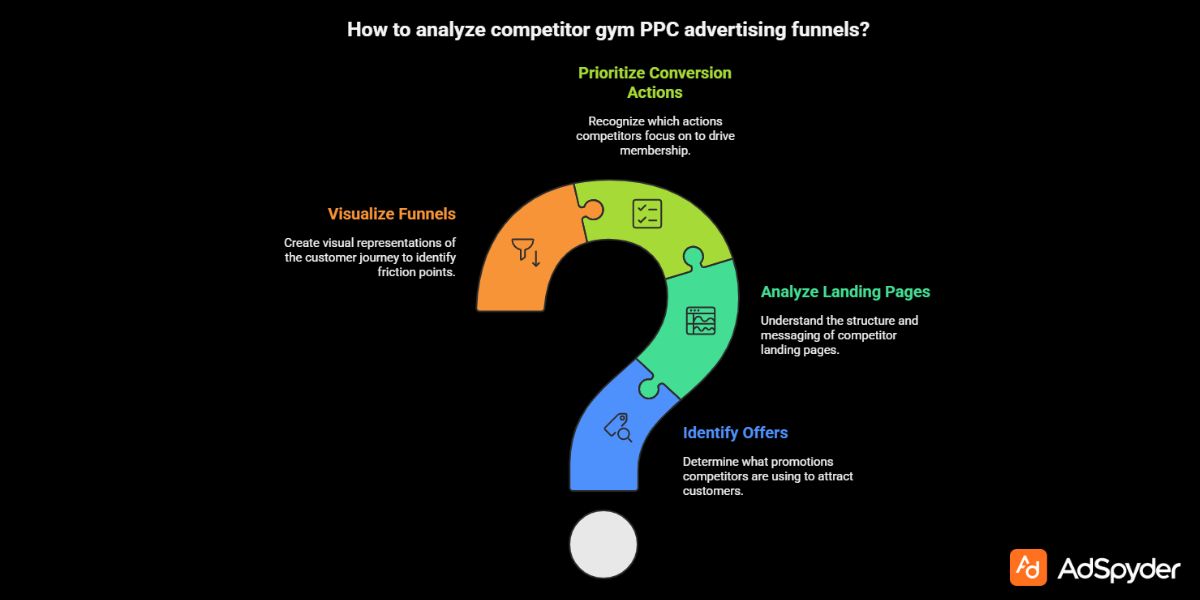
Clicks alone don’t generate revenue—funnels do. Top-performing gyms align ads tightly with landing page messaging and offers.
Before launching or scaling campaigns, it’s critical to understand:
- Which offers competitors are promoting
- How their landing pages are structured
- What conversion actions they prioritize (free trial, class booking, consultation)
Using visualized enrollment funnels, marketers can see the complete journey from ad click to membership sign-up. This insight helps identify friction points such as long forms, unclear CTAs, or mismatched messaging. Funnel analysis is a non-negotiable step in fitness digital marketing.
Refine Targeting with Local and Behavioral Signals
Local intent plays a massive role in gym lead generation.
To capture this demand, gym PPC advertising should be refined using:
- Location-based targeting (radius or ZIP codes)
- Time-of-day bid adjustments
- Device targeting for mobile-first searches
Advanced platforms allow marketers to layer gym PPC advertising intelligence with domain and keyword insights to uncover which local competitors dominate “gym near me” searches and how they structure their ads.
This data-driven targeting ensures budgets are spent on users most likely to convert, not just browse.
Optimize Ad Copy for Gym Membership Promotion
Even with the right keywords, weak ad copy can stall performance. High-performing gym PPC advertising focus on clarity, urgency, and value.
Before launching new ads, consider what resonates most with your audience:
- Transformation outcomes
- Convenience and flexibility
- Limited-time offers
- Community and accountability
To speed up testing, many fitness brands now use AI-powered ad generation for gym membership promotion, which helps produce compliant, conversion-focused variations inspired by proven competitor creatives.
Track Performance Beyond the Click for Gym PPC Advertising
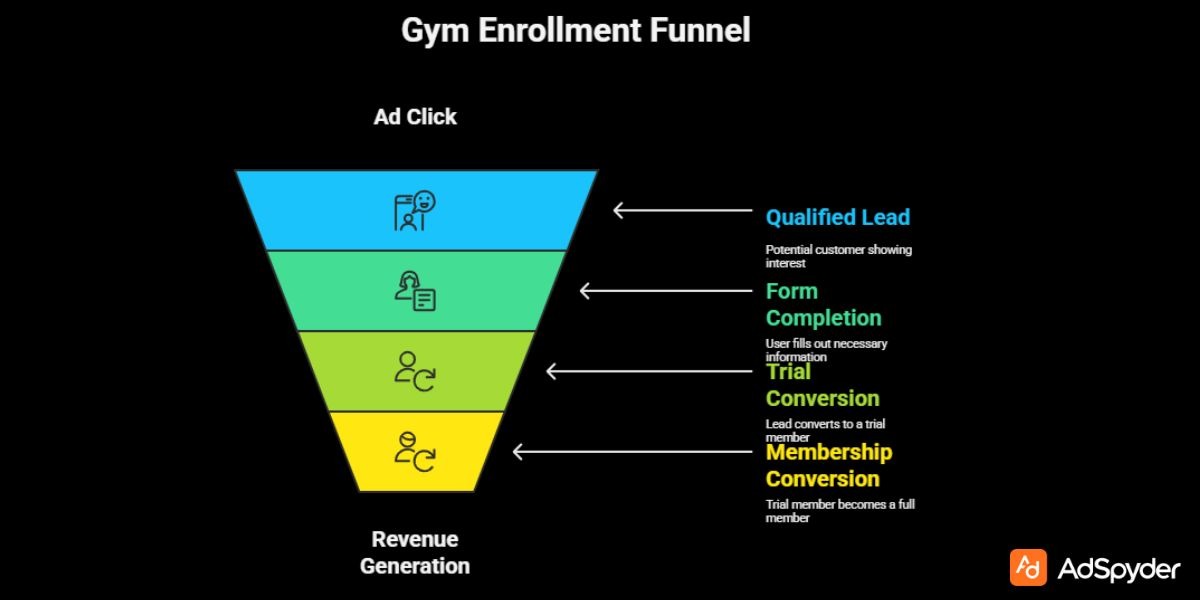
One of the biggest mistakes in gym PPC advertising is optimizing for CTR alone. High-quality gym lead generation requires tracking what happens after the click.
Key performance signals to monitor include:
- Cost per qualified lead
- Form completion rates
- Trial-to-membership conversion
- Drop-off points in the funnel
By connecting ad performance with visualized enrollment funnels, marketers gain clarity on which campaigns actually drive revenue.
How This Fits into a Smarter Fitness Industry Ad Strategy
Optimized gym PPC advertising doesn’t exist in isolation. It works best as part of a broader fitness industry ad strategy that includes:
- Cross-platform monitoring
- Competitor ad research
- Creative refresh cycles
- Fitness retargeting campaigns for high-intent visitors
Platforms that support multi-platform ad discovery allow gyms to compare Google Search performance with social media ads for fitness, ensuring budgets follow conversion—not assumptions.
FAQs: Gym PPC Advertising & Lead Generation
What is gym PPC advertising?
Gym PPC advertising involves paid search or display ads designed to drive gym memberships, class bookings, or consultations.
How do I lower CPA for gym lead generation?
Focus on high-intent keywords, optimize landing pages, and analyze competitor funnels to reduce wasted spend.
Are paid ads for fitness classes effective?
Yes. When paired with strong offers and localized targeting, paid ads for fitness classes convert highly.
Which platform works best for gym PPC advertising?
Google Search is ideal for high-intent leads, while social platforms support discovery and retargeting.
How important is landing page optimization?
Extremely important. Landing page experience directly impacts conversion rate and CPC.
Should gyms use AI for ad creation?
AI accelerates testing and reduces creative fatigue, improving performance consistency.
How do I track true ROI from gym PPC ads?
Track conversions beyond clicks using funnel and enrollment analysis tied to memberships.
Conclusion
High-quality gym lead generation isn’t about cranking budget. It’s about buying the right intent, aligning the right offer, and removing friction between click and signup. When your keywords, ads, and landing pages tell the same story, your CPL typically stabilizes—and your membership pipeline becomes more predictable.
If you want to move faster than local competitors, use competitor funnel visibility plus rapid testing to keep improving without guessing. That’s the core loop behind AdSpyder for Smarter Fitness and Wellness Ads, and it’s how gyms turn fitness digital marketing from “spend and hope” into measurable growth.