Social platforms have become the front door for modern fitness brands. Whether you’re a local gym, boutique studio, or online coach, social media ads for fitness are often the first touchpoint before a prospect ever searches on Google. The challenge isn’t launching ads—it’s scaling them without burning budget or exhausting creatives.
This guide explains how to scale social media ads strategically, using competitor intelligence, creative velocity, and funnel alignment to drive consistent gym membership promotion results as part of a larger fitness digital marketing system.
Why Scaling Social Media Ads for Fitness is Different from PPC
Unlike search, social ads interrupt rather than respond to intent. Users aren’t actively looking for a gym—they’re scrolling. That means your success depends heavily on creative relevance, emotional hooks, and timing.
Industry benchmarks consistently show that over 70% of performance variance in social campaigns comes from creative, not targeting alone. This is why gyms that rely on one or two “winning” ads often see performance crash after a few weeks.
To scale safely, your approach must balance:
- Creative freshness
- Audience expansion
- Offer clarity
- Conversion-path optimization
This philosophy aligns directly with the framework of paid ads for fitness classes, where research, generation, and optimization work together.
Identify Winning Social Media Ads for Fitness in your Market
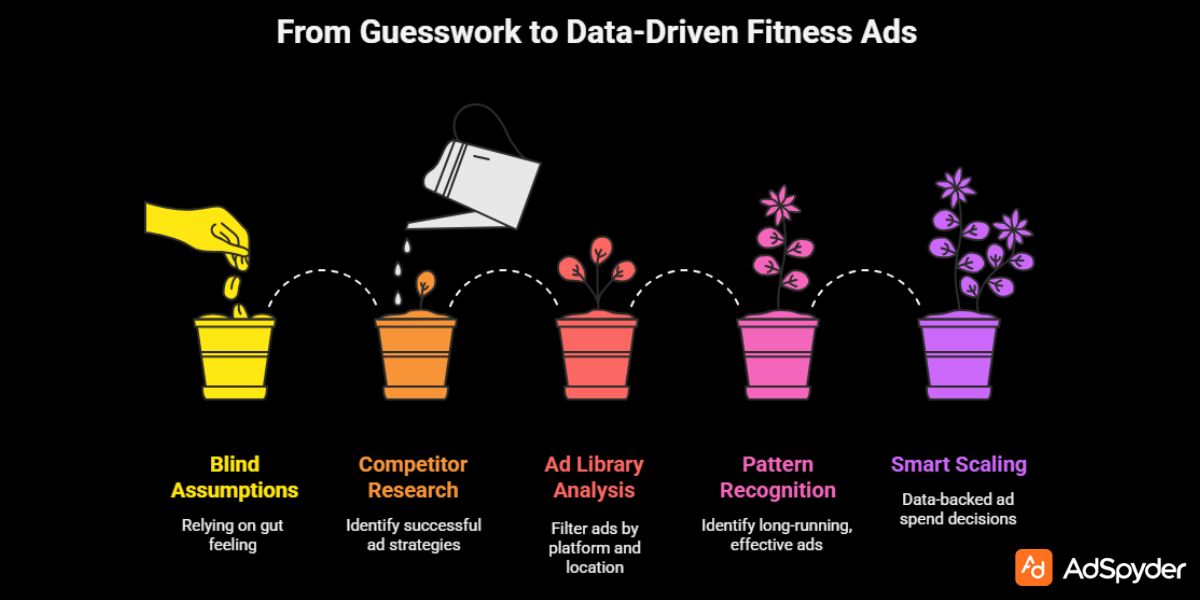
Before increasing spend, you need proof—not assumptions. Scaling ads that look good but don’t convert is a common trap.
Start by researching:
- Which competitors are running ads consistently (longevity signals performance)
- What formats they rely on (video, UGC, carousel, static)
- Which angles dominate their messaging
Using multi-platform ad library insights, marketers can filter social media ads for fitness by platform, location, and campaign type. This allows you to reverse-engineer what’s already resonating with your local audience instead of guessing.
Patterns to look for:
- Ads running longer than 30–45 days
- Repeated offers or hooks across creatives
- Consistent CTA language tied to booking or trials
This research stage reduces creative risk and supports smarter scaling.
Scale With Creative Systems, Not Single Ads
Scaling doesn’t mean “turning up the budget.” It means increasing creative output while maintaining message consistency with health and wellness advertising trends.
Before the bullets, here’s the mindset shift: top fitness brands don’t scale ads—they scale creative frameworks.
Effective gyms structure creative around proven angles:
- Transformation and Results Angle (before/after, progress metrics)
- Convenience and Accessibility Angle (location, scheduling, on-demand)
- Value and Offer Angle (free trials, limited-time pricing)
- Community and Support Angle (group energy, coaching accountability)
Once the angle is selected, generate variations across:
- Hooks (first 3 seconds)
- Visual styles (UGC, studio shots, motion graphics)
- Headlines and captions
- CTAs
This is where AI creative generation for fitness becomes essential. Brands using AI-assisted creative workflows often report 4x faster creative testing, allowing them to scale spend without stalling performance.
Match Social Ads to the Right Stage of the Funnel
One major reason social media ads underperform is misalignment between the ad and the expected action. Social users are rarely ready for “Buy Now.”
Instead, scale ads by funnel stage:
- Top-of-funnel: inspiration, transformation stories, lifestyle visuals
- Mid-funnel: education, social proof, program breakdowns
- Bottom-of-funnel: offers, urgency, retargeting
Before listing bullets, consider this: campaigns that align creative with funnel intent consistently outperform generic “join now” ads, especially for higher-ticket memberships.
To manage this properly, connect your campaigns to visualized enrollment funnels so you can see how social traffic progresses toward sign-up. This clarity prevents wasted spend on ads that generate engagement but no memberships.
Use Retargeting to Unlock Scale Without Rising CPA
Scaling cold audiences alone almost always increases costs. Retargeting is what stabilizes performance as budgets grow.
A strong fitness retargeting campaigns structure includes:
- 7–14 day retargeting for page viewers
- Offer-based ads for abandoned leads
- Social proof ads for undecided prospects
- Creative refresh tied to frequency thresholds
To keep retargeting effective, monitor competitor refresh cycles using historical ad data, ensuring your creatives don’t stagnate while others evolve.
Expand Platforms Strategically, Not Everywhere at Once
Not every gym needs to be on every platform. Scaling happens when you double down on what’s already working.
Use competitor analysis to determine:
- Where competitors spend the most time (Instagram vs. TikTok)
- Which formats dominate per platform
- Whether offers differ by channel
For example:
- Instagram often excels at visual storytelling and community
- TikTok favors authenticity, UGC, and short-form education
- Facebook remains strong for retargeting and local awareness
By combining social media ads for fitness insights with cross-channel benchmarking from ad performance analytics insights from AdSpyder for fitness brands, you can expand confidently instead of spreading budget thin.
Measure Social Media Ads for Fitness with Membership Growth
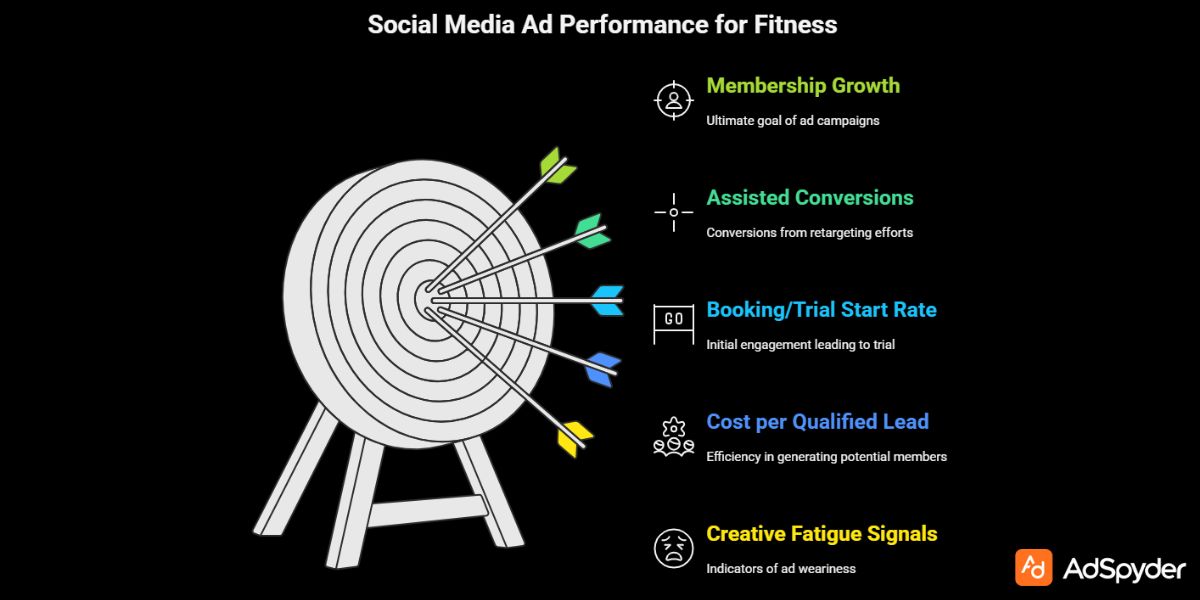
Engagement metrics alone won’t tell you if scaling is successful. Likes don’t pay rent—members do.
Before the bullets, here’s the rule: optimize for movement down the funnel, not vanity metrics.
Key indicators to track:
- Cost per qualified lead
- Booking or trial-start rate
- Assisted conversions from retargeting
- Creative fatigue signals (frequency, CTR decay)
Connecting these metrics to gym PPC advertising ensures your scaling decisions support sustainable growth rather than short-term spikes.
Conclusion
Scaling social media ads for fitness requires more than increasing budgets. It demands a system that blends creative velocity, competitor intelligence, and funnel clarity. When ads align with user intent and evolve alongside audience fatigue, gyms can grow predictably without sacrificing efficiency.
By treating social campaigns as part of a broader fitness industry ad strategy—supported by research, AI-powered creative, and performance tracking—brands turn social media from an experiment into a repeatable membership engine.
FAQs: Social Media Ads for Fitness
How long should a fitness ad run before scaling?
Typically 7–14 days with stable performance and consistent conversions.
Which social platform is best for gym membership promotion?
Instagram and Facebook dominate local gyms; TikTok excels for discovery and younger audiences.
How often should I refresh social ads?
When frequency rises or CTR drops—often every 2–4 weeks.
Do video ads outperform images for fitness?
Yes. Video often drives higher engagement, especially for transformation and community angles.
Is retargeting necessary for scaling?
Absolutely. Retargeting stabilizes CPA as spend increases.
Should offers differ between platforms?
Often yes. Platform-native behavior influences what converts.
How do I know if my ads are fatiguing?
Watch for rising frequency, declining CTR, and fewer conversions per impression.