AI Search · Lead Generation · Conversational Advertising
Quick Answer
- Earn visibility inside AI answers.
- Capture commercial intent with paid ads.
- Continue the same message after the click.
- Research emerging ads with AdSpyder’s ChatGPT Ad Library.
How AdSpyder Helps
Connect AI Search Demand With Competitor Advertising Intelligence
AI search can tell you where buyers are discovering brands. AdSpyder helps with the paid side of the same journey by showing how competitors position offers, creatives and landing pages across advertising channels.
Find competitor messages
Study offers and creatives
Audit landing pages
Current status: AdSpyder’s dedicated ChatGPT Ad Library page is currently marked “Coming Soon.” Until full dedicated coverage is available, use AdSpyder’s existing cross-platform ad intelligence, Domain Analysis and Landing Page Analysis to research the wider paid journey around AI-search demand.
AI search changes where brand discovery happens.
A buyer may now ask ChatGPT, Gemini, Perplexity or Google’s AI-powered search experience to compare tools, explain options or recommend a solution before visiting a traditional search-results page.
That creates a new lead-generation problem. Getting mentioned is valuable, but visibility alone does not create pipeline. Brands still need a clear path from discovery → consideration → click → conversion → follow-up.
What Is AI Search Lead Generation?
AI search lead generation is the process of creating demand through AI-powered discovery and converting that demand into identifiable prospects through content, advertising, landing pages and follow-up.
It normally combines two different acquisition systems.
Organic AI Discovery
Your brand, product or content appears as a source, mention or recommendation inside an AI-generated response.
AI-Native Paid Advertising
Paid placements appear around AI-driven discovery and decision-making experiences, such as current ChatGPT Ads.
These should not be confused. A brand being cited organically does not mean it paid for placement, and an ad does not influence ChatGPT’s independent answer.
The Discovery-to-Demand Map
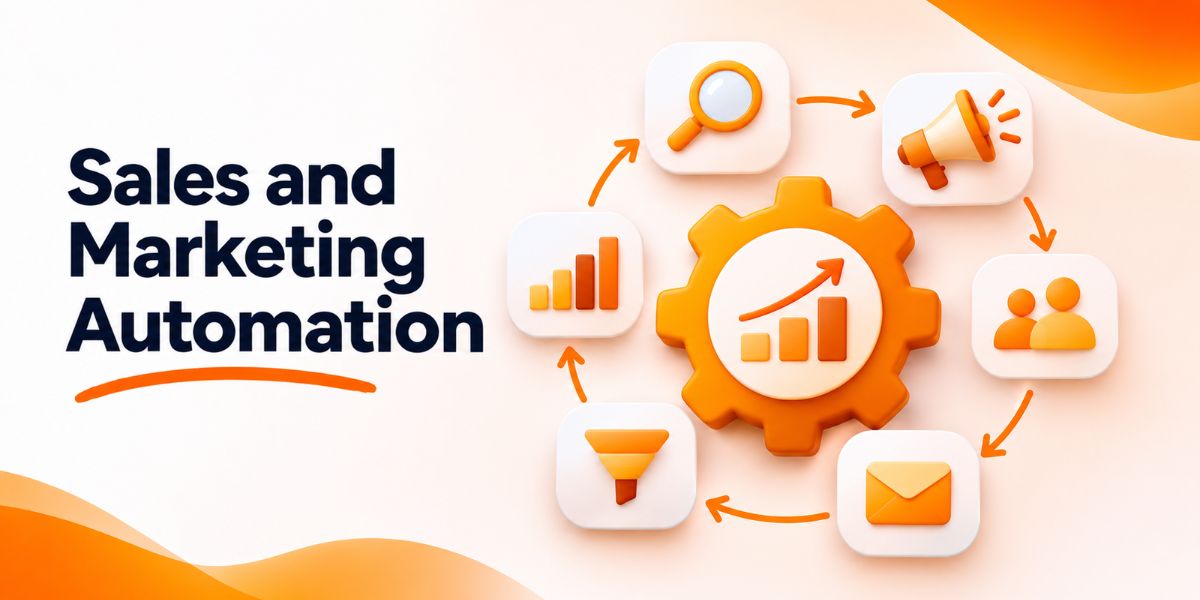
How AI Search Lead Generation Works From Discovery to Revenue
AI Discovery
→
Consideration
→
Paid Capture
→
Landing Page
→
Lead
→
Revenue
The critical point is that AI discovery and conversion are different jobs. Visibility creates consideration. Your paid and owned funnel converts that consideration into measurable demand.
STAGE 1
Create Content That AI Search Can Understand and Reference
AI visibility starts with content that clearly answers real buyer questions and provides information worth citing.
Useful content should make important facts easy to extract:
- Direct definitions
- Specific product capabilities
- Original data or methodology
- Clear comparisons
- Limitations and edge cases
- Credible external sources
The objective is not to repeat the same keyword unnaturally. It is to make the entity, problem, solution and evidence unambiguous.
Gushwork’s guide to generative optimization similarly emphasizes clear structure, answer-oriented content, entity clarity and citation-worthy evidence for AI-search visibility.
STAGE 2
Map the Conversations That Signal Buying Intent
AI-search intent is usually richer than one keyword. A user can explain their problem, budget, constraints and alternatives inside the same conversation.
Build conversation clusters around stages of the decision:
| Intent Stage | Example AI Question | Best Asset |
|---|---|---|
| Problem | How can I reduce manual competitor ad research? | Guide |
| Category | What tools can analyze competitor ads? | Category page |
| Comparison | Which ad intelligence tool is best for agencies? | Comparison |
| Decision | Can this tool analyze Google and Meta ads? | Product page |
STAGE 3
Capture AI Search Demand With Paid Advertising
Organic AI visibility creates demand, but paid advertising gives brands more control over when and how they enter the buying journey.
That now includes AI-native advertising channels.
ChatGPT Ads in 2026
- Ads appear separately from ChatGPT’s answers.
- Advertisers can optimize for views, clicks or conversions.
- Relevance can use conversation context and advertiser context hints.
- Context hints are not exact-match keywords.
- Ads include a headline, description, image and landing page.
OpenAI describes ChatGPT Ads as a way to reach people while they explore options, compare choices and make decisions. That makes the channel especially relevant to AI search lead generation because the advertising environment already sits inside a decision-oriented conversation.
See AdSpyder’s current ChatGPT Ads guide for formats, targeting, measurement and competitor-research limitations.
STAGE 4
Research the Competitor Message Before You Build Your Campaign
Competitor research should answer what buyers are being promised, not simply which ads look attractive.
For each useful competitor ad, record:
What pain is being addressed?
What outcome is offered?
What supports the claim?
Trial, demo, guide or purchase?
What action is requested?
Where does the click lead?
AdSpyder’s ChatGPT competitor-ad research workflow recommends studying repeated patterns across several competitors instead of copying one visible ad.
STAGE 5
Continue the AI Search Intent on the Landing Page
The landing page should continue the same specific problem and promise that created the click.
A common failure looks like this:
Strong Ad
“Automate competitor ad research across Google, Meta and LinkedIn.”
Weak Landing Page
Generic homepage copy that no longer mentions competitor research.
Message continuity matters because AI-search users often arrive with highly specific intent. Sending them to a generic page forces them to restart the research process.
Use AdSpyder Landing Page Analysis to compare competitor offers, CTAs, proof and post-click structures before building your own version.
STAGE 6
Retarget and Nurture the Demand You Already Created
Not every visitor who discovers your brand through AI search will convert immediately. The next job is to keep qualified interest moving.
Depending on consent, identifiers and the advertising platforms you use, site visitors can enter appropriate remarketing or nurture workflows after they visit your owned properties.
- Product comparison visitors → proof and differentiation
- Pricing visitors → case studies or demos
- Educational visitors → deeper problem-solving content
- Trial users → activation education
- High-fit leads → sales follow-up
The key is to nurture based on the original intent rather than forcing every AI-search visitor into the same generic sequence.
AI Search Lead Generation Example
Example: B2B Payroll Software
- Discovery: A buyer asks an AI assistant for payroll tools suitable for a 50-person distributed team.
- Organic visibility: The brand’s comparison guide is cited or mentioned.
- Paid capture: A relevant ad reinforces distributed-team payroll positioning.
- Landing page: The page continues the same remote-team use case.
- Conversion: The visitor requests pricing.
- Follow-up: Sales receives the acquisition source, page and stated company size.
Illustrative example. It does not represent confirmed results from a specific advertiser.
How Should AI Search Lead Generation Be Measured?
AI-search visibility and lead generation need different metrics. A mention is an awareness signal. A qualified opportunity is a commercial outcome.
| Stage | Useful Metrics |
|---|---|
| AI Visibility | Brand mentions, citations, prompt coverage |
| Paid Reach | Impressions, CTR, clicks, CPC |
| Website | Engaged visits, CTA clicks, conversion rate |
| Lead Quality | Qualified-lead rate, cost per qualified lead |
| Revenue | Opportunities, pipeline and closed revenue |
Avoid inventing universal AI-search conversion benchmarks. Performance will vary by category, geography, channel, offer, brand authority and buyer intent.
AI Search Visibility vs AI Search Lead Generation
| Visibility | Lead Generation |
|---|---|
| Earn mentions and citations | Create identifiable prospects |
| Optimize information | Optimize conversion paths |
| Measure presence | Measure pipeline and revenue |
| Primarily organic | Organic + paid + CRM |
Common AI Search Lead Generation Mistakes
- Optimizing only for citations — visibility needs a conversion path.
- Treating prompts like exact keywords — conversational context is broader.
- Sending ads to generic pages — specific intent gets lost after the click.
- Copying competitor ads — research patterns, then differentiate.
- Ignoring attribution — AI-search demand becomes invisible inside the CRM.
- Assuming visible competitor ads are profitable — public activity does not reveal CPA or ROAS.
AI Search Lead Generation Checklist
Prepare for AI-Native Advertising
Research the ads that compete for AI-driven demand.
Use AdSpyder to study competitor messaging, offers and landing pages across paid channels while preparing for deeper ChatGPT ad intelligence as dedicated coverage expands.
Explore ChatGPT Ad Intelligence →
Also explore Ad Library, Domain Analysis and Landing Page Analysis.
Frequently Asked Questions
What is AI search lead generation?
AI search lead generation combines visibility inside AI-powered discovery experiences with content, paid advertising, landing pages and follow-up systems that convert that interest into identifiable prospects.
Can AI search generate leads without paid ads?
Yes. Organic citations and brand mentions can generate visits and leads. Paid advertising provides an additional way to capture commercial demand with greater campaign control and measurement.
Does ChatGPT currently have ads?
Yes. ChatGPT Ads are available to advertisers in supported markets and appear separately from ChatGPT’s independent responses. OpenAI currently supports campaign goals including views, clicks and conversions.
Do ChatGPT Ads use keywords?
ChatGPT Ads can use advertiser context hints, but OpenAI states that these are not exact-match keywords. Ad relevance can consider wider conversational intent along with the ad and destination page.
How does AdSpyder help with AI search lead generation?
AdSpyder helps marketers research the paid competitive layer around AI-driven demand. Teams can analyze competitor ads, domains, creatives and landing pages, then use those signals to build original campaigns and conversion paths.
Is AdSpyder’s ChatGPT Ad Library live?
The public AdSpyder ChatGPT Ad Library page is currently marked Coming Soon. Marketers can use AdSpyder’s existing cross-platform advertising intelligence while monitoring the dedicated page for expanded ChatGPT-specific coverage.
What should AI-search lead generation measure?
Track AI visibility separately from commercial outcomes. Useful metrics include brand mentions, citations, paid clicks, landing-page conversion rate, qualified-lead rate, cost per qualified lead, opportunities and revenue.