Dropshipping is still one of the fastest ways to start an ecommerce business—because you don’t need to buy inventory upfront. But “easy to start” doesn’t mean “easy to win.” The winners treat dropshipping like a real business: tight niche choice, supplier reliability, clear positioning, fast creative testing, and a simple plan to acquire customers profitably. This guide is your practical dropshipping business plan for 2026.
You’ll learn how to start dropshipping step-by-step, how the dropshipping business model works, and how to launch even if you’re searching for how to start dropshipping with no money or how to start dropshipping for free. We’ll cover Amazon rules, Shopify setup, product research, pricing, marketing, and operations—plus 7 FAQs to answer the questions beginners ask most.
What Is Dropshipping?
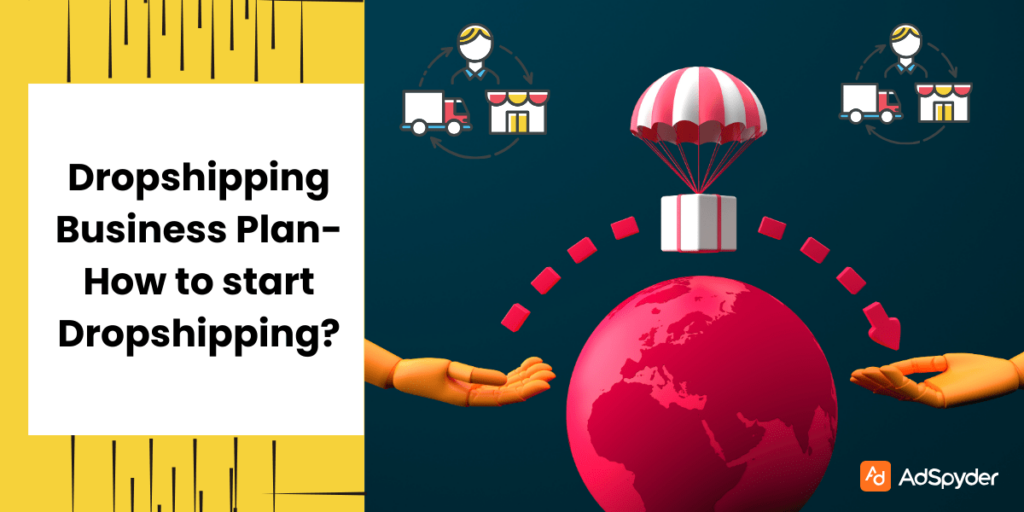
Dropshipping is a retail fulfillment method where you sell products online without holding inventory. When a customer places an order, you forward it to your supplier, and the supplier ships the product directly to the customer. You earn the difference between what the customer pays and what you pay the supplier (minus your marketing and operating costs).
- You can start with low upfront investment (no bulk inventory).
- You can test niches quickly and pivot fast.
- You can focus on marketing, branding, and customer experience.
But here’s the real truth: the “business” isn’t the supplier—it’s your offer + your positioning + your acquisition system. The stores that win are the ones that make products easier to discover, easier to trust, and easier to buy.
Dropshipping Business Model (How the Money Actually Works)
The dropshipping business model has 4 moving parts: product costs, shipping/handling, marketing, and overhead. New sellers often price only based on supplier cost and forget that ads + returns can eat the margin.
| Model layer | What it includes | Your goal |
|---|---|---|
| COGS | Supplier cost + packaging + transaction fees | Protect margin with smart pricing |
| Shipping | Delivery cost + timelines + tracking | Reduce complaints + refunds |
| Marketing | Ads, influencer fees, content production | Acquire customers profitably |
| Operations | Tools, support, returns, chargebacks | Keep the business stable |
If your product margin can’t comfortably cover ads + refunds + support, you’ll feel “busy” but not profitable. Choose products with enough margin, and improve AOV with bundles and upsells.
Key Dropshipping Statistics (Quick Snapshot)
A Simple Dropshipping Business Plan (Beginner-Friendly)
A real dropshipping business plan should fit on one page. Your goal isn’t to write a fancy document—your goal is to make decisions faster and avoid expensive mistakes.
- Niche: who you sell to and what problem you solve.
- Hero product: 1–3 products with clear demand and margin.
- Offer: price, bundles, shipping promise, guarantee.
- Supplier: shipping times, quality, return handling.
- Traffic plan: organic (content/SEO) + paid (ads/influencers).
- Break-even math: AOV, gross margin, target CPA.
- Ops: support scripts, refunds, tracking updates.
If you want to grow beyond “random posts,” build a repeatable content engine early. Start with a tool stack and workflows using content marketing tools so product pages and blog content compound traffic over time.
How to Start Dropshipping With No Money (or Very Little)
If you’re searching for how to start dropshipping with no money or how to start dropshipping for free, the honest answer is: you can start very lean, but you’ll still invest something—time, skills, or a small budget for tools and samples.
A lean “no-money” path that actually works
- Start with content + community: short videos, guides, and comparison posts around one niche.
- Pre-sell with a simple storefront: use a minimal theme, a single hero product, and clear delivery expectations.
- Use organic proof: testimonials, UGC, and influencer collabs before spending heavily on ads.
- Reinvest profits: first into faster shipping options, then into paid ads.
“No money” often fails because people skip product validation and supplier checks. If you can, order at least one sample. One bad supplier can wipe out weeks of work.
How to Start Dropshipping on Amazon (Without Getting Suspended)
Many beginners want how to start dropshipping on Amazon or how to dropship on Amazon without money. Amazon can work, but it’s strict: customers must receive orders on time, returns must be handled properly, and you must be the seller of record (your branding on invoices/packing slips matters).
Amazon-friendly approach
- Choose reliable domestic suppliers (fast shipping reduces late delivery risk).
- Avoid marketplace arbitrage (buying from another retailer and shipping to the customer is high risk).
- Control invoices and branding so customers see you as the merchant.
- Track metrics daily: late shipment rate, cancellation rate, return rate.
If you’re starting with minimal budget, Amazon’s fees and performance standards can be tough. Many first-time sellers find it easier to validate products on social/SEO first, then expand to Amazon once operations are stable.
How to Create Dropshipping Business Plan on Shopify (Most Flexible Option)

For most people learning how to start a dropshipping business, Shopify is the most flexible platform. You control branding, store experience, email/SMS flows, and pixel/conversion tracking (depending on region and consent).
Quick Shopify setup checklist
- Pick one niche (avoid “general store” unless you have strong creative and budget).
- Build 1 high-converting product page before you add 50 products.
- Set clear shipping expectations and a transparent returns policy.
- Add trust assets: reviews, UGC, FAQs, and contact visibility.
- Track key events (add to cart, initiate checkout, purchase).
Shopify is where you can build a brand—not just a product listing. That makes it easier to improve conversion rates and reduce dependence on low-quality traffic.
Product Research & Niche Picking (The Make-or-Break Step)
Beginners often ask how to become a dropshipper, but the real question is: “How do I choose products that can win?” Your best products have clear demand, enough margin, and a strong reason to buy now.
- Demand: people actively search for it, or it performs well in social ads.
- Margin: you can profit after ads (not just “margin on paper”).
- Creativity: you can demonstrate it in 5–10 seconds (video-friendly).
- Differentiation: bundle, variation, angle, or niche-specific positioning.
- Low support risk: fewer sizes/returns, fewer quality complaints.
A fast way to improve selection is to study competitors’ creatives and landing pages. Even before you spend big, you can identify patterns: what hooks repeat, what price points convert, and which bundles are common.
Dropshipping Business Plan: Suppliers & Fulfillment (How to Avoid Refund Hell)
Your supplier is your invisible business partner. If they ship late, mis-pack orders, or ignore support tickets—your brand takes the hit. A good supplier gives you reliability, tracking, and consistent quality.
Supplier evaluation checklist
- Shipping times: tested, repeatable delivery windows.
- Tracking quality: real tracking updates, not “label created” for 10 days.
- Returns process: clear policy, return address, and damage handling.
- Consistency: product quality doesn’t vary between batches.
- Communication: fast replies when something breaks.
Before scaling ads, place 3–5 test orders to different addresses. Track delivery time, packaging, and product quality. This small step saves massive refunds later.
Marketing & Growth in Dropshipping Business Plan (Traffic Is the Real Game)
Most dropshipping stores fail because they don’t have a sustainable traffic plan. A smart approach uses both compounding channels (SEO/content/email) and accelerators (paid ads, influencers). The goal is to build a system where traffic and trust increase over time.
1) Content + SEO (long-term growth)
Start with “buyer intent” content: comparisons, best-of lists, how-to guides, and problem/solution pages. Use content marketing tools to speed up research, planning, and publishing—so you can produce consistently without burning out.
2) Video-first marketing (fast trust)
Dropshipping is easier to sell when people can see the product working. If you’re launching a new offer, build a simple video system using video marketing for product launches. Your best assets are often short: unboxing, before/after, demo, “3 problems this solves,” and FAQ-style objection handling.
3) YouTube ads (scale winners)
Once you have a winning product video, YouTube can scale it to new audiences. Study what great brands do in YouTube ad campaigns and borrow patterns: clear hook in 2 seconds, proof in 10–15 seconds, and one CTA. Combine YouTube for discovery with retargeting on social for conversion.
4) Mobile-first creative (because most clicks are mobile)
If your store is slow or your video is hard to understand on a phone, you’ll waste spend. Build vertical videos and fast landing pages using mobile video marketing strategies. Prioritize readability, fast loading, and a clear CTA above the fold.
- Test 3–5 hooks (different angles), same product.
- Keep landing page constant while testing ads (one variable at a time).
- Scale the creative that produces consistent add-to-carts and purchases.
- Once you have a winner, add bundles and upsells to raise AOV.
The goal isn’t to “run ads.” The goal is to build a repeatable machine: test creative → validate conversion → scale winners → reinvest in faster shipping and better proof.
Operations & Customer Support for Dropshipping Business Plan (Where Most Beginners Lose Money)

Operations are unsexy, but they protect profit. The best beginner stores win by setting expectations and communicating proactively. Most refunds happen when customers feel confused or ignored.
What to build in week 1
- Shipping page: clear delivery timelines and tracking explanation.
- Returns policy: what’s allowed, what’s not, and how long it takes.
- Support templates: “Where is my order?” “Refund request” “Damaged item.”
- Order tracking emails: proactive updates reduce anxiety.
- Quality checks: identify products that cause high refunds and replace them fast.
Don’t optimize only the ads. Optimize the full customer experience: page clarity, delivery trust, and post-purchase communication. That’s how you build repeat buyers instead of one-time refunds.
FAQs: Dropshipping Business Plan
How do I start dropshipping as a beginner?
Can I start dropshipping with no money?
What is a dropshipping business plan?
Is Shopify good for dropshipping?
How do I start dropshipping on Amazon without money?
What products are best for dropshipping?
How long does it take to become profitable?
Conclusion
The best way to learn how to start dropshipping is to treat it like a system: pick one niche, validate a hero product, partner with a reliable supplier, build a simple store, and grow with content + video + smart paid testing. If you want dropshipping for beginners to work long-term, don’t chase random products—build trust, improve the customer experience, and reinvest into better shipping, better proof, and better creative. That’s how you turn a small dropshipping setup into a real ecommerce business.