Dynamic Creative Optimization (DCO) is one of the fastest ways to scale ad testing without scaling your workload. Instead of building 30 “different ads” manually, you create a library of creative elements (headlines, images, videos, descriptions, CTAs, even product feeds), and the platform automatically assembles combinations and shows the best versions to the right people.
If you’ve ever wondered why one audience loves your ad while another ignores it, DCO solves that at the creative level by matching messaging to audience interests—and then learning which combinations drive clicks, leads, and purchases.
What Is Dynamic Creative Optimization (DCO)?
Dynamic creative optimization (also called DCO advertising) is an approach where your ad system automatically builds and tests multiple variations from a “kit” of creative parts. Instead of guessing one perfect ad, you let the algorithm find the best combinations—by audience segment, placement, device, and performance.
- Creative elements = headlines, primary text, visuals, CTA buttons, offers, product cards
- Rules = which assets can’ t appear together, which claims must be paired with disclaimers
- Learning loop = the system serves combinations, watches results, and shifts budget to winners
DCO is commonly used for dynamic creative ads on social platforms, responsive-style creatives on display networks, and personalized product ads powered by feeds. It’s especially powerful when you want performance at scale without turning your workflow into chaos.
How DCO Works (Step-by-Step)

Most DCO systems follow the same foundation—whether you’re running Facebook dynamic creative, Google-style responsive assets, or enterprise DCO stacks. Here’s the process in plain language.
| Step | What you do | What the system does |
|---|---|---|
| 1) Build assets | Upload multiple headlines, texts, images, videos, CTAs, offers | Creates possible combinations from your asset library |
| 2) Define targeting | Choose audiences, placements, geo, device, goals | Matches combinations to user context + predicted response |
| 3) Launch test | Run campaigns like normal | Serves different combinations to learn what works |
| 4) Learn & optimize | Monitor results; remove weak assets | Shifts delivery toward winners and patterns |
| 5) Scale | Clone winners into new audiences + creatives | Expands performance while keeping personalization |
DCO vs Dynamic Ads: What’s the Difference?
Marketers often mix these up because both include the word “dynamic.” But they solve different problems: DCO optimizes the creative combination, while dynamic ads personalize the product/content shown (usually from a feed).
| Item | DCO (Dynamic Creative Optimization) | Dynamic Ads (Feed-based) |
|---|---|---|
| Primary goal | Find winning creative combinations | Show the right product/content to each user |
| Inputs | Headlines, text, images, videos, CTAs, offers | Product feed + template creative |
| Best for | Scaling testing, personalization by messaging | Catalog retargeting, broad product coverage |
| How you win | Better hooks + creative match = higher response | Better product relevance = higher conversion |
In practice, you can (and often should) use both: dynamic ads to personalize the product, and DCO to optimize the message, offer, and creative style that convinces the click.
Dynamic Creative Optimization on Facebook (Facebook Dynamic Creative)
When people say “dynamic creative optimization Facebook,” they usually mean Meta’s Dynamic Creative experience (commonly used inside Ads Manager). You provide multiple assets, and the platform automatically serves combinations that perform best across audiences and placements.
- 3–5 hooks (problem, outcome, curiosity, proof, speed)
- 2–4 offers (trial, demo, bundle, discount, free shipping, guarantee)
- 2–3 creatives per angle (UGC-style, product demo, before/after)
- CTA variety (Learn More vs Get Offer vs Sign Up)
- Landing page match (each angle should have a matching section above the fold)
The key is to think in “families of messages.” If one headline promises speed, pair it with visuals and primary text that also emphasize speed. If another headline promises trust, pair it with testimonials and proof. Dynamic creative optimisation works best when assets are intentionally structured—not random.
DCO Across Display, Programmatic, and Discovery Channels
DCO isn’t limited to social. Many brands use it across display placements, retargeting, and programmatic advertising stacks to keep creatives relevant across thousands of placements. You can also apply the same thinking to performance surfaces like Google discovery ads, where creatives must adapt to context and user intent.
| Channel | What DCO personalizes | Example use case |
|---|---|---|
| Display / GDN | Layout, headline, images, CTA by placement/device | Same campaign fits 300+ placements without redesign |
| Programmatic | Offer + message matched to segments in real time | Retargeting that changes based on product category viewed |
| Discovery / Feed | Creative combos optimized for scrolling context | Lifestyle visuals + benefit-led headlines for warm audiences |
| Local / Industry | Location, intent, and proof by market | Segmented real estate advertising creatives by neighborhood + property type |
The more placements and audience segments you run, the more DCO becomes a competitive advantage. It helps you stay relevant without creating hundreds of one-off creatives that burn your design team.
DCO Quick Snapshot (How To Think About It)
How to Build a High-Performance DCO Asset Library
DCO campaigns fail for one simple reason: the asset library is weak. If you upload 5 headlines that all say the same thing, DCO can’t magically create differentiation. Your goal is to build a library that covers multiple buyer motivations.
- Angle A: Pain relief (remove risk, fix frustration, avoid mistakes)
- Angle B: Outcome (results, transformation, time saved)
- Angle C: Proof (reviews, stats, social proof, demos)
- Angle D: Differentiator (why you vs alternatives)
- Angle E: Offer (trial, bundle, guarantee, limited-time)
| Asset type | What “good” looks like | Common mistake |
|---|---|---|
| Headlines | Different hooks (speed, proof, curiosity, offer) | Same meaning with synonyms |
| Primary text | Explains benefit + proof + CTA clearly | Overstuffed, vague, or too long |
| Images / videos | Different formats (UGC, product demo, infographic) | Same visual with tiny edits |
| Offers / CTAs | Mix low-friction and high-intent CTAs | One CTA for every audience stage |
Responsive-Style DCO Best Practices (That Actually Move Results)
Many people treat DCO like a “turn it on and pray” feature. But high-performing DCO is structured. These best practices will help you get clean learnings and repeatable wins.
- Keep variables meaningful: test angles, not punctuation changes
- Limit combinations early: too many assets = slow learning
- Protect brand rules: avoid conflicting claims in mixed assets
- Match landing pages: each angle should “continue” on-page
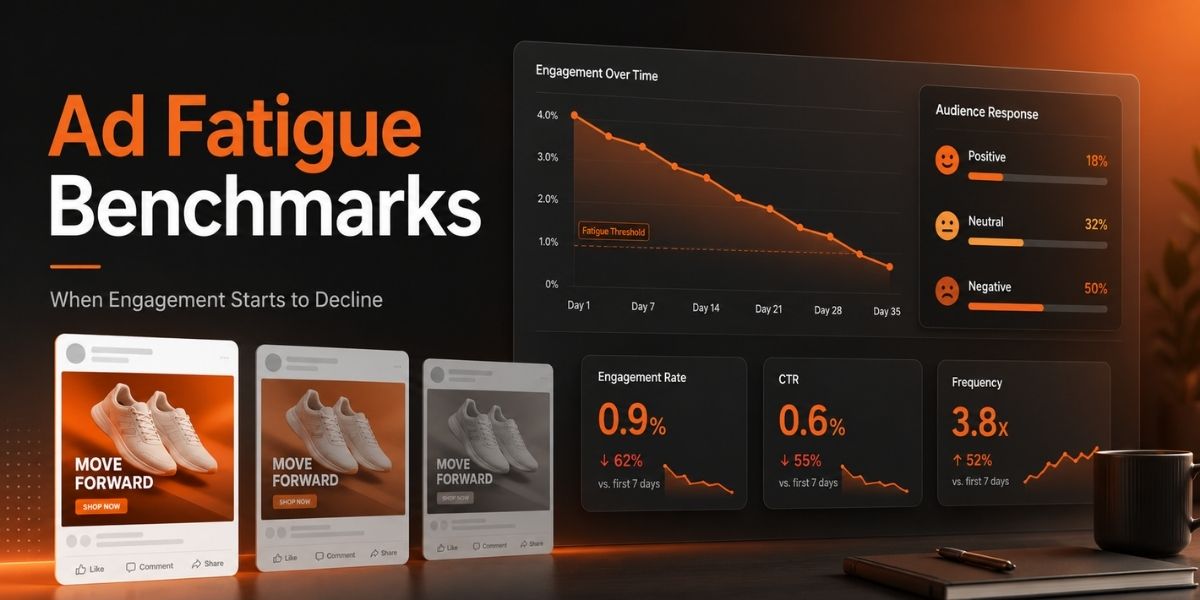
- Refresh winners: DCO still fatigues—rotate new variations
- Segment by funnel stage: cold vs warm need different messages
A simple strategy is to run 2 campaigns: one “discovery” campaign for broad testing (multiple angles), then a “scale” campaign where you keep only winners and expand audiences. This keeps learnings clean and budget efficient.
How to Measure DCO Performance (Without Getting Lost)

DCO can produce dozens (or hundreds) of combinations—which is great until reporting becomes confusing. The trick is to measure at two levels: campaign outcomes and asset-level contribution.
| Metric category | What it tells you | What to do next |
|---|---|---|
| Delivery | Are you getting enough impressions + stable learning? | Reduce assets, broaden audience, fix budget constraints |
| Engagement | Are creatives earning attention (CTR, view rate, saves)? | Swap hooks, change first 2 seconds, improve proof |
| Conversion | Is traffic converting (CVR, CPA, ROAS)? | Align landing page, simplify checkout, improve offer |
| Asset contribution | Which headlines/visuals consistently appear in winners? | Keep winners, replace losers, produce “next-gen” variations |
DCO Tools: What to Use (Based on Your Setup)
“Dynamic creative optimization tools” can mean two different things: (1) platform-native features (like Facebook Dynamic Creative), or (2) broader creative + feed + testing systems used in larger teams. Choose based on your workflow and how fast you iterate.
| Team type | Best DCO approach | Why it works |
|---|---|---|
| Solo / small team | Native DCO in platform (Meta, Google responsive-style) | Fast setup, minimal overhead |
| Growth team | Structured asset library + naming + iteration cadence | Keeps learnings clean across experiments |
| Performance org | Feed + rules + creative ops + analytics pipeline | Scales personalization across many products/markets |
No matter your size, the biggest leverage point is creative intelligence: knowing which hooks and formats already win in your category so your DCO starts with strong assets.
How AdSpyder Helps You Win With Dynamic Creative Optimization
DCO performance depends on the quality of your inputs. If your headlines are generic and your visuals look like everyone else, DCO simply rotates average creatives faster. The shortcut is starting with market-validated patterns.
- Find winning angles in your niche: offers, claims, positioning, and creative formats
- Build a stronger asset library using competitor insights (hooks, CTAs, landing pages)
- Reduce creative guesswork so DCO learns faster and wastes less budget
- Improve iteration speed by modeling proven patterns—then testing your unique twist
- Use AdSpyder to identify top-performing competitor ads in your category.
- Extract 5 angles + 5 offers + 5 creative formats you see repeating.
- Turn those patterns into your DCO asset library and launch controlled tests.
- Keep winners, replace losers, and refresh every cycle.
That’s how you make dynamic content optimization a repeatable growth engine instead of a one-time experiment.
FAQs: Dynamic Creative Optimization (DCO)
What is dynamic creative optimization (DCO)?
Is DCO the same as Facebook dynamic creative?
How many assets should I upload in a DCO test?
What makes DCO campaigns fail most often?
Can DCO work for ecommerce and catalog ads?
How do I pick DCO winners?
What are the best dynamic creative optimization tools?
Conclusion
Dynamic Creative Optimization isn’t a hack—it’s a system. When you build a strong asset library, structure angles intentionally, and measure both outcomes and asset contribution, DCO becomes one of the cleanest ways to scale performance without scaling complexity. Whether you’re using Facebook dynamic creative, applying DCO thinking to Google discovery ads, or expanding into programmatic advertising, the advantage is the same: personalization and testing at speed.