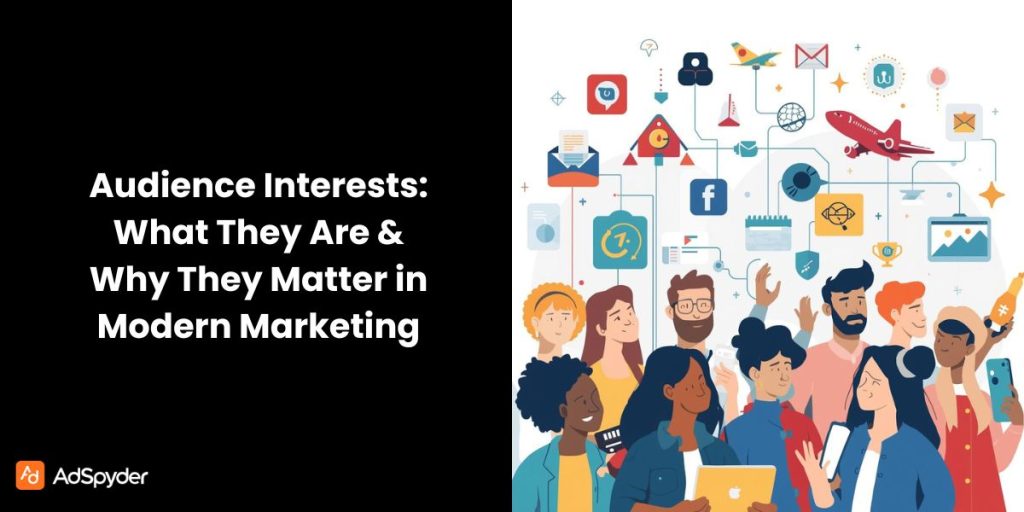
“Audience interests” are the topics, hobbies, brands, and behaviors people consistently engage with—things like fitness, SaaS tools, parenting, travel, home workouts, skincare, or ecommerce entrepreneurship. In paid media, interest-based targeting matters because it’s the fastest way to move from “broad reach” to “relevant reach.” When ads match what people care about, they feel less like interruptions and more like timely recommendations.
In this guide, you’ll learn how interest based targeting works across Facebook/Instagram and Google, how to build strong interest clusters, and how to test them without burning budget. You’ll also get practical audience interest examples, plus a repeatable playbook you can apply to ecommerce, local services, SaaS, and creators.
What Are Audience Interests in Marketing?
Audience interests describe what your potential customers actively care about—topics they engage with, content they consume, brands they follow, and communities they spend time in. In ad platforms, interests become “targeting signals” you can use to reach people who are more likely to click, watch, and convert.
- A skincare buyer: “K-beauty”, “dermatology”, “acne care”, “sunscreen”, “Sephora”
- A fitness buyer: “home workouts”, “yoga”, “HIIT”, “protein supplements”, “running”
- A B2B buyer: “sales enablement”, “CRM”, “marketing automation”, “SaaS growth”
- An ecommerce founder: “Shopify”, “dropshipping”, “product research”, “UGC ads”
When you combine interests with the right creative and landing page message, you reduce wasted impressions and improve relevance—especially in competitive categories where CPMs spike quickly.
Demographics vs Interests vs Behavioral Targeting
Most targeting strategies fall into four buckets: demographics, geography, behavior, and interests. Interest-based targeting is powerful because it maps to “why” someone buys (what they care about), not only “who” they are.
| Targeting Type | What It Captures | Best For | Common Pitfall |
|---|---|---|---|
| Demographic | Age, gender, job, income proxies | High-level qualification | Too broad; low intent |
| Geographic | Location, radius, region | Local demand capture | Wrong radius = wasted spend |
| Behavioral | Actions and patterns (site visits, video viewers) | Retargeting + funnels | Not enough volume |
| Interest-based | Topics/brands/categories a user engages with | Prospecting with relevance | Over-narrowing audiences |
The best campaigns blend these layers: start with geography (if needed), qualify by demographics (if applicable), then use interest clusters to align the message. For scale, pair interests with lookalikes and retargeting.
Where Do Audience Interests Come From?

Platforms infer interests from signals like content engagement, follows, searches, video views, clicks, time spent, and interactions. That’s why two people with identical demographics can behave totally differently: their attention patterns reveal different intent.
- Topical signals: pages, creators, hashtags, groups, channels
- Engagement signals: likes, shares, saves, comments, watch time
- Intent signals: searches, product views, in-market behaviors
- First-party signals: your CRM/website events (when you implement tracking)
Important: many users want relevance, but they also want trust. That’s why modern interest targeting should be paired with clear value props, honest creative, and landing pages that deliver what the ad promised.
Facebook & Instagram Audience Targeting: How It Works

On Meta platforms, interests typically sit inside detailed Targeting. This is where you refine who sees your ads by layering demographics, interests, and behaviors.
How to build a “good” interest audience (not too broad, not too narrow)
- Start with a theme: “home fitness”, “men’s grooming”, “B2B lead gen”, “Shopify growth”.
- Add 8–20 related interests: mix categories + brands + creators.
- Use ‘Narrow further’ carefully: narrowing can help quality, but it can also kill delivery.
- Exclude obvious mismatches: avoid wasted impressions and irrelevant clicks.
- Layer 1 (interests): “Shopify”, “ecommerce”, “online shopping”, “product research”
- Narrow further (intent): “business page admins”, “engaged shoppers” (if available), “marketing automation”
- Exclude: “freebies”, “coupon hunters” (if it hurts AOV), or irrelevant regions
Instagram ad interests: where hashtags fit (and where they don’t)
Hashtags are great for organic discovery, but paid targeting is primarily controlled through Ads Manager audiences (interests/behaviors/custom/lookalikes). Use hashtags to understand what your audience talks about, then translate those themes into interest clusters and creative angles.
Google Interest Targeting: Affinity, In-Market, and Custom Segments
On Google, interest targeting often appears as affinity segments (habits and long-term interests), plus intent-driven audiences like in-market. These are powerful for YouTube, Display, and demand generation campaigns—especially when paired with strong creative and clean tracking.
- Affinity: best for awareness + consistent demand building.
- In-market: best when you want conversion intent (people actively researching/buying).
- Custom segments: build audiences around searched keywords, visited URLs, or apps.
Want to connect this to your full-funnel plan? Your top-of-funnel interests should match your creative, and your mid-funnel remarketing should match your landing page narrative (especially if you’re building a B2B video marketing funnel).
Audience Interest Examples You Can Use Today
Below are ready-to-test interest cluster ideas (not single interests). You can adapt these to your niche, language, and pricing.
| Buyer Type | Interest Themes | Creative Angle That Fits |
|---|---|---|
| Ecommerce founder | Shopify, ecommerce tools, product research, UGC | “Steal what’s working” competitor breakdown + offer |
| Fitness & wellness | Home workouts, yoga, nutrition, running | Before/after story + simple routine promise |
| Beauty & skincare | Skincare routines, acne care, dermatology, K-beauty | Problem/solution proof + ingredient credibility |
| B2B SaaS buyer | CRM, demand gen, sales enablement, automation | ROI case study + clear workflow demo |
| Local services | Home improvement, real estate, neighborhood themes | Trust + reviews + local proof (map/radius) |
| Entertainment shoppers | Movies, gaming, creators, fandoms | Fast hook + meme/UGC style social proof |
Notice what’s missing: overly generic interests like “shopping” alone. You can include broad interests, but only as one layer inside a structured cluster.
How to Build Interest Clusters That Convert
The fastest way to build a strong interest cluster is to work backwards from the customer’s real-world buying journey. Ask: what do they watch, follow, and research right before buying?
- Layer A (Category): the big topic (e.g., “ecommerce”, “fitness”, “skincare”).
- Layer B (Problem/Outcome): what they want (e.g., “weight loss”, “lead generation”, “acne care”).
- Layer C (Brands/Creators): tools, influencers, communities that signal depth.
Turn interest insights into ads people actually want to watch
Interest targeting works best when your creative looks native to the audience’s world. That’s why user generated content ads often outperform polished studio creatives in cold prospecting: they feel like the content people already consume.
If you operate in regulated categories, align your interest choices with compliance and tone (for example, audiences engaging with responsible messaging when discussing online gambling advertising). The interest is only half the equation—your claims and landing page must match policies and expectations.
Audience Interests Targeting Testing Playbook (Low Waste, High Learning)
Testing interest audiences doesn’t mean creating 50 ad sets and hoping something works. Use a structured approach that isolates variables, collects clean signals, then scales what’s proven.
| Step | What You Do | Why It Works |
|---|---|---|
| 1) Start with 3–6 clusters | Each cluster = a theme (not a single interest) | Avoids randomness and improves learnings |
| 2) Keep creative consistent | Same hook/offer across clusters | So audience differences are measurable |
| 3) Track the right KPIs | CTR, CVR, CPA, ROAS + quality signals | Prevents “cheap clicks” traps |
| 4) Scale winners, prune losers | Increase budgets gradually; keep testing new clusters | Maintains performance while expanding reach |
The most overlooked lever: aligning your landing page promise with the interest cluster’s mindset. If your audience is “beginner-friendly,” don’t send them to a technical page. Match language to intent.
Common Audience Targeting Mistakes (and Fixes)

How AdSpyder Helps You Find Winning Audience Interests Faster
Interest targeting gets easier when you stop brainstorming in a vacuum. When you can see what competitors run—hooks, visuals, offers, landing pages—you can infer the interest themes they’re leaning on and build better audience clusters.
- Use competitor messaging to identify the “real” pains your audience responds to.
- Turn repeated themes into interest clusters and creative variations.
- Speed up testing by modeling proven formats, then differentiating your angle.
A practical way to do this is with an ad spy tool workflow: pick 10 competitor ads, extract 3 recurring themes, and turn each theme into one interest cluster + one creative direction.
The result: fewer random tests, faster learning, and audiences built around what people already engage with.
Key Audience Interests & Relevance Statistics (Quick Snapshot)
FAQs: Audience Interests & Interest-Based Targeting
What are audience interests in marketing?
Is interest-based targeting better than demographic targeting?
How do I find good Facebook/Instagram interests?
What does “Facebook ads narrow audience” mean?
What are Instagram ad interests?
What are Google affinity segments?
How do I improve interest targeting results quickly?
Conclusion
Audience interests are your shortcut to relevance. Instead of guessing, build interest clusters around real customer intent, test them with a clean playbook, and align your creative + landing page to the mindset behind the interest. When you combine transparency with relevance—and use competitor insight to speed up ideation—you’ll see better CTR, stronger conversion quality, and lower wasted spend.