Christmas shopping has evolved far beyond buying wrapped products off a shelf. Modern buyers want meaningful experiences, not just physical items. This shift is exactly why Christmas DIY holiday kits have surged in popularity across families, couples, corporate buyers, educators, and creative hobbyists.
A DIY holiday kit isn’t just a gift. It’s:
-
A shared memory
-
A bonding activity
-
A personal creative experience
-
A stress-free solution for festive planning
In an environment where digital-heavy categories dominate ad inventory—especially through high-budget Amazon Christmas ads—DIY kits give brands a tactile, emotional edge that large marketplaces often struggle to replicate.
This guide explores how to:
-
Design high-selling Christmas DIY kits
-
Position them emotionally and commercially
-
Promote them using modern ad formats
-
Leverage multi-channel campaigns
-
Avoid costly seasonal mistakes
-
Extend momentum into January with New Year home decor ads and New Year jewellery ads
Why Christmas DIY Holiday Kits Are One of the Strongest Seasonal Products
DIY kits succeed because they solve multiple holiday problems at once.
1. They Simplify Gift Buying
Many Christmas shoppers struggle with:
-
What to buy
-
Whether it will be appreciated
-
If it will arrive on time
-
If it will feel “personal enough”
DIY kits eliminate this friction by offering:
-
Universal appeal
-
Easy shipping
-
Instant emotional value
-
Clear use case
This is why they frequently outperform standard Christmas gift ads, which often rely purely on price or novelty.
2. They Convert Experience-Seekers, Not Just Shoppers
Modern consumers increasingly prioritize:
-
Experiences over possessions
-
Activities over accumulation
-
Participation over passive ownership
A DIY holiday kit promises time spent, not just an object unwrapped. This experiential angle positions DIY kits closer to memory-making than typical consumer goods.
3. They Appeal to Every Age Group
DIY kits adapt easily across demographics:
-
Kids: craft kits, painting kits, ornament kits
-
Teens: DIY art kits, candle kits, jewelry kits
-
Adults: baking kits, decor kits, hobby boxes
-
Seniors: puzzle kits, painting, knitting
Few Christmas product categories scale this universally.
4. They Extend Beyond December
Unlike most seasonal gifts, DIY kits often carry into:
-
New Year organization projects
-
Winter hobbies
-
Early spring refresh cycles
This is where transition strategies using New Year home decor ads become incredibly effective for brands that started with Christmas DIY engagement.
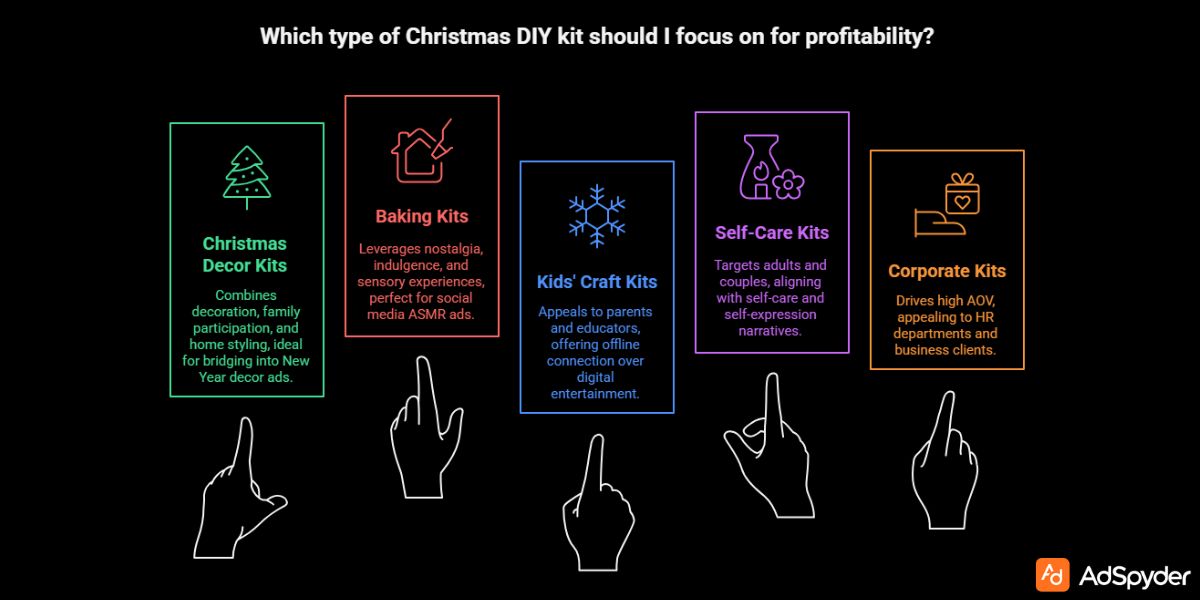
Most Profitable Types of Christmas DIY Holiday Kits
Not all kits sell equally. These categories dominate consistently:
1. Christmas Decor & Ornament DIY Kits
These combine:
-
Decoration
-
Family participation
-
Home styling
-
Seasonal tradition
High-performing examples include:
-
Wreath-making kits
-
Hand-painted ornament boxes
-
Garland design kits
-
Tree-topper craft kits
Decor kits naturally bridge Christmas and January refresh behaviors, making them ideal gateways into New Year home decor ads after December 25.
2. Baking & Edible DIY Holiday Kits
Food-based kits combine:
-
Nostalgia
-
Indulgence
-
Family bonding
-
Sensory experience
Top sellers include:
-
Gingerbread house kits
-
Cookie decorating kits
-
Hot chocolate kits
-
Holiday cake baking kits
Edible kits benefit heavily from ASMR-style video ads and transform especially well through social platforms.
3. Kids’ Craft & Family Activity Kits
These dominate household purchases in:
-
Parent segments
-
Homeschool communities
-
Educator networks
Examples:
-
Christmas card creation kits
-
Paper snowflake kits
-
Paint-your-own Christmas scene kits
-
Family game & activity kits
These kits compete directly with digital entertainment and often win because they promise offline connection.
4. Self-Care & Creative Hobby Kits
These appeal to:
-
Adults gifting themselves
-
Couples
-
Wellness audiences
Examples:
-
Candle-making kits
-
Soap-making kits
-
Resin art kits
-
Knitting & embroidery sets
These often perform exceptionally well when positioned alongside New Year jewellery ads, tapping into self-care and self-expression narratives.
5. Corporate & Premium DIY Gift Kits
These drive high average order value (AOV):
-
Team-building DIY kits
-
Corporate holiday gift boxes
-
Custom-branded DIY sets
They appeal strongly to HR departments, agencies, and business clients during Q4.
The Psychology Behind Why DIY Kits Outperform Standard Holiday Products
DIY kits outperform traditional Christmas products because they trigger multiple emotional drivers at once:
-
Anticipation before the activity
-
Engagement during the build
-
Pride after completion
-
Memory formation long after
Unlike passive consumption categories, DIY kits:
-
Activate curiosity
-
Sustain attention
-
Create emotional attachment
-
Generate social sharing
This is the same emotional mechanism that makes storytelling-heavy formats work so well in Christmas book ads—but DIY kits combine story with physical interaction.
Best Ad Formats for Selling Christmas DIY Holiday Kits
DIY kits are visual products that require demonstration. The most effective ad formats reflect this.
| Funnel Stage | Best Ad Format | Platform | Purpose |
|---|---|---|---|
| Discovery | Short-form video, Reels, TikToks | Instagram, TikTok | Show transformation & activity |
| Consideration | Carousel ads | Facebook, Pinterest | Show contents, steps, results |
| Conversion | Static image + offer | Meta, Google Display | Drive urgency & gifting |
| Retargeting | Dynamic ads | Meta, Google | Recover warm traffic |
| Education | Blog + email | Website + CRM | Teach use, build trust |
DIY kits benefit more from motion than any other Christmas product category. Buyers want to see the process, not just the result.
How to Structure Christmas DIY Holiday Kits: Video Ads That Convert
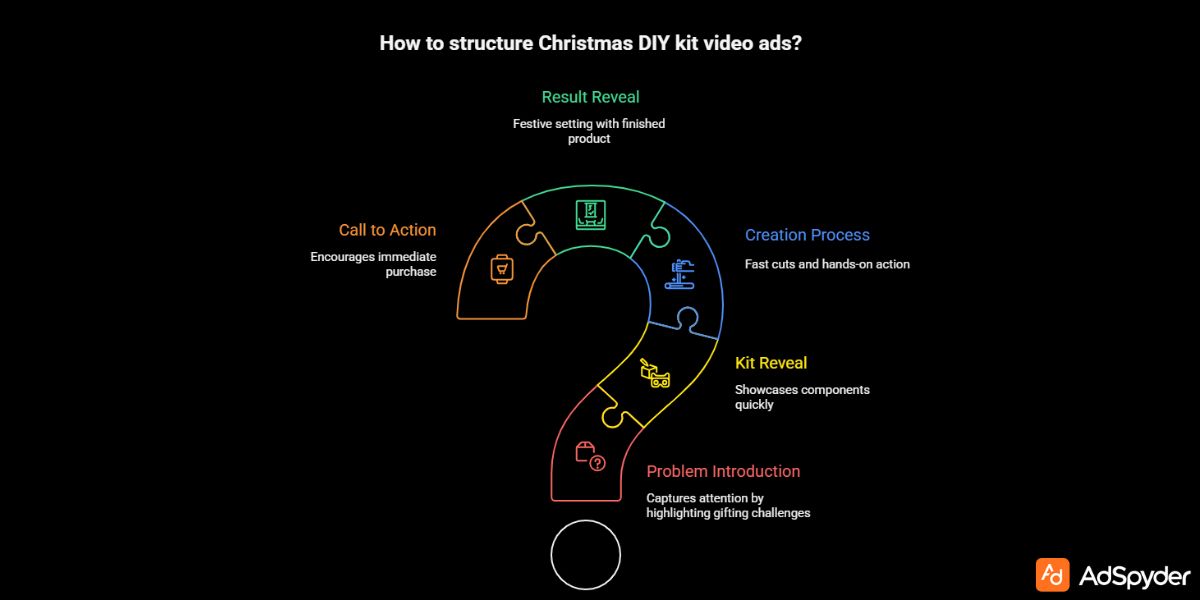
High-performing DIY kit video ads follow this formula:
-
Problem Introduction (0–2 seconds)
“No idea what to gift this Christmas?” -
Kit Reveal (2–5 seconds)
Show all components quickly. -
Creation Process (5–15 seconds)
Fast cuts, hands-on action, time-lapse. -
Result Reveal (last 3–5 seconds)
Show finished result in festive setting. -
Clear Call to Action
“Limited holiday stock available.”
This structure mirrors what makes Amazon Christmas ads successful—clear product function, fast pacing, visible outcomes—but DIY kits add emotional payoff.
Multi-Channel Strategy for Scaling DIY Holiday Kit Sales
DIY kits demand multi-touch campaigns. Buyers rarely convert on first impression.
1. Social Media Channels
Best platforms:
-
Instagram (Reels, Stories, Shopping tags)
-
TikTok (process videos, tutorials)
-
Pinterest (visual inspiration boards)
Key content types:
-
Time-lapse builds
-
Before/after transformations
-
Family crafting moments
-
“Everything included” unboxing
2. Email Marketing
Email drives some of the highest DIY kit conversions.
Powerful sequences:
-
“Holiday Gift Guide”
-
“12 Days of Creative Christmas”
-
“Last-Minute DIY Gifts”
-
“Post-Christmas Creative Reset”
3. Paid Search & Shopping Ads
Target keywords like:
-
“DIY Christmas gifts”
-
“Christmas craft kits”
-
“Holiday activity kits”
-
“DIY gift boxes”
Shoppers arriving via search often convert faster than social traffic.
4. Influencer & UGC Marketing
DIY kits thrive on:
-
Micro-creators
-
Craft influencers
-
Family vloggers
-
Homeschool educators
Authentic UGC consistently outperforms studio ads.
How DIY Holiday Kits Fit Into the Larger Holiday Ad Ecosystem
DIY kits don’t operate in isolation. They compete for attention with:
-
Christmas gift ads
-
Christmas book ads
-
Toy and electronics promotions
-
Fashion and beauty products
However, DIY kits win on:
-
Emotional differentiation
-
Multi-user participation
-
Lower return rates
-
Longer engagement life cycle
Where books sell stories and electronics sell performance, DIY kits sell experience plus transformation.
Pricing Strategy for Christmas DIY Holiday Kits
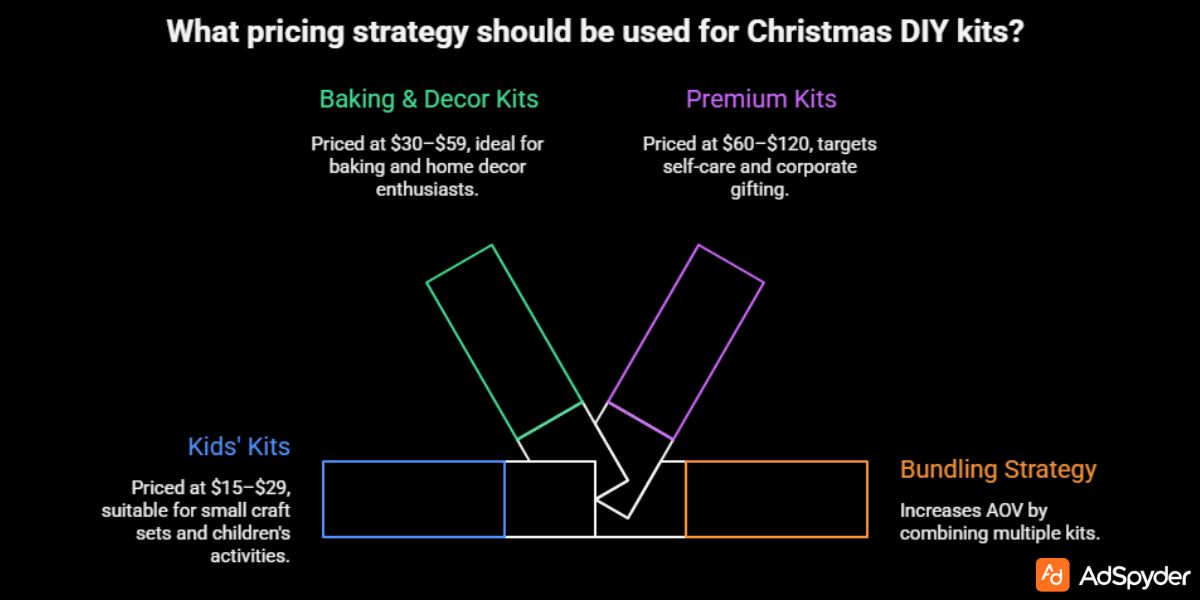
Pricing must reflect:
-
Perceived value
-
Gifting comfort zone
-
Component cost
-
Shipping weight
Typical high-performing ranges:
-
$15–$29 → kids’ kits & small craft sets
-
$30–$59 → baking kits, decor kits
-
$60–$120 → premium self-care & corporate kits
Bundling is one of the fastest ways to increase AOV.
Copywriting That Sells DIY Holiday Kits
Best-performing copy emphasizes:
-
“Everything you need in one box”
-
“No experience required”
-
“Fun for all ages”
-
“Perfect Christmas gift”
-
“Limited holiday edition”
-
“Create something together this Christmas”
DIY kits don’t sell on specs. They sell on emotion plus simplicity.
Visual Strategy: What DIY Kit Creatives Must Show
Your visuals must answer these buyer questions instantly:
-
What’s inside the kit?
-
How difficult is it?
-
Who is it for?
-
What will the finished result look like?
Use:
-
Flat lays of contents
-
Hands-on progress shots
-
Family usage scenes
-
Close-ups of texture and detail
This mirrors best-in-class execution in Christmas home decor ads, where product-in-context always outperforms studio-only imagery.
Common Mistakes That Kill DIY Holiday Kit Sales
-
Launching Too Late
DIY kits depend on planning time. Late launches miss the core buying window. -
Poor Instruction Clarity
Confusing kits increase refunds and negative reviews. -
Weak Gift Positioning
If it doesn’t clearly feel like a gift, it won’t sell at Christmas. -
Ignoring Mobile Checkout
Most Christmas buyers shop on phones. -
No Retargeting
DIY kit buyers often need 2–4 touches before converting.
Post-Christmas Strategy Extending Christmas DIY Holiday Kits Momentum Into January
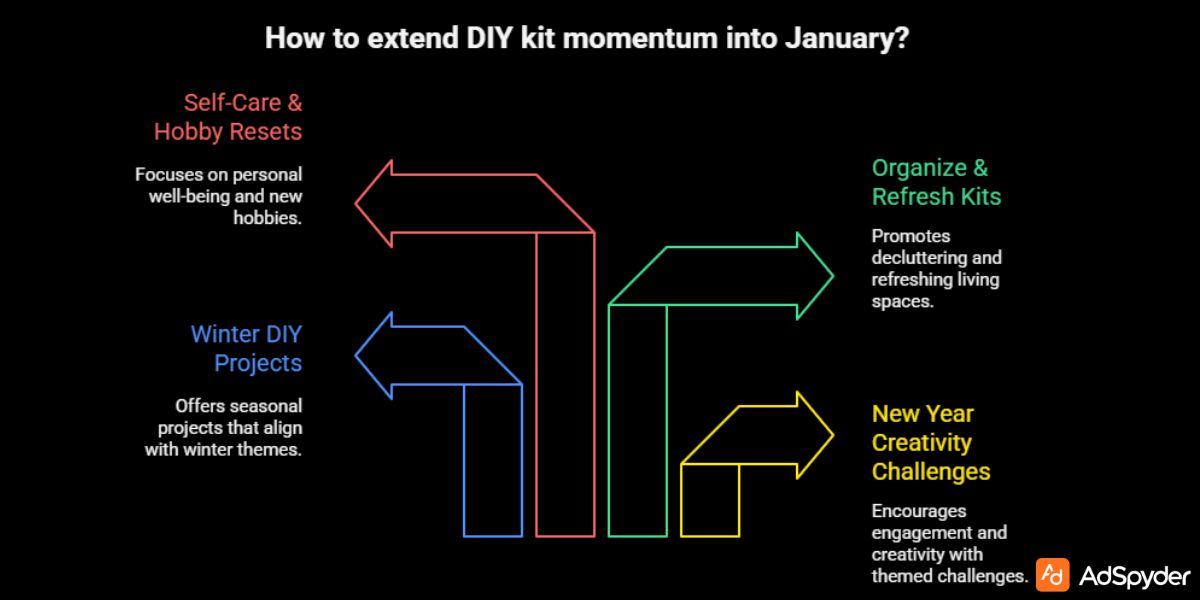
Smart brands don’t stop at December 25.
Transition strategies include:
-
“New Year creativity challenges”
-
“Winter DIY projects”
-
“Organize & refresh kits”
-
“Self-care & hobby resets”
This transition naturally aligns with:
-
New Year home decor ads
-
New Year jewellery ads
-
Self-improvement and wellness campaigns
DIY kits fit perfectly into the New Year transformation mindset.
Christmas DIY Holiday Kits Campaign Checklist
Before December
-
Finalize kit designs
-
Order packaging & materials
-
Shoot lifestyle photography
-
Produce short-form videos
-
Build retargeting audiences
Early December
-
Launch paid ads
-
Push gift guides
-
Email promo sequences
-
Influencer collaborations
Mid–Late December
-
Add urgency to shipping
-
Highlight digital bonus content
-
Push “instant activity gifts”
Post-Christmas
-
Retarget gift-card users
-
Launch New Year DIY campaigns
-
Shift creatives to winter refresh theme
Why DIY Kits Are Becoming a Core Category in Holiday Marketing
DIY kits are no longer niche products. They are becoming:
-
Mainstream Christmas gifts
-
Core Q4 revenue drivers
-
Strategic brand builders
As large platforms flood the market with mass-produced products, DIY kits differentiate through:
-
Personalization
-
Participation
-
Purpose
This is the same reason why thoughtfully crafted storytelling continues to win in categories like Christmas book ads—humans crave meaning, not just merchandise.
Conclusion: Why Christmas DIY Holiday Kits Win the Long Game
Christmas DIY holiday kits succeed because they transform gifting from a transaction into an experience. They create stories, memories, and shared time—something no generic product can replicate.
While markets are crowded with:
-
Heavy-budget Amazon Christmas ads
-
Mass-scale Christmas gift ads
-
Saturated decor and toy campaigns
DIY kits quietly dominate by offering:
-
Emotional engagement
-
Practical value
-
Multi-user participation
-
Long-term brand loyalty
Brands that master DIY kits don’t just win December—they build communities that return every winter.
If you combine:
-
Visual-first marketing
-
Strong gifting psychology
-
Smart retargeting
-
And post-holiday transition strategies
Your DIY holiday kits won’t just sell. They’ll become a seasonal tradition.
Christmas DIY Holiday Kits – FAQs
When should I start promoting Christmas DIY holiday kits?
Start in early November and scale up through early–mid December.
What types of DIY kits sell best at Christmas?
Decor kits, baking kits, kids’ craft kits, and self-care or hobby kits usually perform strongest.
Are DIY kits good for last-minute Christmas gifts?
Yes, especially if they are easy to ship, clearly giftable, and available with fast delivery options.
Which platforms work best for advertising DIY holiday kits?
Instagram, TikTok, and Pinterest for visual discovery; Meta and Google ads for retargeting and search-based intent.
Do I need professional photos for DIY kit marketing?
High-quality images and short videos are essential — they help show what’s inside the kit and how fun or easy it is to use.