
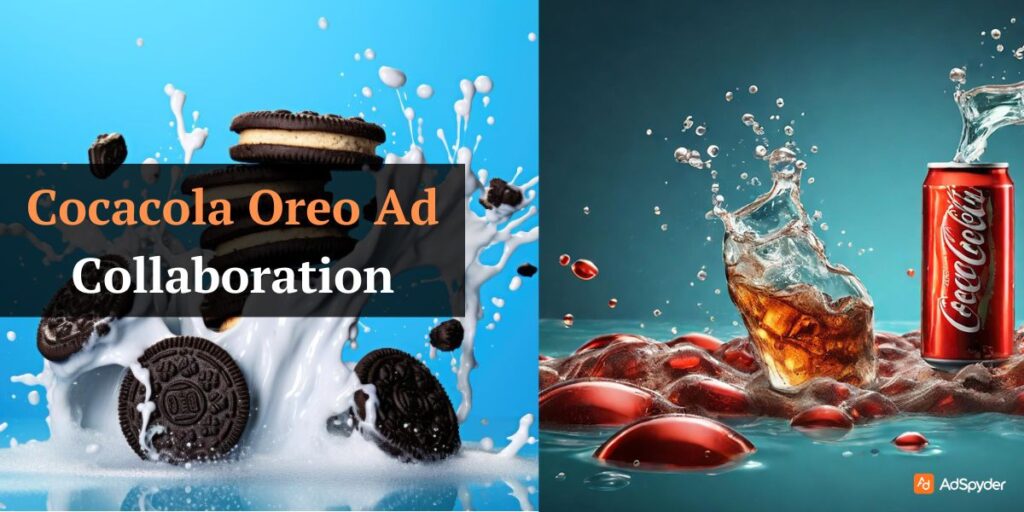
When two icons share the same shelf space for decades, the obvious move is to compete. The smarter move is to collaborate—then turn attention into a limited-time product drop people can’t stop talking about. That’s exactly what happened with the Coca-Cola x OREO partnership: a playful, globally scaled Cocacola Oreo Ad Collaboration designed to feel like a cultural moment, not just a promotion.
In this guide, we’ll break down the full Coca Cola Oreo collaboration campaign—from the product mechanics to the creative strategy, distribution, and the “Besties” narrative that powered the rollout. If you’re researching Coca Cola Oreo ads (or building a Coke Oreo co-branded campaign of your own), you’ll walk away with reusable tactics for planning, launching, and scaling brand partnerships.
What the Cocacola Oreo Ad Collaboration Actually Is
The CocaCola Oreo ad collaboration wasn’t “just” a brand mashup. It was a complete partnership package: limited-edition products, a shared narrative, and digital + physical experiences that encouraged participation.
- Coca-Cola OREO Zero Sugar (a Coca-Cola taste with OREO-inspired flavor hints) — positioned as a playful “taste you recognize” with a twist.
- OREO Coca-Cola Sandwich Cookie — a cookie engineered to feel “Coke-like,” featuring Coca-Cola design cues and a fizzy-style experience (including a “fizz” sensation via embedded elements).
The bigger strategic choice: rather than chasing a “functional” reason to exist, this partnership leaned into emotion + novelty.
The story wasn’t “here’s a new flavor.” It was “two best friends become better together.”
That “story-first” approach is why these Coca-Cola Oreo ads felt closer to pop culture content than a standard FMCG spot—especially across social placements where audiences reward playful surprises.
Why The Cocacola Oreo Ad Collaboration Worked (Beyond the Hype)
Most partnerships fail for one of two reasons: they’re too logical (boring) or too random (confusing).
The Coca-Cola Oreo collaboration campaign hit the sweet spot: instantly understandable, but still surprising.
| Collab lever | What they did | Why it matters |
|---|---|---|
| Icon + icon | Two globally recognizable brands with long histories | Instant attention, easy recall, low explanation cost |
| Limited-time urgency | A drop-style release (“get it while it lasts”) | Drives trial, social posting, and repeat store checks |
| Narrative hook | “Besties” — friendship + togetherness | Gives the campaign a shareable human angle |
| Experience layer | On-pack QR → interactive moments (music, IRL activations) | Extends engagement beyond a single purchase |
| Packaging as an ad | Black-and-white co-branded design with recognizable brand cues | Shelf impact + social-friendly visuals |
If you’ve studied high-energy brand worlds like Red Bull ad campaigns, you’ll notice the same compounding effect: the product, story, and distribution all reinforce each other.
This is what makes a collaboration campaign feel “inevitable” once it’s live.
Campaign Breakdown of Cocacola Oreo Ad Collaboration: The “Besties” Strategy in 5 Layers
To understand why the coke oreo co branded campaign traveled so well across regions and platforms, it helps to look at it as a layered system—not a single ad.
The products were engineered to be talk-worthy (“does it taste like Coke?” “does it feel fizzy?”), which is exactly what fuels social conversation.
Layer 2: Packaging that stops the scroll (and the cart)
Co-branded packaging has one job: make the collaboration unmistakable at a glance.
The Coke x OREO look leaned hard into contrast (black/white), iconic marks, and repeating visual motifs.
This matters because packaging becomes your most distributed “creative asset” — it appears in UGC, retailer photos, unboxing videos, and shelf shots.
Layer 3: The friendship story (“Besties”) as an emotional shortcut
The campaign theme did something subtle and powerful: it gave people a reason to involve someone else.
“Besties” isn’t a product claim; it’s a social behavior. That sets up gifting, tagging, sharing, and “try it with me” moments.
This is also why digital activations (like music-based experiences) fit naturally—because they’re designed for pairs.
Layer 4: Digital experiences to extend the campaign beyond purchase
Many limited-edition drops spike fast and disappear. Experience layers help you stay relevant longer. With QR-driven participation, the collaboration turned the pack into a gateway—nudging buyers to do something after checkout, not just consume and move on.
Layer 5: Retail + convenience channels built for impulse
This partnership was designed for the “I’ll try it once” buyer. Grocery and convenience placements are ideal because novelty converts best at the shelf. Your takeaway: if your collaboration relies on impulse, your distribution plan is part of your creative strategy.
Key Stats That Explain the Scale Behind Cocacola Oreo Ad Collaboration
When brands this large collaborate, the “ad” is only the visible layer. Underneath is massive distribution power and brand equity. Here are a few stats that help frame why a Coke x OREO partnership can become a global talking point quickly.
Creative & Messaging Lessons from Cocacola Oreo Ad Collaboration

The best way to learn from coca cola oreo ads is to separate what’s unique to these brands from what’s reusable for any partnership. Below are practical lessons you can copy—whether you’re a DTC brand collaborating with a creator or a global brand partnering with another household name.
1) Build the campaign around a relationship, not a product feature
“Besties” works because it’s a story people already understand. It turns the collaboration into a social prompt: try it with someone, tag your friend, compare reactions. That behavior produces free distribution.
2) Make the first impression visual (packaging, color, icons)
In a co-branded launch, your packaging does double duty: it sells in-store and acts as a content asset.
That’s why co-branded releases often feel similar to capsule drops in fashion—high contrast, limited time, instantly recognizable.
If you like how fashion brands stage “drops,” take a look at how Zara SRPLS ad campaigns create a premium, collectible feel even when the product itself is simple.
3) Engineer “talk value”: a detail people debate
Great collaboration marketing creates a question people want to answer:
Does it taste like Coke? Is it actually “fizzy”? Which one is better?
When you build debate into the product, your campaign earns attention on autopilot.
4) Keep the brand cues intact—don’t blur identity
Co-branding fails when neither brand feels present. Here, both brands kept their signature cues
(logo language, iconography, and recognizable product forms) while still giving the partnership its own “look.”
A useful reference outside food: many Samsung ads show how to introduce novelty while preserving core identity—especially when launching new product variants.
5) Treat retail as a media channel (especially for limited editions)
A limited-time drop is strongest when it’s easy to find. Collab campaigns win when the shopper sees it in the wild—then buys it “for the story.”
This “in-the-moment” purchase logic appears in many categories.
Even if you’re not in CPG, learning from consumer categories helps: for example, best practices for garment advertising often emphasize how creative, product imagery, and urgency cues work together to drive quick decisions.
Distribution & Retail Mechanics for Cocacola Oreo Ad Collaboration: How the Drop Was Built for Trial
A collaboration can have amazing creative and still underperform if it’s hard to buy.
The Coke x OREO partnership was structured for trial in familiar places: grocery, convenience, and select partner locations.
- Trial is easier than switching: people will try a novelty product even if they won’t change their routine brand.
- Retailers love news: limited runs create shelf excitement and seasonal-style merchandising.
- Scarcity boosts conversation: “I found it” posts spread faster than “this is always available.”
For marketers planning a co-branded campaign, the practical takeaway is simple:
decide where discovery will happen (shelf, social, search, influencers), then make your distribution plan reinforce that.
If discovery is social-first, you need photogenic packaging and easy links to retailers. If discovery is shelf-first, your on-pack story matters even more.
How to Replicate the Cocacola Oreo Ad Collaboration Playbook (Without a Global Budget)

You don’t need two century-old brands to run a strong partnership campaign. You need the same structure: clear collab idea → high-contrast creative → limited-time urgency → easy distribution → measurable learning. Here’s a practical playbook you can apply to your next collab launch.
Step 1: Define the “collaboration thesis” in one sentence
Example pattern: “When Brand A meets Brand B, you get unexpected benefit for shared audience.”
If you can’t write this, your partnership is at risk of becoming a logo swap.
Step 2: Create one hero visual system (and enforce it everywhere)
The Coke x OREO look was cohesive. That consistency is what makes collaborations feel “real,” not opportunistic.
Build a mini style guide: background colors, logo rules, product angles, typography, and 2–3 signature motifs.
Step 3: Add one interactive behavior that supports sharing
It can be small: a quiz, a “pick your duo” generator, a limited-time code, a downloadable asset, or a UGC prompt.
The goal is to make the collaboration feel like an experience, not a post.
Step 4: Turn urgency into a calendar (prelaunch → drop → sustain)
Limited edition works best when you plan the “three phases”:
tease (announce the partnership), drop (availability + where to buy), and sustain (reactions, comparisons, UGC, restock moments).
Step 5: Spy the category patterns, then build better variants
Don’t guess what angles will work—observe them. Map which collaboration hooks repeat:
“limited drop,” “best friends,” “unexpected flavor,” “collector packaging,” “exclusive merch,” “scan to unlock,” and so on.
Then write 8–12 ad variants that each emphasize one of those angles.
- Attention: CTR, view-through rate, social share rate
- Trial: retailer click-outs, coupon/redemption, first-purchase rate
- Conversation: UGC volume, sentiment, “taste debate” mentions
- Sustain: repeat purchase signals, search lift, branded query growth
Bottom line: the best collaborations are designed as systems.
The story earns attention, the product earns talk, distribution earns trial, and the campaign earns repeatable learning you can reuse for the next drop.
FAQs: Cocacola Oreo Ad Collaboration
What is the Coca-Cola x OREO collaboration campaign?
What products were part of the Coca-Cola x OREO drop?
Why did the “Besties” message work so well?
What makes co-branded campaigns perform better than normal launches?
How should brands measure a collaboration campaign?
What’s the biggest risk in co-branded campaigns?
How can smaller brands copy the Coke x OREO playbook?
Conclusion
The Coca-Cola x OREO partnership is a strong case study in modern collaboration marketing because it’s not “one ad.” It’s a connected system: a limited-time product drop, a clear story (“Besties”), packaging built for attention, experiences built for sharing, and distribution built for impulse trial. If you’re planning your own Coca-Cola Oreo collaboration campaign-style launch, focus on the fundamentals: preserve both brand identities, engineer talk value, make the campaign social by design, and measure beyond impressions—track trial, conversation, and sustained demand. That’s how a Coke Oreo co-branded campaign becomes a real growth lever, not just a moment.