
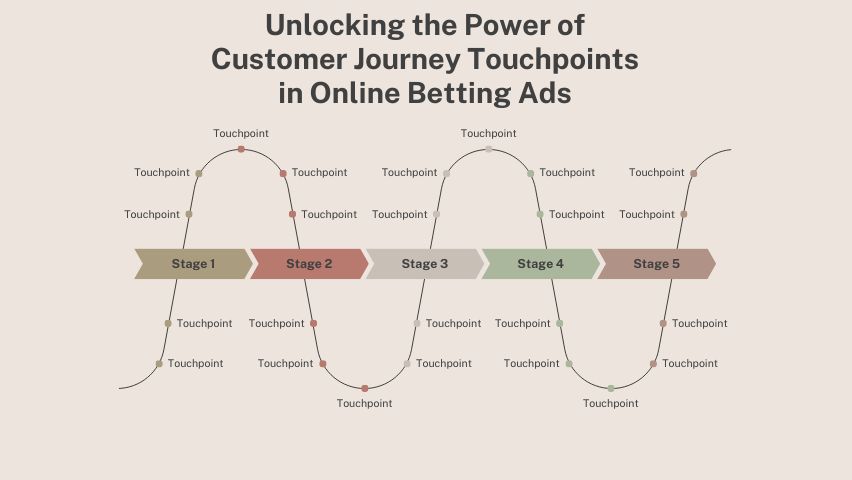
If your marketing feels “busy” but revenue feels “slow,” the problem usually isn’t one channel—it’s the customer journey touchpoints between channels. A customer might see your ad, read reviews, compare competitors, visit your website twice, abandon cart, ask a question on WhatsApp, then finally convert after a retargeting ad. Every one of those interactions is a touchpoint—and one bad touchpoint can break the entire journey.
In this guide, you’ll learn what customer touchpoints are, how to do touchpoint mapping, and how to improve performance across digital + offline journeys. You’ll also see customer journey touchpoints examples for both B2C and B2B.
What are Customer Journey Touchpoints?
A customer touchpoint is any moment where a person interacts with your brand—directly or indirectly—across any channel. Touchpoints can be obvious (an ad click, a website visit, a sales call) or subtle (reading reviews, seeing your brand mentioned in a community, comparing pricing pages).
- Journey = the full path (awareness → purchase → retention → advocacy)
- Touchpoints = the individual interactions inside that path
- Touchpoint mapping = documenting + improving those interactions
Most brands lose conversions when touchpoints aren’t consistent. Example: an ad promises “Free demo in 2 minutes,” but the landing page asks for 12 fields, then the follow-up email arrives 48 hours later. That’s a broken journey.
Why Customer Journey Touchpoints Matter For Growth

Touchpoints affect both conversion and brand perception. Even if your ads are great, a weak checkout, slow support reply, or confusing onboarding can destroy ROI.
| Journey stage | Common marketing touchpoints | What to measure | Most common mistake |
|---|---|---|---|
| Awareness | Paid ads, influencer mentions, PR, community posts | Reach, CTR, view rate, brand search lift | Generic messaging for everyone |
| Consideration | Landing pages, comparison pages, reviews, webinars | Engaged sessions, scroll depth, lead quality | Mismatch between ad promise and page |
| Decision | Checkout, demos, sales calls, pricing + offers | Conversion rate, CPA, time-to-close | Friction (forms, steps, unclear trust) |
| Retention | Onboarding, email flows, support, in-app prompts | Activation rate, churn, repeat purchases | No guided “next step” after purchase |
| Advocacy | Referral programs, UGC, reviews, case studies | NPS, referral rate, review volume | Not asking happy customers to share |
Touchpoints also matter for compliance and brand safety. If you’re in a regulated niche, your ads and landing pages must align with policies and user expectations. For example, teams running campaigns in sensitive verticals often build a “compliance checkpoint” touchpoint into creative review—similar to the principles in responsible gambling advertising.
Types of Customer Journey Touchpoints (digital + offline)
- Search ads, social ads, display ads, video ads
- Website pages (home, product, pricing, FAQ, comparison)
- Email sequences, WhatsApp/SMS, push notifications
- Chat support, bots, live chat, help center
- Reviews, influencer mentions, communities
- In-store experience, staff interaction, demos
- Events, pop-ups, trade shows
- Packaging, delivery experience, returns
- Phone calls, field sales visits
You’ll often hear “digital touchpoints” like ads and landing pages described as marketing touchpoints. But the journey doesn’t stop at conversion. Post-purchase touchpoints (onboarding, delivery, support) are what drive repeat revenue—especially in subscription businesses and high-consideration products.
Touchpoint Mapping: How to Build a Customer Journey Map With Touchpoints
Customer touchpoint mapping is a structured way to identify every interaction that influences a purchase and then prioritize what to fix first. Here’s a practical approach you can run in 60–90 minutes with your team.
- Pick one persona + one offer. Journey maps break when you try to cover everyone at once.
- Define stages. Awareness → Consideration → Decision → Onboarding/Use → Retention → Advocacy.
- List touchpoints per stage. Include ads, content, website, sales/support, and “social proof” steps like reviews.
- Add customer intent + emotion. What are they trying to achieve? What’s the anxiety or friction?
- Assign one KPI per touchpoint. If you can’t measure it, it won’t improve.
- Mark “Moments that Matter.” Identify the 2–3 touchpoints most likely to make or break conversion.
- Create fixes + owners. Turn the map into an execution backlog (not just a slide).
- Does the landing page match the ad message 1:1?
- Is the “next step” obvious within 5 seconds?
- Is there trust proof near the CTA (reviews, logos, results)?
- Can a customer switch devices and continue without friction?
- Do you have a retention touchpoint within 24 hours of purchase?
If your growth plan is heavily paid-led, map touchpoints alongside your acquisition loops. That’s where strategy content like paid product marketing becomes useful: it forces you to connect ad spend to real journey steps, not vanity metrics.
Customer Journey Touchpoints Examples
Example 1: E-commerce (Google Shopping vs Amazon-style journey)
In retail, the journey often starts with product discovery and comparison. Your touchpoints must reduce uncertainty quickly—price, shipping, returns, and reviews. If you’re deciding where to invest, understanding the tradeoffs in Google Shopping vs Amazon ads can guide which discovery touchpoints matter most for your category.
- Search/Shopping ad → product detail page (PDP)
- Reviews/UGC proof → comparison page → cart
- Abandonment email/SMS → retargeting ad → checkout
- Order confirmation → delivery updates → returns support (if needed)
- Post-purchase cross-sell → loyalty/referrals
Example 2: B2B SaaS (longer consideration journey)
In B2B, the buyer journey includes multiple stakeholders. Your touchpoints must serve different needs: ROI proof for decision-makers, workflows for users, and compliance/security for procurement.
- LinkedIn/Google ad → use-case landing page
- Case study + comparison page → “book a demo”
- Demo → follow-up sequence → trial/onboarding
- In-product activation prompts → success call → expansion
A simple upgrade to this journey is better segmentation at the top. If you know your audience intent early, your messaging becomes more relevant. That’s why building segments using audience interests (and then aligning touchpoints to those interests) is one of the fastest ways to reduce wasted spend.
Example 3: Seasonal brand campaigns (creative-led journeys)
In seasonal marketing, one powerful creative touchpoint can drive the entire journey—especially if it generates social sharing + discussion. A classic pattern is: high-reach video → social chatter → search lift → store visits/purchases.
If your brand runs festive campaigns, map touchpoints around creative peaks and follow-up offers. A good reference for how creative can anchor a journey is Coca-Cola Diwali ads—notice how the story becomes the “entry touchpoint,” and everything else supports it.
Key Customer Journey Touchpoints Statistics (quick snapshot)
How to Optimize Customer Journey Touchpoints (what to fix first)

When you improve touchpoints, you’re reducing friction and increasing trust. The fastest wins usually come from fixing “handoffs”—the moments where customers move from one channel to another.
- Message match: same promise, same proof, same CTA from ad → landing page.
- Reduce form friction: ask only what you need; move the rest to step 2.
- Trust near CTA: reviews, client logos, guarantees, security badges.
- Follow-up speed: reply in minutes, not days (especially for leads).
- Device continuity: save carts, remember preferences, deep-link to the right screen.
- Segment touchpoints by intent: new vs returning, product-aware vs unaware.
- Post-purchase journey: onboarding + support touchpoints that prevent regret and churn.
One underrated approach is to borrow proven journey patterns from adjacent categories. For instance, retail teams often learn “comparison and trust” tactics from marketplaces, while B2B teams learn “speed + clarity” from product-led SaaS. That’s also why competitor research is valuable: it exposes the journey steps that repeatedly show up in winning funnels.
How AdSpyder Helps You Improve Marketing Touchpoints
The easiest way to improve touchpoints is to stop guessing what “good” looks like. In most niches, the best-performing brands converge on similar journey steps: consistent hooks, repeated trust proof, strong offers, and clear next actions.
- Identify which touchpoints competitors emphasize (ad → landing page → offer → proof).
- Spot patterns in messaging angles and CTAs across the journey.
- Find “handoff gaps” (great ad, weak landing page; strong offer, weak retention).
- Build a structured iteration plan: one touchpoint improvement per week.
If you want to systemize this, create a “Touchpoint Playbook” for your team: for each journey stage, define your best-performing creative pattern, your best landing page layout, and your best follow-up message—then keep refining it with real competitive insights.
FAQs: Customer Journey Touchpoints
What are customer journey touchpoints?
What is touchpoint mapping?
How many touchpoints should a customer journey map include?
What are digital touchpoints?
What are the most important marketing touchpoints to optimize?
How do touchpoints differ in B2B customer journeys?
How can I find the touchpoints that competitors use to convert?
Conclusion
Winning funnels aren’t built on one “best channel”—they’re built on consistent, low-friction customer journey touchpoints. Start by mapping your touchpoints, prioritize the moments that matter, and improve one interaction at a time. When you pair that with competitor intelligence and better audience alignment, your entire journey becomes easier to scale.