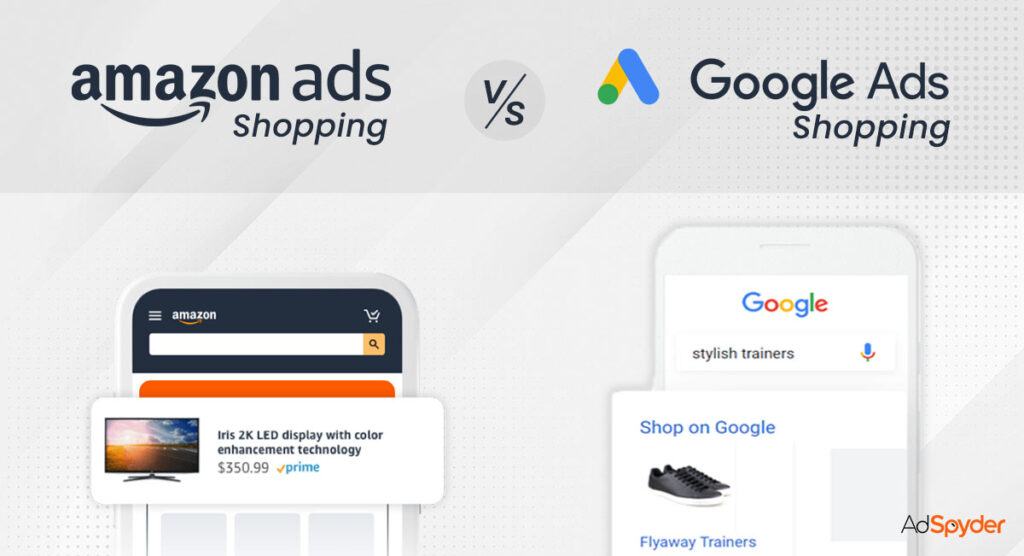
If you sell products online, you’ve probably asked a version of this question: Should I put budget into Google Shopping ads vs Amazon product ads? Both can drive sales, but they work in very different ways. Google Shopping helps you win demand across Google Search and the wider Google ecosystem, while Amazon Ads helps you win demand inside the marketplace where buyers already have high intent.
And buyer behavior makes the choice more nuanced. Multiple studies and reports have found that a large share of shoppers start their product search on Amazon (often cited around the mid-50% range in the U.S. At the same time, Google still captures meaningful “first-touch” discovery for comparison shopping and brand exploration (commonly cited around the mid-30% range). :contentReference[oaicite:1]{index=1}
In this guide, we’ll break down Google Shopping vs Amazon product ads with practical setups, costs, optimization tactics, and a simple decision framework—so you can build a plan that matches your customer journey.
Google Shopping vs Amazon Product Ads: The Quick Answer
Use Google Shopping ads when you want to generate demand on Google, send traffic to your store, and win customers who are still comparing options across brands and retailers. Use Amazon product ads when your goal is to win shoppers who are already in a “ready to buy” marketplace environment—especially if you have strong listings, reviews, and pricing.
- Discovery + comparison → Google Shopping campaign
- Marketplace conversion → Amazon Sponsored Products / Sponsored Brands
- Best for scale → Run both, with clear roles (top-funnel vs bottom-funnel)
How Google Shopping Ads vs Amazon Product Ads Work

Both platforms are “product-first” ad systems. That means your performance depends less on writing the perfect headline and more on having clean product data, competitive pricing, and trustworthy landing experiences. But the mechanics and intent signals are very different.
| Category | Google Shopping Ads | Amazon Product Ads |
|---|---|---|
| Where intent happens | Google Search + Shopping surfaces (discovery & comparison) | Amazon marketplace (high purchase intent) |
| What the click does | Sends to your website (you own the checkout + data) | Sends to an Amazon listing (Amazon owns checkout + shopper context) |
| Creative control | Moderate (feed-driven; you can influence via titles, images, promos) | Lower for Sponsored Products (listing-driven), higher for Brands/Video |
| Best-fit products | Visually clear, price-comparable products with strong site UX | Products with strong reviews, Prime shipping, and competitive pricing |
| Main KPI focus | ROAS + new customer acquisition + incremental traffic | ACoS / ROAS + rank defense + conversion volume |
Setup & Requirements: Product Listing Ads on Google vs Amazon
The biggest reason campaigns underperform isn’t bidding—it’s missing prerequisites. If you want consistent results, treat setup like infrastructure.
Google Shopping: add products to Google Shopping the right way
To run Google shopping ads, you need a product feed (typically via Merchant Center) plus a Shopping campaign in Google Ads. If you’re new, think of it as two layers: feed quality (titles, images, GTINs, pricing, availability) and campaign structure (bids, priorities, negatives, segmentation).
- Create/verify Merchant Center, upload a clean product feed (or connect via platform/app)
- Confirm policies + shipping/tax settings match what users see on-site
- Enable Google listings and ads surfaces (where applicable) for broader exposure
- Build a Google shopping campaign with clear segmentation (brand / margin tier / bestseller groups)
- Track conversions properly (purchase, add-to-cart, lead) so bidding has feedback loops
Amazon: what you need before Sponsored Products works
Amazon Ads performance is tightly tied to your listing quality and your ability to win the Buy Box. Before scaling spend, treat your listing as the “landing page experience.” That means: keyword relevance, image clarity, price competitiveness, review velocity, and fulfillment reliability.
- Strong product listing: title + bullets + images + A+ content (when available)
- Clear pricing strategy and shipping promise (Prime/FBA helps conversion)
- Define goals by format: Sponsored Products (direct sales), Sponsored Brands (brand lift), Sponsored Display (retargeting)
- Separate campaigns by match type + intent (defense vs conquest vs exploration)
Costs & Pricing: Instagram-style “rates” vs auction reality
People search for “Google Shopping ads cost” and “Amazon ads pricing” because they want predictable rates—but both are auction-based systems. Your actual cost is driven by competition, category margins, targeting, seasonality, and conversion rate.
Google Shopping: CPC is only half the story
With Google ads shopping, you typically pay per click. But your true cost is “CPC ÷ conversion rate,” which is why site UX, trust signals, and page speed matter. If your store is weak on mobile, even cheap clicks won’t produce profitable ROAS.
Amazon: ACoS helps you control profit
Amazon advertisers often use ACoS (Advertising Cost of Sale) as the central metric. ACoS keeps spend grounded: if a product has low margin, you can set stricter ACoS targets and avoid scaling into loss.
- Start with a 2–3 week test budget (enough volume to learn, not guess)
- Separate “learning” campaigns from “profit” campaigns
- Scale only after you fix feed/listing issues (not before)
Optimization Playbook: What to Fix First (So ROAS Improves Faster)
Whether you advertise on Google Shopping or run Amazon Sponsored Products, there are predictable levers that move performance. The key is fixing the levers in the right order—so you’re not “optimizing bids” while your product data is broken.
| Lever | Google Shopping | Amazon Product Ads | Why it works |
|---|---|---|---|
| Product data quality | Titles, GTINs, images, attributes, promos | Listing title, bullets, images, A+ content | Better relevance → higher CTR & conversion |
| Query control | Negatives + segmentation by intent | Search term mining + match type strategy | Cuts waste and protects profitability |
| Offer competitiveness | Price + shipping clarity on-site | Price + Prime/FBA + reviews | Increases CVR without extra spend |
| Creative support | Strong images + clean PDP UX | Sponsored Brands/Video assets | Improves engagement & trust |
| Retargeting | Use remarketing to recover abandoners | Sponsored Display retargeting + audiences | Turns “almost buyers” into buyers |
When to Choose Google Shopping vs Amazon Ads

Your best channel depends on where your product wins and where your business model benefits most—owned store data vs marketplace conversion.
- You want to grow Google shopping for business by driving users to your own site
- You can differentiate with brand story, bundles, or on-site experience
- Your margins allow you to invest in discovery + remarketing
- You can run experiments (landing pages, CRO, upsells) that marketplaces restrict
- Your listings already convert (reviews, Prime, competitive pricing)
- You need bottom-funnel volume fast (especially for established categories)
- You’re defending brand terms and category rank
- You can manage ACoS with a disciplined product-level approach
Also consider your broader business direction. If you’re choosing between operating models (like store-first vs marketplace-first), the trade-offs can look similar to e-commerce vs dropshipping: owning the experience gives you more control, but often requires more effort and infrastructure.
The Hybrid Strategy That Usually Wins (Google + Amazon Together)
The “either/or” debate is often a trap. Most brands do better when they assign each channel a role across the funnel: Google Shopping for discovery + comparison, Amazon Ads for marketplace conversion and rank defense.
- Google Shopping captures new interest → sends to your store for education, bundling, and email/SMS capture
- Amazon Sponsored Products converts high-intent buyers → protects category position
- Retargeting reconnects across channels (site visitors, product viewers, cart abandoners)
- Creative layer supports both (UGC, demos, comparison clips) using native styles—especially if you’re also designing native ads
If you’re building offers for a new store (especially with fast experimentation), this hybrid also pairs well with dropshipping on Shopify because you can validate demand on Google while using marketplaces for faster conversion signals.
Key Statistics: Shopping Discovery vs Marketplace Intent
How AdSpyder Helps You Compete on Shopping Ads (Without Guesswork)
Shopping ads are competitive because they’re measurable. The fastest way to improve is to stop relying on assumptions and start learning from what the market is already rewarding. That’s where AdSpyder becomes useful: you can study patterns in creatives, offers, and landing page angles—then build a plan that’s grounded in reality.
- Find offer patterns that repeatedly show up for winning products (pricing, bundles, warranties, shipping promises)
- Spot creative trends fast—especially across product categories and seasons
- Speed up iterations by borrowing proven hooks (and avoiding dead angles)
If you want a structured launch plan, start with Google shopping ad campaigns and then layer in insights from PPC strategies with AdSpyder.
FAQs: Google Shopping vs Amazon Product Ads
What are product listing ads (PLAs)?
How do I add products to Google Shopping?
Which is better for new brands: Google Shopping or Amazon Ads?
What’s the biggest mistake in Shopping campaigns?
How do I decide budgets across Google and Amazon?
Can I run Google Shopping ads without a website?
How can I improve results quickly in both channels?
Conclusion
Google Shopping and Amazon product ads aren’t “better vs worse”—they’re built for different moments of intent. If you want scalable discovery and store-owned growth, build a clean feed and run a structured Google Shopping campaign. If you want to convert marketplace-ready buyers, strengthen your listing and use Amazon Ads to win sales and defend rank. The safest path for most brands is a hybrid plan aligned to the customer journey—then optimize using real market patterns, not guesses.