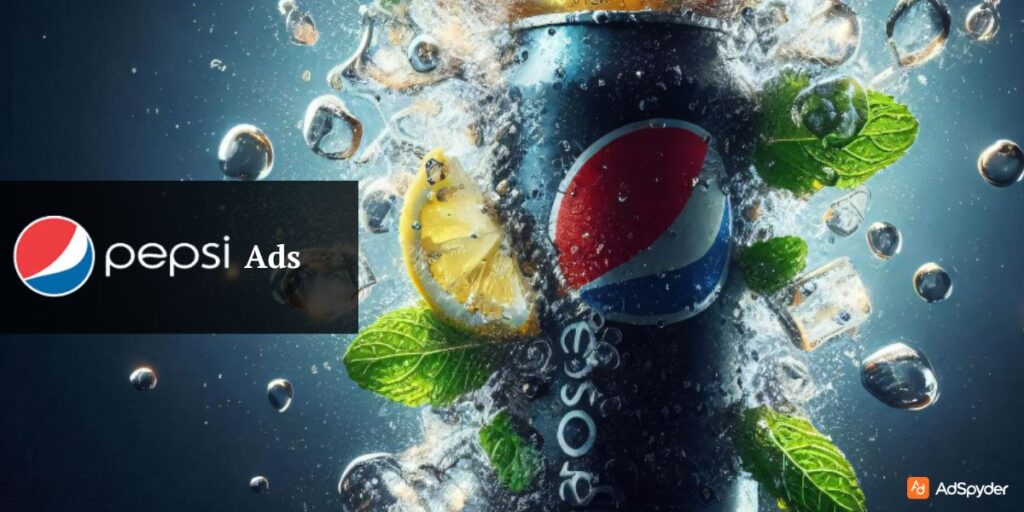
Pepsi doesn’t just sell a drink—it sells a moment. The most iconic Pepsi ads are built on energy, pop culture, and a simple promise: crack open a Pepsi and the vibe changes. That’s why Pepsi’s best work isn’t remembered as “a beverage commercial”—it’s remembered as music, sports, youth culture, and a statement about what’s cool right now.
In this updated guide, we’ll break down Pepsi advertising campaigns and the modern Pepsi marketing strategy—what Pepsi repeatedly gets right (and what it sometimes risks). You’ll also get a repeatable framework you can apply to your own brand: how to build best Pepsi commercials-style creative using hooks, celebrity/culture leverage, distribution-first thinking, and post-click experiences that protect conversion.
Why Pepsi Ads Work: Culture First, Product Second
The best advertisement for Pepsi rarely starts with ingredients. It starts with a scene that feels alive: music, sport, humor, friendship, a party, or a “main character” moment. Pepsi’s creative engine is built on one big advantage—Pepsi can borrow attention from the culture, then attach itself to that attention with strong branding and a simple sensory payoff (refreshment).
- Borrow attention: celebrities, music, sports, or a cultural moment.
- Create a hook: humor, surprise, or instant vibe.
- Deliver a sensory payoff: “ice-cold,” fizz, refreshment, energy.
- Stamp brand memory: color, logo, tagline, signature shot.
Pepsi also plays a different brand game than “premium” brands. It’s not trying to be exclusive—it’s trying to be universal and current. If you’re interested in how the rules change when brands chase exclusivity, compare this approach with luxury brand marketing strategies, where scarcity, heritage, and controlled distribution matter far more than virality.
Pepsi Ads Marketing Strategy: Brand Energy + Big Distribution

The modern Pepsi marketing strategy is a balancing act between brand building (top-of-funnel) and availability (being easy to buy everywhere). Pepsi is everywhere, so the job of marketing is not “explain the product.” It’s “make the brand feel like the right choice in the moment.”
| Strategy pillar | How Pepsi executes | Why it matters |
|---|---|---|
| Culture association | Music, sports, celebrity moments, internet-native humor | Fast attention + strong memory |
| Event marketing | Super Bowl scale moments and major sponsorships | Mass reach + repeated exposure |
| Brand consistency | Signature colors, logo placement, product hero shot | Better recall across formats |
| Always-on distribution | Retail + quick commerce + restaurants + stadiums | Turns attention into instant purchase |
Notice the pattern: Pepsi’s strategy is not only about “a great commercial.” It’s about repeated visibility, everywhere people already are. This is the same distribution-first thinking you see in other high-spend categories—travel platforms like MakeMyTrip ads
or hospitality brands like Hilton ads, where the winner is the brand that stays memorable and easy to choose.
Best Pepsi Commercials: The Campaign Types That Keep Repeating
Lists of the “best Pepsi commercials” often look different by era, but the building blocks don’t change much. Pepsi repeatedly wins with the same campaign types—because these types are easy to scale, easy to remix, and easy to distribute across TV + digital + social.
1) Celebrity-driven “moment” ads
Pepsi has historically leaned into star power to create instant attention. The creative trick is not just showing the celebrity—it’s creating a scene that feels like a cultural clip people want to talk about. A single iconic shot can become the entire campaign’s memory anchor.
2) Music + performance storytelling
Music is a shortcut to emotion. Pepsi ads often feel like mini music videos: rhythm, crowd, lights, a “drop,” and then the Pepsi moment. This is why brand partnerships and collaborations are powerful—similar to how pop-culture collabs generate attention loops, like a Coca-Cola x Oreo collab ad can spark conversation far beyond the product itself.
3) Sports-event scale campaigns
Pepsi’s play is “own the biggest screens.” When you associate the brand with the biggest events, you earn repeated exposure and cultural legitimacy. The Super Bowl era is a classic example: it isn’t only about the ad—it’s about the event, the conversation, the highlights, and the replays.
4) Humor-first and meme-friendly ads
Comedy spreads. A joke can outperform a “beautiful” ad because people share jokes without feeling like they’re sharing marketing. Pepsi uses humor to keep the brand light, youthful, and scrollable.
5) Product ritual ads (ice, fizz, first sip)
Even with culture-first storytelling, Pepsi still anchors the creative in a sensory ritual: the can opening, fizz, ice pour, and the first sip. This is the “product proof” moment. Without it, the ad becomes entertainment with weak brand recall.
A Creative Framework for Pepsi Ads-Style Campaigns
If you want to build modern Pepsi advertising campaigns (or learn from them), here’s a framework you can reuse for any mass brand:
Hook → Culture Signal → Product Ritual → Brand Stamp → Distribution Loop.
| Layer | What to build | Practical goal |
|---|---|---|
| Hook | 2-second pattern break (humor, surprise, star reveal) | Stop the scroll / keep attention |
| Culture signal | Music/sports/creator language + vibe cues | Make the ad feel “now” |
| Product ritual | Pour, ice, fizz, first sip, refresh reaction | Attach sensory memory to brand |
| Brand stamp | Logo, color, tagline, signature end card | Improve recall |
| Distribution loop | Short cutdowns + meme formats + retargeting | Turn one idea into many assets |
- Variant A (Celebrity reveal): hook = surprise cameo, ritual = first sip reaction.
- Variant B (Humor): hook = joke setup, ritual = “refresh reset” punchline.
- Variant C (Music): hook = beat drop, ritual = cold pour synced to sound.
- Variant D (Sports): hook = clutch moment, ritual = celebration sip.
This is why Pepsi can keep producing big work: the campaign is designed to create multiple assets, not just one “hero film.”
Key Pepsi Advertising Statistics (Quick Snapshot)
Brand Finance via Brandirectory (Pepsi brand value $22.6B, 2025), PepsiCo press release (Halftime Show 2021 viewership 104.8M).
Distribution & Channel Playbook: How Pepsi Turns One Idea into Millions of Impressions
Pepsi’s advantage isn’t only creative quality—it’s how the creative is distributed. The same campaign concept often shows up as: a hero film, multiple 6–15 second cutdowns, influencer remixes, meme edits, event tie-ins, and retail placements.
- Hero: 30–60s film for TV/YouTube and big screens.
- Shorts: 6s hook-only edits + 15s story edits for Reels/Shorts.
- Creator formats: “reaction,” “challenge,” “duet,” behind-the-scenes.
- Retail linkage: same creative cues on shelves and store displays.
- Event amplification: one big moment repeated across many placements.
If you’re building campaigns for a different category (like tech), the distribution principle still applies: create a concept that works as a hero story and a short-form snippet.
You can study how brand storytelling adapts across categories in Samsung Ads, where product proof and innovation cues replace beverage ritual, but the “repeatable structure” remains the same.
What Marketers Can Steal From Pepsi Ads (Even If You Don’t Sell Beverages)

Pepsi is a masterclass in building brand memory at scale. Here are the most useful, copyable lessons you can apply to almost any category.
1) Build your “brand stamp” and never skip it
Pepsi ends with strong cues: logo, colors, product shot, and a repeatable tone. This is what makes people remember the brand, not just the scene.
2) Use culture to earn attention, but anchor it to the product
Pop culture can make an ad travel—but you still need a product ritual or proof moment. Otherwise your campaign becomes “that funny clip” and your brand gets forgotten.
3) Design for remixability
The best Pepsi ads are easy to cut into 6–15 second “moments.” If you can’t cut your hero ad into Shorts, your concept is too complicated for modern distribution.
4) Create a campaign world, not a single ad
Pepsi campaigns often feel like a universe: the music, the vibe, the event, and the brand identity all reinforce each other. One ad becomes many touchpoints.
5) Make the choice easy at the moment of purchase
Brand building works best when product availability is frictionless. Pepsi’s distribution makes “I want that now” instantly actionable.
How AdSpyder Helps You Build Better Pepsi Ads-Style Campaigns
Pepsi wins by moving fast: fresh creative, fast distribution, and constant iteration. That’s exactly where most teams struggle—by the time they learn what’s working, the moment has passed. AdSpyder helps you shorten that cycle by turning competitor advertising into a repeatable workflow.
- Collect: pull competitor ads across Search + Social + video formats.
- Tag: label each creative by hook (humor, celebrity, sports, music), and by CTA type.
- Spot repeats: identify what patterns competitors keep reusing (that’s usually where ROI is).
- Generate variants: build 4 new versions per winner—same core idea, different hook/proof/ending.
- Optimize: compare performance weekly and keep a “winner library” to scale fast.
The goal isn’t to copy Pepsi (or any competitor). The goal is to understand the market’s creative language—then build your own version that’s clearer, faster, and more conversion-friendly.
FAQs: Pepsi Ads, Campaigns & Strategy
What makes Pepsi ads so memorable?
What is Pepsi’s marketing strategy in simple terms?
What are the best Pepsi commercials usually based on?
How does Pepsi compare to “premium” brand marketing?
How much does PepsiCo spend on advertising?
Why are big events important in Pepsi advertising campaigns?
How can AdSpyder help with my campaigns?
Conclusion
Pepsi’s biggest advantage is that it treats advertising as culture + distribution—not just “messaging.” The strongest Pepsi ads borrow attention from music, sports, and celebrity moments, then lock the memory with a consistent brand stamp and a sensory refresh ritual. If you want to build your own high-impact campaigns, focus on a repeatable creative system: hook fast, signal relevance, show the product payoff, and design assets for remixability across formats. Do that consistently, and your next advertisement for Pepsi-style campaign (even in a different category) becomes easier to scale—without losing originality.