Print advertising hasn’t disappeared just because digital dominates the spotlight. Posters, magazines, and newspapers still matter because they offer something physical, something people can actually hold or see in their environment. Unlike a digital ad that vanishes with a click, print tends to stick around—maybe it’s a magazine left on a coffee table, a poster on a busy street corner, or a newspaper folded on the train. That sense of presence is why many brands still put part of their budget into print. It creates a kind of credibility that digital alone sometimes struggles to achieve.
Each type of print medium has its own strength. Posters are often bold, visual, and tied to location, which makes them perfect for events or local promotions. Magazines let advertisers tap into niche audiences since readers are already engaged with specific topics—ads feel more relevant in that setting. Newspapers are different again; they combine wide reach with timeliness, making them great for offers that need to land right when people are actively looking for news or deals.
Posters: Design, Placement, and Effectiveness
Posters remain one of the most versatile and impactful forms of print advertising. Their large size and bold visuals are designed to grab attention instantly. This makes them ideal for high-traffic spaces such as retail stores, events, public areas, and transit locations. The main purpose of a poster is to spark immediate recognition and encourage action—whether that’s visiting a store, attending an event, or checking out a website.
Design Principles for Effective Posters
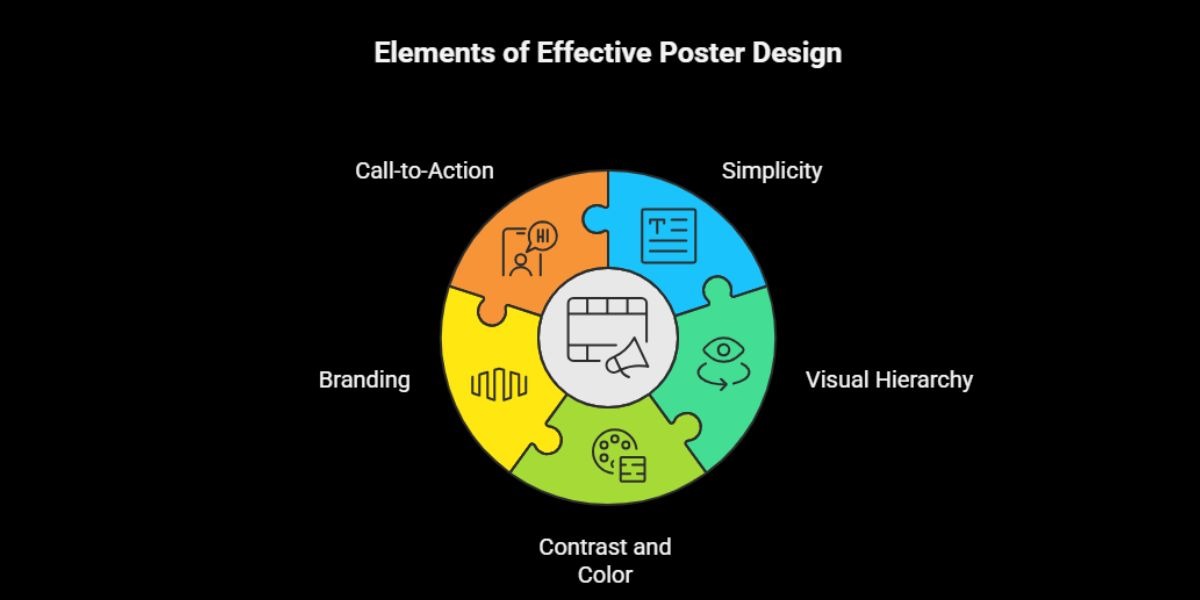
- Simplicity: Keep the text minimal so the core message is instantly clear. Too many words can overwhelm and lose viewers. Let the other content do the talking.
- Visual hierarchy: Arrange headlines, images, and calls-to-action in a way that guides the eye naturally from top to bottom. Flow should be as smooth as possible.
- Contrast and color: Bright colors and strong contrast help posters stand out, especially in busy or cluttered environments.
- Branding: Logos and brand colors should be clearly visible without dominating the entire design.
- Call-to-action (CTA): Always include a direct next step, such as “Visit our store” or “Register online,” to drive response.
Where a poster is placed often matters just as much as the design itself. The right location can turn a simple print into a high-impact campaign. Posters work especially well in places with heavy foot traffic, at events where audiences are already engaged, or inside retail spaces where purchase decisions are being made in the moment.
Also Read – Digital Advertising Formats
Placement and Reach
- Busy public areas: Transit stops, malls, and crowded streets are classic spots. The more people pass by, the higher the visibility.
- Event spaces: Posters at concerts, sports games, or conferences don’t just get seen—they reach audiences with a shared interest, which makes the message more relevant.
- In-store settings: Near the checkout or product displays, posters act as a nudge, often influencing last-minute decisions.
When done right, poster campaigns blend eye-catching visuals with smart placement, creating awareness and encouraging action almost instantly.
Examples of Poster Campaigns That Worked
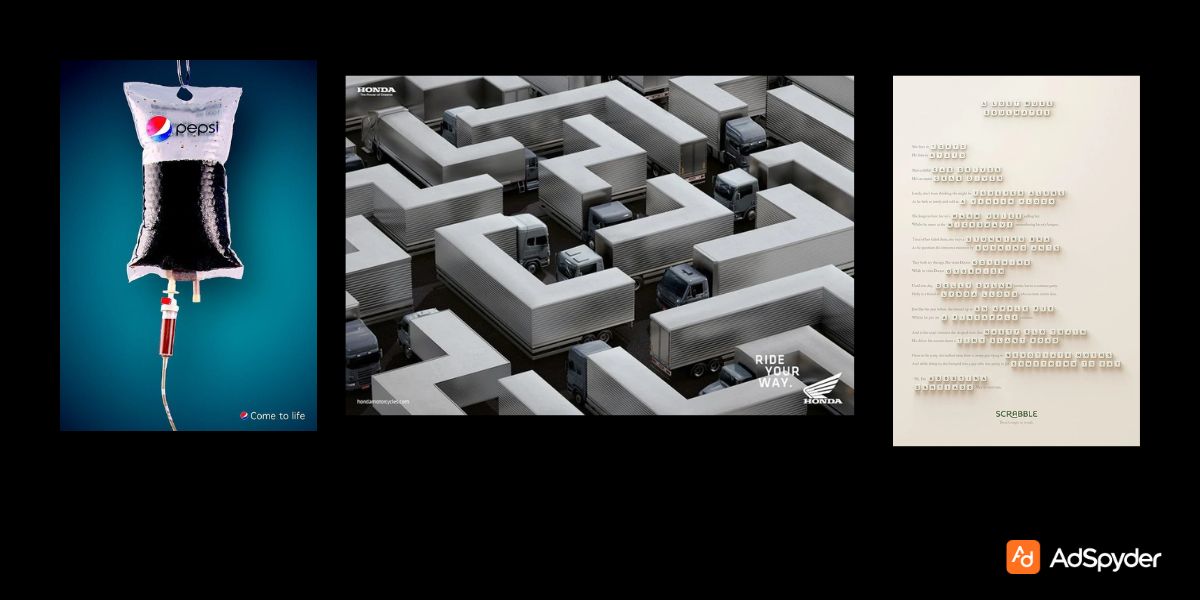
- Pepsi, a soft-drink brand reimagines its product as a life-support IV bag, filled with dark cola and hooked to a blood line. No copy except the logo and a tiny tagline in the corner—just a striking visual metaphor that says, “this drink is your lifeblood.” The image is so bold and unexpected that it stops people in their tracks.
- Honda, an automotive brand turns a crowded car park into a visual puzzle: long, L-shaped blocks form a maze while compact cars glide neatly between them. The poster instantly communicates “easy to maneuver, even in impossible spaces” without a single line of explanation—perfect for busy city drivers who only glance for a second.
- A Scrabble campaign uses a minimalist cream background and builds an entire love story out of Scrabble tiles embedded in the text. Each line hides a clever word twist—Tokyo / Kyoto, cab driver / crab diver, an apple pie / a pineapple—showing how a few letters can completely change meaning. It’s a poster people lean in to read, rewarding them for paying attention and perfectly reinforcing the brand’s promise: there’s magic in words.
Watch Out – Viral Ad Campaigns
Examples of Poster Campaigns
- Seasonal promotions: Retailers often roll out posters during holiday seasons to showcase discounts or limited-time offers. A clothing brand, for example, might use bold typography and product imagery on winter sale posters placed around busy shopping areas.
- Charity initiatives: Nonprofits lean on posters to raise awareness for causes, especially in community spaces. Simple, striking visuals paired with a direct call-to-action like “Donate Today” or “Join the Campaign” often work best.
- Transit advertising: Posters in buses, trains, and subway stations get repeated exposure from commuters. Movie studios use this channel frequently, combining eye-catching graphics with clear release dates to build anticipation.
- Event promotions: Concerts, exhibitions, and sports events benefit from posters placed near venues or within relevant neighborhoods. These usually emphasize the event name, date, location, and ticket details to make the information easy to act on.
Design Tip: Posters should be easy to read from a distance. Keeping the text short, using a clear hierarchy, and pairing it with high-contrast colors makes the message far more effective.
Must Watch – Native Advertising
Magazines: Niche Targeting and Creative Storytelling
Magazines provide marketers with the opportunity to reach specific, engaged audiences. Unlike posters, which are location-based, magazines allow for precise demographic or interest-based targeting. Advertisers choose publications that align with their audience’s lifestyle, profession, or hobbies.
Key Advantages of Magazine Advertising
- Targeted Audience: Specialized publications allow brands to reach readers with specific interests, such as technology, fashion, or finance. This niche targeting allows for brand awareness and special promotion offers, especially for buying.
- Longevity: Magazines often remain in homes and offices for weeks or months, increasing repeated exposure.
- High-Quality Visuals: Glossy pages and professional printing enhance visual appeal, allowing for premium branding.
- Credibility: Associating a brand with a respected publication can increase trust among readers.
Creative Approaches
- Full-page visuals highlighting products or services.
- Editorial-style advertisements that blend seamlessly with magazine content.
- Inserts, such as coupons or samples, that encourage immediate engagement.
Examples of Successful Magazine Campaigns
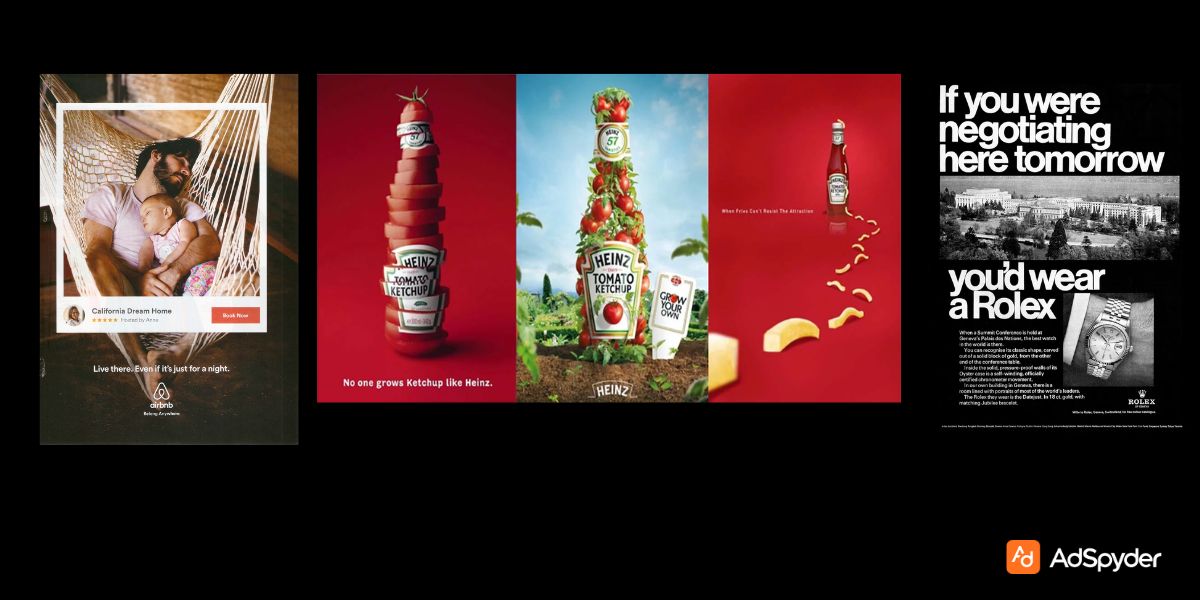
- AirBnN, a travel brand uses a warm, intimate photograph of a father and baby napping in a hammock—framed to look like an Airbnb listing. By blending app UI with a real-life moment, the ad communicates that staying in someone’s home creates genuine connection. The simple line “Live there. Even if it’s just for a night” turns a booking into an emotional experience.
- Heinz, a ketchup brand leans entirely on strong visual concepts to show authenticity. One ad reconstructs a Heinz bottle from stacked tomato slices; another shows a bottle growing from a tomato vine; a third depicts fries “drawn” toward a bottle on a bright red page. Each execution reinforces the same idea: real ingredients, irresistible taste, and a product people naturally gravitate toward.
- Rolex, a luxury watchmaker takes a more editorial approach. Large, assertive typography paired with a monochrome image of Geneva’s Palais des Nations instantly sets a tone of authority. The headline—“If you were negotiating here tomorrow, you’d wear a Rolex”—positions the brand as the watch of leaders and decision-makers, turning the product into a symbol of status and credibility.
Magazine Advertising Examples
Magazines allow for high-impact, creative campaigns tailored to specific audiences. Examples include:
- Multi-Page Spreads: A luxury watch brand may create a two- or three-page spread to tell a story about craftsmanship, appealing to affluent readers.
- Sponsored Content: Brands can create advertorials that match the magazine’s editorial tone, providing value while subtly promoting products. For instance, a travel company writing a “Top 10 Destinations” feature with integrated hotel promotions.
- Inserts: Promotional inserts, such as discount coupons, product samples, or event tickets, encourage immediate action and offer measurable results.
- Niche Publications: Targeted magazines allow brands to reach professionals or hobbyists with specific interests, increasing ad relevance and engagement. Examples include tech magazines, fitness publications, or culinary journals.
Creative Tip: High-resolution photography and professional layouts enhance perceived brand quality. Combining storytelling with product focus increases reader engagement.
Newspapers: Reach, Timeliness, and Local Impact
Newspapers have long been one of the most trusted advertising platforms. Even with the rise of digital media, they remain highly effective—especially for businesses or organizations looking to reach local or regional audiences. Because they’re published daily or weekly, newspapers are also perfect for time-sensitive promotions, where timing and urgency really matter.
Advantages of Newspaper Advertising
- Local targeting: Works well for businesses that serve a specific town, city, or region.
- Timeliness: Frequent publication schedules make it easy to promote current offers or events.
- Credibility and trust: Established newspapers carry a sense of authority, which advertisers can benefit from.
- Flexible formats: Options range from large display ads to classifieds, inserts, and even sponsored articles.
Creative Strategies for Newspaper Ads
- Use bold, eye-catching display ads to highlight major promotions or product launches.
- Place classifieds for things like job postings, real estate, or small local services.
- Add inserts with coupons or flyers to encourage immediate responses from readers.
- Make sure branding is consistent and to the point. This ensures a sense of continuity and brand recall.
Examples of Effective Newspaper Ads
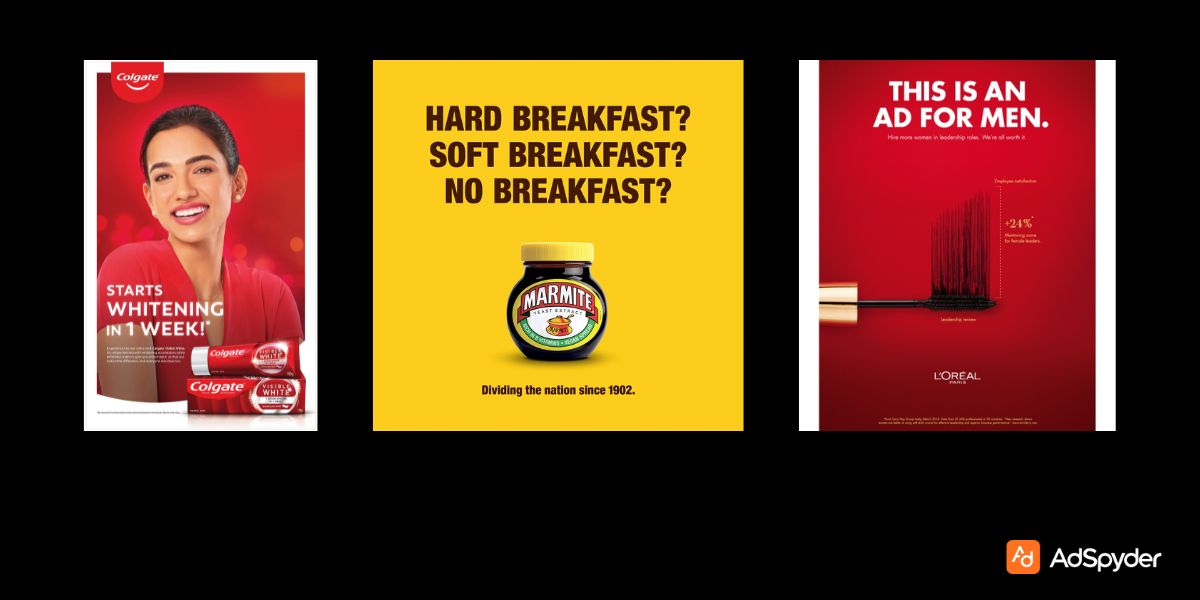
- Colgate, a toothpaste brand uses a clean, high-impact visual of a smiling model against Colgate’s signature red. The bold headline “Starts Whitening in 1 Week!” paired with a simple product shot makes the message unmistakable—even at a quick glance on a newspaper page.
- Marmite, a breakfast spread brand embraces humor and bold typography with a bright yellow background and the line: “Hard breakfast? Soft breakfast? No breakfast?” The familiar Marmite jar anchors the ad, reinforcing its long-standing polarizing identity with the punchline “Dividing the nation since 1902.”
- L’oreal, A beauty brand takes a surprising approach with the headline “This is an ad for men.” What looks like a mascara stroke cleverly doubles as a bar graph, highlighting the business benefits of hiring more female leaders. It’s a smart, attention-grabbing concept that turns a beauty product into a conversation about gender equality at work.
Related – Video Advertising
Best Practices for Print Advertising
To get the most out of posters, magazines, and newspapers, it’s important to go beyond simply placing an ad. The real impact comes from knowing the audience, crafting strong visuals, and making sure the message ties into broader marketing efforts. Below are some proven practices that help print ads deliver stronger results.
Best Practices for Print Advertising
- Know your audience: Pick the right medium and publication based on who you want to reach—whether that’s by age, interests, or location.
- Use strong visuals: Sharp images, bold colors, and clear typography grab attention faster than blocks of text.
- Keep the message clear: Focus on one main idea or offer, and say it in as few words as possible.
- Stay consistent with your brand: Use the same logos, color palette, and tone of voice so the ad feels connected to your overall identity.
- Add a call-to-action (CTA): Tell people exactly what to do next—visit a website, call a number, or show up at an event.
- Test variations: Try out different sizes, placements, or design styles to see what gets the best response.
- Blend with other channels: Print works best when it supports digital efforts—like pairing a poster campaign with matching social ads.
- Track and measure: Promo codes, QR codes, or custom landing pages make it easier to see how much impact the ad is having.
Creative Tips for Print Advertising
- Typography: Choose fonts that are legible at various distances. Headlines should be bold and body text concise. Do not go for over the top fonts that does not match with your brand ideals.
- Color Psychology: Use color strategically to evoke emotions. Red can create urgency, blue conveys trust, and green is associated with growth or eco-friendly messaging.
- Layout Balance: Ensure a visual hierarchy that leads the eye from headline to imagery to CTA. Avoid cluttered designs.
- Visual Storytelling: Use imagery to communicate your message quickly; visuals are often remembered more than text.
- CTA Emphasis: Include a clear, action-oriented CTA. Phrases like “Visit Today,” “Sign Up Now,” or “Learn More” improve response rates.
Integrating Print with Digital Marketing
Combining print with digital campaigns enhances reach and measurability:
- QR Codes: Posters, magazines, or newspaper ads can include QR codes that link to landing pages or promotional content.
- Dedicated URLs: Unique URLs in print ads help track engagement and conversion rates.
- Social Media Amplification: Print campaigns can be mirrored on social platforms to reinforce messaging and increase reach.
- Email Integration: Encourage readers to sign up for newsletters via print campaigns, blending offline and online channels.
Tip: Ensure consistent branding across all touchpoints to strengthen recognition and recall.
Print Media Comparison Table
| Format | Reach | Cost | Longevity | Best Use Case |
| Posters | High-foot-traffic areas | Low-Medium | Short-term | Event promotions, product launch |
| Magazines | Targeted niche readers | Medium-High | Medium-long-term | Luxury products, lifestyle branding |
| Newspapers | Local/regional audience | Low-Medium | Short-term | Sales, local events, classifieds |
Lessons Learned from Print Advertising
- Location and Placement Matter: A poster’s effectiveness is highly dependent on foot traffic and visibility.
- Content Must Be Relevant: Niche targeting in magazines ensures the audience is more receptive.
- Timing is Key: Newspaper ads need to align with events, holidays, or promotions for maximum impact.
- Integration with Digital Amplifies Results: Combining print campaigns with social media or email marketing increases overall reach and engagement.
- Tracking is Critical: Without measurement tools, it’s impossible to know the ROI of print campaigns. QR codes, dedicated URLs, and unique promo codes are essential.
FAQs About Print Advertising
Is print advertising still effective in the digital age?
Yes. Print still builds awareness, trust, and local reach—and works even better when it pushes people to digital touchpoints.
How do I measure the ROI of print ads?
Use trackable tools like unique promo codes, QR codes, custom URLs, plus surveys or sales/visit spikes during the campaign.
Which is better: posters, magazines, or newspapers?
It depends on your goal: posters for bold, location-based impact; magazines for niche/lifestyle audiences; newspapers for local, timely messages.
How often should print campaigns run?
Match the format and goal—posters weekly or monthly, magazines per issue, newspapers daily or weekly for time-sensitive offers.
Can small businesses benefit from print advertising?
Absolutely—local posters or community paper ads can be affordable ways to drive nearby foot traffic and brand awareness.
What design elements matter most in print ads?
Strong visuals, clear messaging, and a simple call-to-action; avoid clutter and keep branding consistent.
How can print advertising complement digital marketing?
Use print to drive online actions—QR codes, URLs, or social handles—so offline impressions feed your digital campaigns.
Conclusion for Print Advertising
Print advertising isn’t gone, and it’s not just a leftover from the pre-digital era. Posters, magazines, and newspapers still do something digital often can’t—they put a message in someone’s hands or in their everyday surroundings. That physical presence makes ads more memorable and, in many cases, more trusted.
The key is using print where it makes sense and not treating it as separate from everything else. A poster that connects to a website, a magazine ad that ties into a social campaign, or a newspaper insert that pushes a weekend sale—these are all ways print can work alongside digital. Instead of thinking “either/or,” smart marketers are finding success with “both.”