

Video has become one of the most effective formats in modern marketing. It builds trust faster than text, explains complex ideas more clearly, and tends to earn higher engagement across search engines and social platforms. But here’s the catch: publishing a great video doesn’t automatically mean it will be discovered. That’s where SEO comes in. This guide breaks down practical, proven SEO strategies for video marketing—covering keyword research, on-page optimization, technical setup, platform strategies (including YouTube), and performance tracking. You’ll also learn how to improve engagement signals that influence rankings and how to avoid common mistakes that hold video content back.
Why SEO Strategies for Video Marketing Matter in 2026 & Beyond
Video appears everywhere: on landing pages, in product pages, in SERP features, on YouTube, and across social feeds. Search engines are increasingly tuned to surface video results when they match user intent—especially for “how-to,” “review,” “demo,” and “best of” queries.
Beyond rankings, video also influences performance at multiple stages of the funnel:
- Awareness: stronger reach and brand recall
- Consideration: clearer education and trust-building
- Conversion: improved clarity, confidence, and reduced friction
Video also plays a growing role in brand positioning. For example, brands leaning into ESG messaging often use video in sustainability marketing to make impact stories more tangible, show behind-the-scenes initiatives, and communicate transparency in a way static content can’t.
How Video SEO Differs from Traditional SEO
Traditional SEO is mostly about optimizing a page for search engines: content quality, internal links, technical structure, and backlinks. Video SEO adds new layers because you’re optimizing both the page and the video asset—often across multiple platforms.
Here’s what makes video SEO different:
- Engagement matters more: watch time, retention, session duration, and interactions strongly influence rankings on video platforms.
- Metadata plays a bigger role: titles, descriptions, thumbnails, and transcripts help algorithms interpret what your video is about.
- Indexing depends on technical setup: the way you embed, host, and mark up video affects whether search engines can understand and surface it.
- Discovery happens in multiple places: Google results, YouTube search, suggested videos, and even social feeds.
The result? Video SEO requires both content strategy and technical execution.
Keyword Research: SEO Strategies for Video Marketing
Understanding Search Intent for Video Content
Video content is especially powerful when users want:
- step-by-step guidance
- quick comparisons
- demonstrations
- visual proof or examples
That’s why “how to,” “tutorial,” “review,” “explained,” and “examples” are common triggers for video results.
Before choosing keywords, decide what intent you’re targeting:
- Informational: “video SEO strategies,” “how to optimize video”
- Commercial: “best video SEO tools,” “video SEO checklist”
- Transactional: “video SEO agency,” “video marketing software”
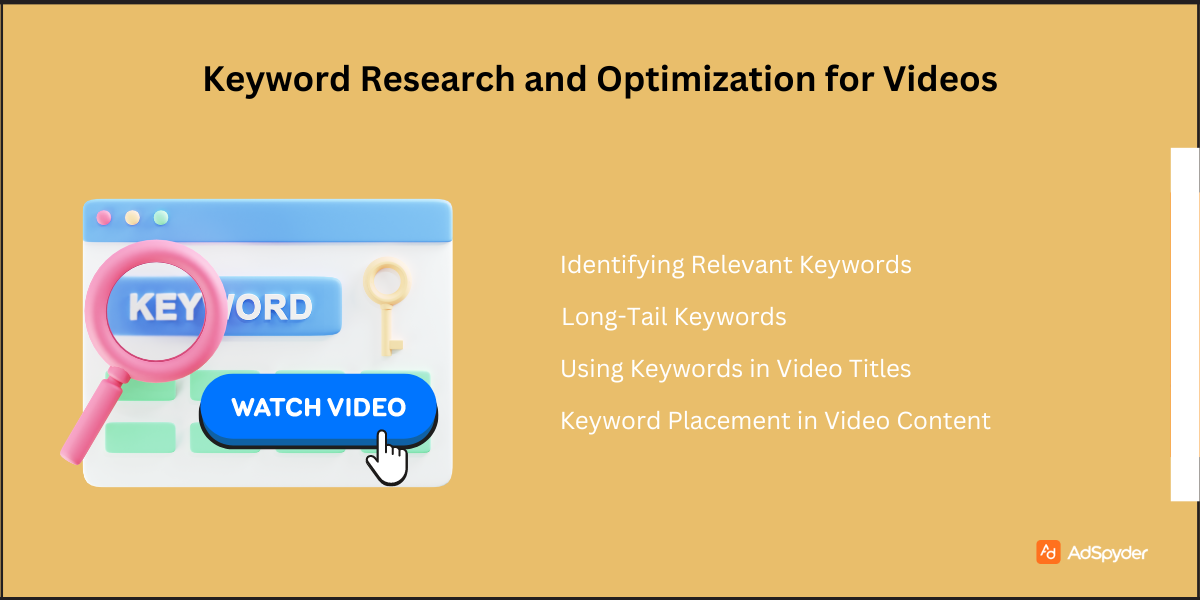
How to Find Video-Focused Keywords
Use a combination of these sources:
- YouTube autocomplete suggestions
- Google SERP video results and “People also ask”
- competitor videos ranking for your target term
- internal search behavior if you have a blog or knowledge base
You’ll often uncover long-tail phrases with clearer intent and lower competition—ideal for faster wins.
Best Tools for Video Keyword Research
- YouTube Studio and YouTube search suggestions
- Google Keyword Planner for broader search demand
- Keyword Research tools like AdSpyder
- SEO tools for competitive data (volume, difficulty, SERP features)
On-Page SEO Strategies for Video Marketing
Optimize Video Titles for Search and Clicks
Your title needs to do two jobs at once:
- tell algorithms what the video is about
- convince humans to click
Best practices:
- include the primary keyword early
- use clear, benefit-driven phrasing
- avoid vague titles that sound like generic content
- keep it readable (not stuffed with keywords)
Example formats that perform well:
- “Video SEO Strategies: How to Rank Your Videos Faster”
- “Video Marketing SEO Checklist (Step-by-Step Guide)”
Write Descriptions That Support Ranking and Conversions
Descriptions are the “context engine” for most platforms. A strong description:
- starts with a keyword-rich summary (first 1–2 lines matter most)
- expands on what the video covers in a scannable format
- includes supporting keywords naturally
- adds links, resources, and a clear CTA
To make descriptions more useful, include:
- timestamps (especially for long videos)
- quick bullet takeaways
- a “next step” CTA (subscribe, read related blog, download checklist)
Use Tags, Categories, and Hashtags Wisely
Tags and categories are not magic, but they still help with relevance and discovery—especially on YouTube. Keep them:
- accurate
- consistent across related videos
- aligned to your topic cluster (not random trending terms)
Technical SEO Strategies for Video Marketing
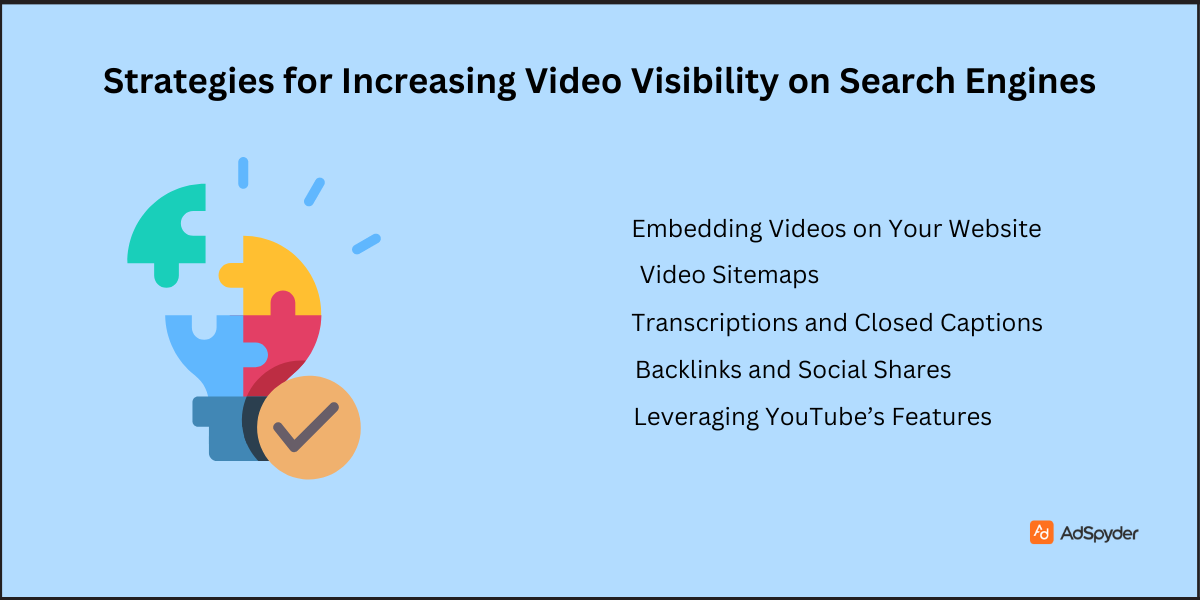
Video Sitemaps: Make Your Videos Easier to Index
If videos are hosted on your website, a video sitemap helps search engines discover and index them properly. This is especially helpful for large sites or content libraries where search engines might not find every video page quickly. To make sure your optimized videos are actually discoverable in search results, it’s important to monitor indexing status using a Bulk Google Index Checker, especially after publishing or updating video-focused pages.
A well-structured video sitemap helps communicate:
- video title and description
- thumbnail URL
- landing page URL
- duration and publication date
Use Video Schema Markup (VideoObject)
Schema gives search engines structured information about your video. When implemented correctly, it can improve the chances of enhanced search results and better understanding of your content.
Make sure your schema matches what users actually see on the page:
- correct video URL
- accurate thumbnail
- matching title/description
- visible video player and content context
Hosting Choices and Page Performance
Where you host a video changes your SEO outcomes:
- YouTube hosting: boosts reach and platform discovery
- self-hosting: better control over branding, conversions, and user journey
- third-party hosting: often improves speed and stability
No matter the hosting method, page performance matters. Slow pages hurt rankings and retention.
This is where UX design for video content becomes a competitive advantage. If your video loads quickly, is placed logically, and is supported by helpful page structure (headings, summaries, CTAs), users stay longer—which supports both SEO and conversion.
YouTube SEO Strategies for Video Marketing: Rank Higher
Know What YouTube Rewards
YouTube promotes videos that satisfy viewers. Strong ranking signals include:
- click-through rate (thumbnail + title)
- watch time
- audience retention
- engagement (comments, likes, shares)
- session growth (what viewers watch next)
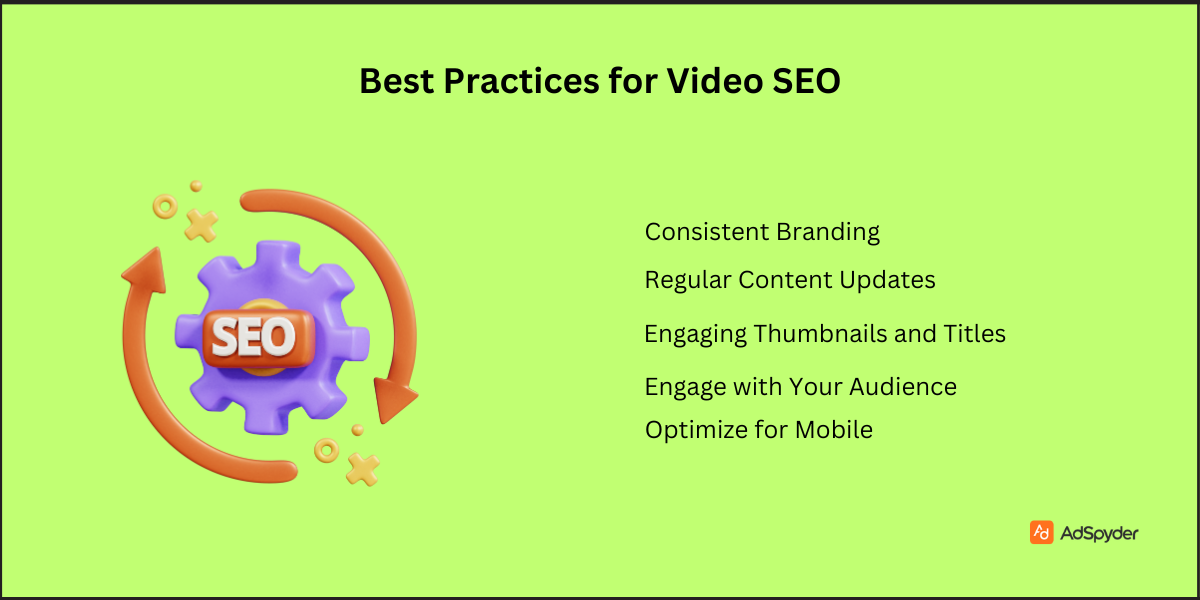
Improve Thumbnails to Increase CTR
Effective thumbnails are:
- visually simple and instantly readable
- high-contrast with a clear subject
- consistent in branding style
- aligned to the promise of the title
CTR is not just a marketing metric—it’s a ranking lever.
Add Captions and Transcripts
Captions improve accessibility and support understanding in silent-play environments. Transcripts also add searchable context for algorithms.
If possible, publish the transcript on the page too—especially if you’re targeting Google search.
Use Playlists, End Screens, and Cards
These features help increase total session duration:
- playlists group content and drive multi-video viewing
- end screens push the next logical video
- cards keep viewers inside your content ecosystem
Increase Engagement Signals for Better Rankings
Even perfect metadata won’t help if viewers leave early. Engagement signals are the “proof” that your content deserves distribution.
Improve engagement by:
- using a strong hook in the first 5–10 seconds
- previewing the outcome (“By the end, you’ll know…”)
- cutting filler and improving pacing
- using chapters/timestamps and clear structure
- asking for a specific CTA (comment, like, subscribe, click a link)
Also optimize distribution based on platform mechanics. A YouTube strategy won’t always translate to LinkedIn. If LinkedIn is part of your growth channel, add LinkedIn insider strategies to your workflow—so you tailor captions, posting formats, and repurposed clips to what performs best in professional feeds.
Measure Performance of SEO Strategies for Video Marketing
Track the Metrics That Actually Improve Rankings
If you want to rank better, you need to track what influences visibility and distribution.
Key performance indicators include:
- impressions and CTR (packaging quality)
- watch time and retention (content quality)
- engagement rate (relevance and response)
- traffic sources (search, suggested, external, browse)
- conversions (leads, signups, purchases)
To go deeper, build consistent reporting around video marketing metrics that connect video performance to business goals—not just views.
Tools for Tracking and Iteration
- YouTube Analytics for performance signals and traffic sources
- Google Search Console for video pages on your site
- keyword tracking tools to monitor rankings
- session recordings/heatmaps to understand on-page behavior
SEO Stragies for Video Marketing Checklist (Quick Reference)
Use this checklist before publishing:
- keyword research aligned to video intent
- SEO-friendly title with primary keyword early
- compelling thumbnail optimized for CTR
- description with summary + keywords + CTA
- captions/transcript added
- schema + sitemap implemented (for site-hosted video)
- supporting page content (headings, summary, takeaways)
- internal links + distribution plan
- performance review and refresh process
Common Mistakes to Avoid: SEO Strategies for Video Marketing
- vague titles that don’t match intent
- weak thumbnails that fail to earn clicks
- slow intros that lose viewers
- no transcript/captions
- embedding video on thin pages with little context
- focusing on views but ignoring retention and conversions
- publishing without a distribution strategy
Conclusion: Key Takeaways & Next Steps
SEO strategies for video marketing succeed when three things work together:
- discoverability (keywords + metadata + technical setup)
- engagement (watch time, retention, interactions)
- experience (fast pages, clear structure, easy viewing)
Start with your highest-priority videos or pages, optimize the fundamentals, and then improve what the analytics reveal. Small improvements to titles, thumbnails, captions, and structure can compound into significant organic growth over time.
FAQs
What are SEO strategies for video marketing?
Tactics that improve video visibility in search engines and video platforms.
Is video SEO only for YouTube?
No—video SEO also applies to website pages and Google search.
Do transcripts help video SEO?
Yes, they add searchable context and improve accessibility.
What matters most for YouTube rankings?
CTR, watch time, and retention are major drivers.
Should I host videos on my website or YouTube?
Use YouTube for reach; use your site when conversions and control are the priority.
How quickly can video SEO improve results?
Often within weeks to a few months, depending on competition and quality.