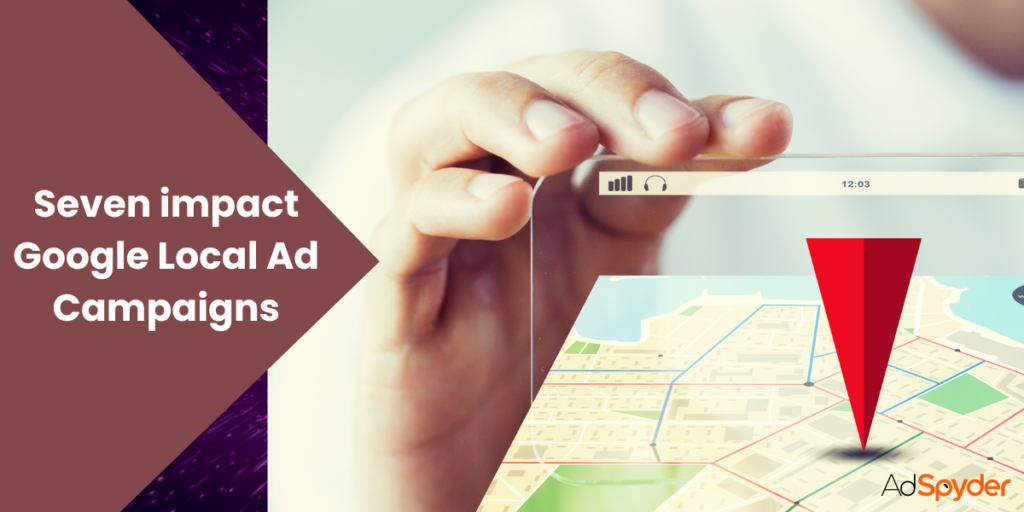
Local customers don’t browse casually—they search with intent. When someone types “near me,” checks a map listing, or taps “call,” they’re already halfway to a decision. That’s why google local ad campaigns are one of the fastest ways to drive real-world outcomes like calls, direction requests, booked appointments, and walk-ins.
This guide breaks down seven high-impact google local business ads you can run in 2026—from local service ads by Google to google local search ads and local search ads on Google Maps. You’ll also learn how to use your Google Business Profile (often called google my business ads by marketers) to strengthen performance, and how to measure what’s actually driving local revenue—not just clicks.
What Are Google Local Ad Campaigns?
Google local advertising is any Google ad format designed to help nearby customers discover, contact, or visit a local business. “Local” can mean a storefront (restaurant, clinic, retail shop) or a service-area business (plumber, electrician, home cleaning) that travels to the customer.
In practical terms, local ads show up where local intent happens: Google Search (“best dentist near me”), Google Maps (“directions”), and local-first placements that prioritize calls and leads. This is why google local search ads and local search ads on Google Maps often outperform generic campaigns—they align with “ready to act” behavior.
Bottom line: local ads work best when they connect high-intent searches to low-friction actions (call, directions, booking, lead form). Your job is to engineer that path.
Google Local Ad Campaigns Types (Search, Maps, Local Services Ads, and More)
You’ll hear “local ads” used loosely, so here’s a clean breakdown of the most common options local businesses use in 2026:
- Search ads with location intent: standard Google Search campaigns using “near me,” city/area keywords, and location assets to drive calls, visits, and leads.
- Maps visibility (local search ads on Google Maps): showing up where users are navigating and comparing nearby options—often driven by location assets and store goals setups.
- Local Services Ads by Google (LSAs): top-of-search placements for service businesses, typically pay-per-lead (calls/messages), built around trust (reviews, business verification).
- Performance Max for store goals: Google’s goal-based campaign type designed to maximize in-store value and local actions like calls and direction clicks across Google surfaces.
You don’t need every campaign type at once. You need the right mix based on your business model: storefront vs service-area, your average order value, and how quickly customers decide.
Key Google Local Ad Campaigns Statistics (Quick Snapshot)
The Local Growth Framework (Presence → Relevance → Proof → Action)
Local ads don’t fail because “Google doesn’t work.” They fail because one layer of the local conversion stack is weak. Use this framework to troubleshoot fast:
| Layer | What customers need | What you build |
|---|---|---|
| Presence | “Are you nearby and open?” | Accurate Business Profile, hours, service areas, location assets |
| Relevance | “Do you solve my problem?” | Intent keywords, tight radius, correct categories, service pages |
| Proof | “Can I trust you?” | Reviews, photos, guarantees, credentials, before/after, FAQs |
| Action | “Make it easy right now.” | Call button, booking, directions, lead form, fast landing pages |
When you optimize these layers in order, Google local business ads become consistent. When you skip them, you’ll see the common local problem: “Lots of clicks, no calls.”
7 High-Impact Google Local Ad Campaigns (Playbooks You Can Run)

These seven campaigns cover the most common local growth goals: more calls, more bookings, more store visits, and more qualified leads. You can run one or stack several—just keep each campaign’s purpose clear.
1) “Near Me” Search Campaign (Google Local Search Ads)
This is the core of Google local search ads: capture high intent queries (near me, open now, emergency, same-day, best, pricing) and drive them to the fastest action—call, booking, or directions.
- Keywords: include “near me,” city names, neighborhoods, and service + urgency terms.
- Location targeting: target by radius + exclude irrelevant areas (don’t “go wide” by default).
- Ad copy: include location/service area, hours, and a clear CTA (“Call now,” “Book today”).
- Assets: add location assets, call assets, and structured snippets for services.
2) Maps-First Visibility (Local Search Ads on Google Maps)
When users open Maps, they’re typically comparing nearby options and deciding quickly. Your goal is to show up with strong proof (reviews, photos) and a simple action (directions, call). This is where your Business Profile quality can make or break results.
Optimize your Maps presence like a landing page: categories aligned to services, fresh photos, up-to-date hours, and review momentum. Then pair it with local-focused Search or store-goal campaigns that prioritize local actions.
3) Local Services Ads by Google (Pay-Per-Lead for Service Businesses)
Local service ads by Google are built for service-area businesses (home services, legal, etc.) that want calls and messages from high-intent customers. Instead of paying per click, you typically pay per lead—making LSAs a strong fit when you can handle inbound volume quickly.
- Answer speed: respond fast—LSA leads reward speed.
- Reviews: build consistent review volume and quality (it affects trust and choice).
- Service coverage: be specific about services and areas; avoid “everything for everyone.”
- Lead quality: track which jobs are profitable, then tighten categories and scheduling.
4) Store Goals / Local Actions Campaign (Modern “Local Campaigns” via Performance Max)
Many advertisers still ask for “Google Ads local campaigns,” but today the modern path is typically Performance Max for store goals—built to drive offline actions like store visits and local actions (call clicks, direction clicks) using your store locations, budget, and creative assets.
This is ideal when you want broad local reach without managing many placements manually. The key is to keep your assets local: location-specific messaging, photos that match the storefront, and offers that make sense for your area.
5) Call-Driven Emergency Campaign (High-Intent, High-Speed)
Some local businesses win by speed: locksmiths, plumbers, roadside assistance, urgent care, appliance repair. For these, “call now” is the conversion. Build a dedicated campaign for urgent queries and optimize for calls during business hours.
- Schedule: run call-first ads only when you can answer.
- Copy: “On the way in 30–60 minutes” beats generic “quality service.”
- Landing path: if you use a page, keep it minimal—call CTA + trust + service area.
6) Local Retargeting Loop (Visitors → Bookings)
Most local buyers don’t convert on the first click—especially for higher-ticket services (dentistry, fitness, education, home remodeling). Retargeting turns “consideration” into bookings by showing proof, FAQs, and reminders to people who already showed local intent.
Retarget different behaviors with different messages: pricing visitors get financing/offer clarity; service-page visitors get before/after + guarantees; map/directions visitors get “open now” + fast booking. When you need to troubleshoot why a campaign isn’t serving or converting, use ad diagnostics to identify issues like low ad rank, policy disapprovals, or weak post-click relevance.
7) Video + Proof Campaigns (Local Trust at Scale)
Local customers choose brands they trust. Video is one of the fastest ways to build that trust—especially when it shows the experience clearly: the storefront, the team, the process, real results, and real people.
- “What to expect” walkthrough: reduce uncertainty (clinic tour, appointment steps, service timeline).
- Before/after + proof clips: outcomes + reviews + credentials.
- Local offer + urgency: seasonal, limited slots, or event-based promotions.
If your local business is ecommerce-led, use video marketing for e-commerce to turn nearby intent into purchases. If creators influence your market, leverage video marketing for influencer collaborations as proof-based ads. And if you’re in experiences/hospitality, ideas from video marketing for travel can help you sell “the feeling” and drive bookings.
Setup Checklist for Google Local Ad Campaigns (Before You Spend Serious Budget)

Local ads are sensitive to “trust signals.” Before scaling, make sure these foundations are solid:
- Google Business Profile: accurate hours, categories, service areas, photos, and consistent contact info.
- Reviews plan: a repeatable system for collecting reviews (and responding).
- Location assets: connect Business Profile to Google Ads so ads can show location details and actions.
- Call tracking: measure calls as conversions (duration thresholds help filter noise).
- Booking clarity: frictionless scheduling (or fast lead capture) on mobile.
- Service page match: one page per core service + local proof + clear CTA.
Optimization & Reporting in Google Local Ad Campaigns (What to Watch Weekly)
Local campaigns are easier to optimize when you separate visibility from actions. A healthy local account tracks both:
- Visibility metrics: impressions, CTR, search terms, map interactions.
- Action metrics: calls, booking starts, lead forms, direction requests, store visits (where available).
- Quality metrics: conversion rate by device, call duration quality, lead-to-sale rate.
Most local optimizations are not “bid tweaks.” They’re relevance upgrades: cleaner service categories, stronger review velocity, clearer offer ladders, and pages that answer the top 5 buyer questions before the user has to ask.
FAQs: Google Local Ad Campaigns
What are Google local business ads?
What are Local Services Ads by Google?
How do local search ads on Google Maps work?
Are “Google My Business ads” still a thing?
What’s the fastest way to improve local ad ROI?
What conversions should local businesses track?
Why do local ads get clicks but no calls?
Conclusion
The most successful local advertisers treat Google like a local intent engine: show up where decisions happen (Search + Maps), build trust fast (reviews, proof, clear service coverage), and make action effortless (call, booking, directions). Start with one clear campaign goal, apply the Presence → Relevance → Proof → Action framework, and scale only what produces qualified leads. Done right, Google local ad campaigns becomes one of the most predictable ways to grow real-world revenue.