Telehealth has transformed how patients access care—but it has also intensified competition for attention. As more platforms, providers, and subscription-based services enter the market, telehealth marketing ads are experiencing faster creative fatigue than ever before. What worked six months ago may now be driving higher CPA and declining engagement.
In 2026, telehealth growth depends on smarter creative refresh strategies, deeper competitor insights, and data-backed experimentation that keeps subscriber acquisition scalable and compliant.
Why Creative Fatigue Hits Telehealth Faster Than Other Healthcare Services
Telehealth relies heavily on digital-first channels such as Meta, YouTube, and Google Display. These platforms reward novelty—and penalize repetition. They are differenr from local ads for clinics, because of wide reach and ease of accessibility.
Industry benchmarks show that ad engagement can drop by 50% within 4–6 weeks if telehealth creatives aren’t refreshed. This makes creative fatigue one of the biggest threats to sustained patient acquisition strategies in subscription-based healthcare models.
Unlike clinics, telehealth brands must continuously persuade patients without in-person trust signals—placing even greater pressure on ad creatives.
Understanding Creative Fatigue in Telehealth Marketing Ads
Creative fatigue occurs when audiences repeatedly see the same messaging, visuals, or formats. Over time, this leads to:
- Lower click-through rates
- Rising cost-per-acquisition
- Reduced algorithmic delivery
For telehealth brands, fatigue often stems from:
- Overused convenience messaging
- Generic “see a doctor online” claims
- Repetitive stock imagery
- Static pricing or offer framing
Without structured refresh cycles, even compliant healthcare ads lose effectiveness.
Learning from Competitor Creative Lifecycles: Telehealth Marketing Ads
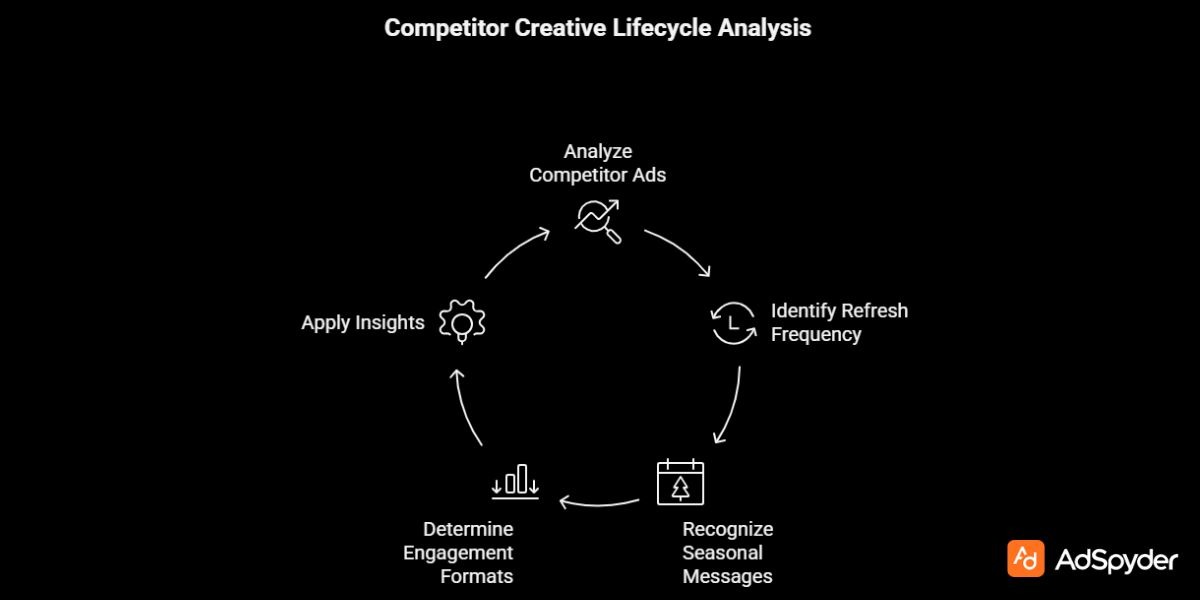
One of the most effective ways to combat fatigue is to study how competitors evolve their ads over time.
By analyzing historical healthcare PPC campaigns, telehealth marketers can uncover:
- How often top brands refresh creatives
- Which messages are rotated seasonally
- What formats sustain engagement longest
Using AdSpyder for Smarter Healthcare Services Advertising, teams can access historical ad libraries and track creative changes—revealing real-world patterns behind sustained subscriber growth.
This insight replaces guesswork with proven creative intelligence.
Using AI to Generate Fresh, Compliant Creatives for Telehealth Marketing Ads
Refreshing ads doesn’t mean starting from scratch.
AI-powered ad generation allows marketers to adapt winning concepts into new variations—while maintaining compliance and brand voice.
Effective AI-driven workflows include:
- Generating new headlines from high-performing competitor ads
- Testing alternative value propositions (access, cost, expertise)
- Adapting visuals to platform-specific formats
- Creating multiple variants for rapid A/B testing
Because telehealth is highly regulated, grounding AI output in approved competitor data is essential for compliance and speed.
Aligning Creative Refresh with Funnel Stages
Not all telehealth creatives serve the same purpose.
Before listing strategies, it’s important to understand where ads fit in the funnel. High-performing telehealth funnels use different creatives for:
- Awareness (education and trust-building)
- Consideration (benefits and differentiation)
- Conversion (offers, access, pricing clarity)
Aligning creative refresh with patient acquisition funnel optimization ensures that new ads don’t just look different—they convert better.
Visualizing competitor ad-to-landing-page journeys helps maintain consistency across the funnel.
Platform-Specific Creative Strategies for Telehealth Marketing Ads
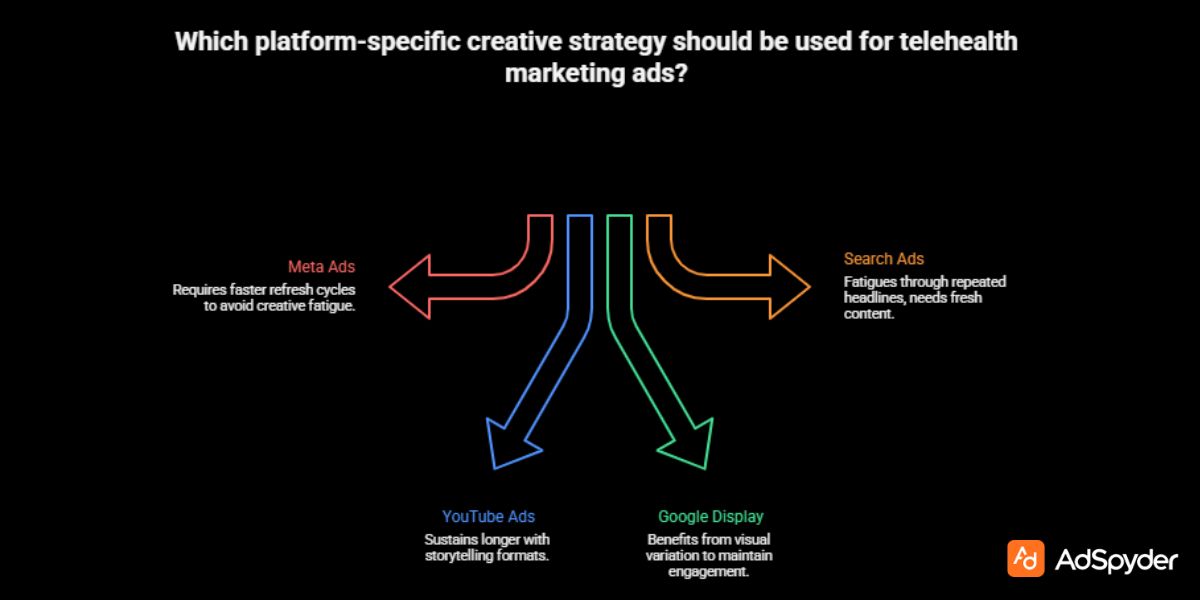
Creative fatigue doesn’t occur uniformly across platforms.
Competitive analysis often reveals:
- Meta Ads require faster refresh cycles
- YouTube Ads sustain longer with storytelling
- Google Display benefits from visual variation
- Search ads fatigue through repeated headlines
Understanding these differences allows telehealth brands to tailor refresh timing and formats—protecting ROI across channels.
This multi-platform intelligence is critical for scalable healthcare digital advertising.
Reducing CPA While Scaling Telehealth Marketing Ads
Creative fatigue directly impacts cost efficiency.
Telehealth brands that systematically refresh creatives report:
- 50% lower ad fatigue
- Higher trial-to-paid conversion rates
- Improved audience quality
By eliminating underperforming ads quickly and replacing them with data-backed variations, teams keep acquisition costs predictable—even at scale.
This approach is especially important in competitive subscription markets.
Staying Compliant While Refreshing Telehealth Marketing Ads
Creative refresh must never compromise on healthcare advertising compliance.
Successful telehealth marketers ensure:
- Messaging avoids exaggerated claims
- Visuals don’t imply guaranteed outcomes
- Privacy and data handling are clearly communicated
Analyzing approved competitor ads provides a safe framework for experimentation—supporting both creativity and healthcare advertising compliance.
Conclusion
Creative fatigue is inevitable—but performance decline is not. Telehealth brands that proactively analyze competitor strategies, rotate messaging intelligently, and leverage AI-powered generation stay ahead of audience saturation. By grounding creative refresh in real data, telehealth marketing ads remain compliant, relevant, and effective.
As competition intensifies, sustainable growth will belong to brands that treat creative optimization as an ongoing system—not a one-time task. With the right insights and tools, telehealth providers can consistently boost subscribers while controlling CPA and protecting trust.
FAQs
What causes creative fatigue in telehealth ads?
Repeated messaging, visuals, and formats shown to the same audience.
How often should telehealth ads be refreshed?
Typically every 4–6 weeks, depending on platform performance.
Can AI help reduce creative fatigue?
Yes, when AI is guided by real, approved competitor data.
Are telehealth ads more regulated than clinic ads?
Often yes, especially around claims, privacy, and outcomes.
Which platforms fatigue fastest for telehealth ads?
Meta platforms typically experience faster fatigue cycles.
How does creative fatigue affect CPA?
Fatigued ads drive lower engagement and higher acquisition costs.
Can creative refresh improve subscriber quality?
Yes. Better messaging attracts more qualified, long-term users.