
Few advertising campaigns have achieved what coca cola christmas ads have: becoming an inseparable part of the season itself. For over nine decades, the christmas coca cola commercial tradition has shaped how the world pictures Santa Claus, defined the emotional tone of holiday advertising, and proven that consistency beats novelty when building cultural ownership. From Haddon Sundblom’s 1931 coca cola santa commercial paintings to the illuminated coca cola christmas truck commercial convoys and the 2024–2025 AI-generated films, every coca cola christmas commercial follows the same formula: warmth, togetherness, and a bottle of Coke as a quiet companion to human joy—the same kind of recurring seasonal asset you can study across brands using AdSpyder’s YouTube Ads Spy.
In this guide, we break down the complete history of christmas adverts coca cola has produced—from the first coca cola christmas commercial with Santa to today—analyze why they work so effectively, explore the lessons marketers can learn, and examine how the brand actually performed through two consecutive years of AI backlash. Whether you’re studying the coke christmas ad legacy for competitive intelligence or planning your own seasonal strategy, this is the definitive breakdown.
- Origin: Coca-Cola used Santa in Christmas ads as early as the 1920s; Haddon Sundblom’s iconic paintings began in 1931.
- Polar bears: introduced in 1993’s “Northern Lights.”
- The trucks: “Holidays Are Coming” first aired in 1995.
- The AI era: Coca-Cola used generative AI for the truck ad in both 2024 and 2025—both years drew public backlash, and both years scored the maximum possible 5.9-star rating in System1 consumer testing.
- The core formula: meaning + consistent visual assets + emotion over product features + real-world extension (truck tours).
The History of Coca-Cola Christmas Advertising
Coca-Cola’s association with Christmas actually predates its most famous imagery: the brand used Santa Claus in print advertising as early as the 1920s, including a 1930 painting by artist Fred Mizen. The story most people mean when they ask about the first coca cola christmas advert, though, begins in 1931, when the company commissioned illustrator Haddon Sundblom to create a series of paintings featuring Santa Claus enjoying Coca-Cola. While Coca-Cola did not invent the red-suited Santa—that image existed in earlier illustrations—Sundblom’s warm, grandfatherly depiction standardized and popularized the jolly figure the world recognizes today. Through decades of global distribution across magazines, billboards, and store displays, Coca-Cola’s Santa became the definitive visual reference.
The Sundblom era (1931–1964): the first coca cola ad with Santa that stuck
Sundblom painted holiday advertisements for Coca-Cola for 33 consecutive years. His Santa was based on a real person—his friend Lou Prentiss, and later Sundblom used his own face as reference. The paintings depicted Santa in relatable domestic settings: reading letters, raiding refrigerators, playing with toys, and always enjoying a Coca-Cola. This humanized, approachable Santa replaced the often stern or otherworldly depictions that preceded it.
Polar bears and the television era (1993–present)
In 1993, Coca-Cola introduced the polar bear characters in the “Northern Lights” commercial—a family of animated bears watching the aurora borealis while sharing bottles of Coke. The polar bears became permanent fixtures in the brand’s advertising universe, transcending language barriers with their universal appeal. Their success demonstrated that coca cola christmas commercials could create beloved characters without a single spoken word.
“Holidays Are Coming” (1995–present)
The “Holidays Are Coming” truck commercial first aired in 1995, featuring a convoy of illuminated Coca-Cola trucks driving through a snowy town. Its jingle became synonymous with the start of Christmas in many countries—though we won’t reproduce the lyrics here, you can find the coca cola christmas song original version on Coca-Cola’s official YouTube channel. The ad has been refreshed and re-aired every holiday season for nearly three decades, and in the UK, its annual premiere is considered the unofficial start of the Christmas season.
The real-world truck tours that followed converted the TV ad into tangible brand experiences—though it’s worth noting these rolled out at different times by market rather than on one global date: the U.S. Holiday Caravan marked its 25th anniversary in 2022, while the UK Truck Tour began in 2010.
Coca-Cola Christmas Ads: Key Numbers
The Most Iconic Coca-Cola Christmas Ads
Each era of coca cola christmas advertisement has contributed lasting creative elements to the brand’s holiday identity. Here are the campaigns that defined the tradition—separate, worth noting, from Coca-Cola’s other famous non-Christmas work like the 1971 “Hilltop” commercial (“I’d Like to Buy the World a Coke”), which built the brand’s broader reputation for emotional advertising but wasn’t a holiday spot.
1. Sundblom’s Santa paintings (1931–1964)
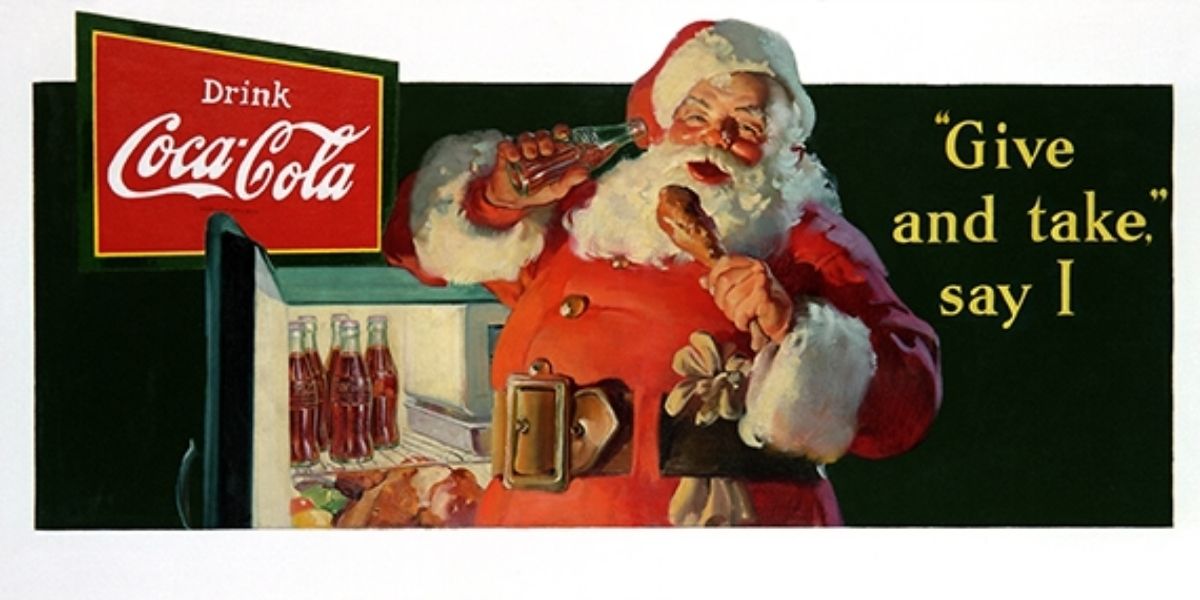
These oil paintings ran as print ads for 33 years and established the visual language of modern Santa Claus. The genius was domesticity—Santa wasn’t shown in a magical workshop but in living rooms, kitchens, and by firesides, making him feel real and relatable. This approach to the coca cola advertisement santa claus pioneered set the template for every holiday brand campaign that followed.
2. “Northern Lights” polar bears (1993)
The first polar bear commercial used groundbreaking CGI animation to create characters that communicated purely through gesture and expression. The bears watching the northern lights while sharing Coca-Cola became one of advertising’s most enduring mascot creations—appearing in subsequent campaigns, Super Bowl ads, and merchandise for over three decades.
3. “Holidays Are Coming” truck convoy (1995)
The truck commercial achieved something remarkable: it made a fleet of delivery vehicles into a symbol of Christmas anticipation. The combination of twinkling lights, the building orchestral jingle, and the small-town setting created a Pavlovian response in viewers—when the ad airs, Christmas has officially begun. Few brands have achieved this level of temporal ownership with a single commercial.
4. Real-world truck tours
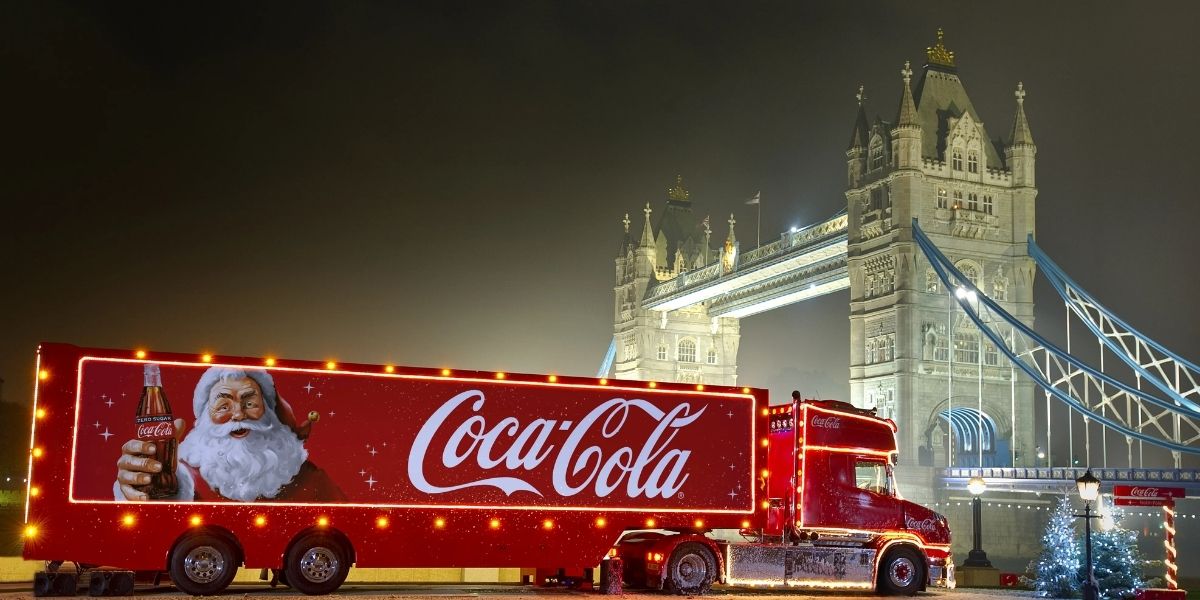
Converting a TV advertisement into a physical brand experience was a strategic masterstroke. The illuminated trucks visit cities across multiple countries each December—rollout dates differ by market rather than following one single timeline—generating local news coverage, social media content, and personal memories that deepen emotional connection far beyond what any screen advertisement can achieve alone.
5. “Open Happiness” holiday editions (2009–2015)
These campaigns expanded the holiday messaging from Christmas-specific to a broader “happiness” platform while maintaining the seasonal warmth. The approach showed how a brand can evolve its holiday messaging without abandoning its core emotional territory. Similar evolution is visible in how other brands handle seasonal advertising—from Halloween ads to Diwali ads—each balancing tradition with freshness.
The 2024–2025 AI-Generated Coca-Cola Christmas Ads: Backlash and Results
2025 wasn’t Coca-Cola’s first brush with AI backlash—it was the second consecutive year. In 2024, Coca-Cola released its first AI-driven reimagining of “Holidays Are Coming,” produced with three AI studios. It drew immediate criticism for uncanny visuals. Rather than stepping back, Coca-Cola doubled down in 2025, releasing a new version—this time swapping human figures for animated animals (polar bears, hedgehogs, seals, pandas)—built from over 70,000 AI-generated clips refined by roughly five specialists and a team of about 100 people over roughly 30 days. The result again sparked immediate and intense debate across the advertising industry and public, with critics calling it “soulless” and pointing to an uncanny-valley effect in the animal animation.
- Uncanny valley effect: viewers noted the AI-generated imagery shifted inconsistently between cartoonish and unsettlingly realistic.
- Brand trust paradox: a campaign built on emotional authenticity felt hollow when produced by algorithms—the medium contradicted the message.
- Industry anxiety: creative professionals saw it as a signal that AI would replace human craftsmanship, amplifying the negative response.
- Repeat offense: because 2025 followed 2024’s backlash almost exactly, critics read it as Coca-Cola ignoring the feedback rather than a one-off experiment.
The lesson is nuanced: AI tools can accelerate production, but deploying them on heritage campaigns where emotional continuity is the primary asset carries real reputational risk—even when the underlying ad tests well. The same principle applies across seasonal advertising—from the Aldi Christmas advert tradition with Kevin the Carrot to any brand with established holiday equity.
Compare this to how Pepsi ads have navigated controversial moments—the Kendall Jenner incident showed that misjudging audience expectations carries real brand consequences regardless of whether the issue is AI or cultural sensitivity.
Why Coca-Cola Christmas Ads Work: The Psychology
The enduring power of coca cola christmas ads is built on psychological principles that any marketer can study—though few have the discipline to execute them over decades.
Nostalgia as a brand asset
Research shows nostalgia increases willingness to spend, reduces loneliness, and creates positive associations with the triggering stimulus. By running variations of the same campaigns for decades, Coca-Cola creates a self-reinforcing cycle: adults remember seeing the ads as children, triggering warm nostalgia they associate with the brand. Each generation’s memories become the next generation’s cultural inheritance.
Consistency builds trust
In a world of constant reinvention, the coke christmas ad identity has remained remarkably stable: red and white palette, warmth and togetherness, simple shared joys. This predictability is comforting during a season associated with tradition and ritual. The brand becomes a reliable part of Christmas itself.
Emotional storytelling over product features
Notice that christmas adverts coca cola never discuss taste, ingredients, or price. The product appears as a prop within human stories—a bottle shared between family members, a can left for Santa. This builds brand affinity rather than brand knowledge, which research shows is more effective for low-involvement purchase decisions.
Temporal ownership
Coca-Cola does not simply advertise during Christmas—it signals Christmas. When the truck ad airs, people declare the season has begun. This temporal ownership is one of advertising’s rarest achievements: the brand becomes tied to a cultural moment. Few brands achieve this level of seasonal association, though the aspiration drives Diwali ads by brands seeking similar festive ownership in Indian markets.
What Marketers Can Learn from Coca-Cola’s Holiday Playbook
You do not need a $47 billion revenue base to apply the principles behind the coca cola christmas ad success. Here are actionable strategies that scale to any budget.
- Start your seasonal identity early and maintain it: Coca-Cola invested consistently for 90+ years. Even starting now with a consistent seasonal approach builds compound returns.
- Lead with emotion, not features: During holidays, consumers buy based on feeling. Let the product benefit be implied through human stories.
- Create rituals, not just campaigns: Think about how your brand can become part of your audience’s seasonal routine rather than interrupting it.
- Respect audience ownership: the AI backlash showed audiences feel ownership of beloved ads, even when the ad tests well with real consumers. Evolve gradually rather than reinventing radically.
- Extend from screen to experience: the truck tours converted a TV ad into real-world brand moments. Consider how digital campaigns can create tangible experiences.
- Use universal themes: family, warmth, generosity resonate globally. The polar bears work worldwide because they avoid culturally specific narratives.
- Separate criticism from performance: social-media backlash and controlled consumer testing measure different things—track both before declaring a campaign a failure or a success.
The overarching lesson is commitment. The most powerful christmas coke commercial ever made was not a single spot—it was the decision to keep telling the same story, beautifully, for nearly a century. That patience builds brands that outlast trends and become part of the culture they serve.
How to Research Coca-Cola and Competitor Christmas Ads
If you want to see new coca cola christmas ads as they roll out, or track how a coca cola christmas commercial ai backlash story develops in real time, don’t rely on memory of what aired last year—track it directly:
- Search the advertiser and campaign phrases in the AdSpyder Ad Library.
- Compare hero films, cutdowns, and lengths using YouTube Ads Spy.
- Review social adaptations and paid distribution via Facebook Ads Spy.
- Inspect promoted domains and destination pages through Domain Analysis.
Record advertiser, market, platform, first-seen and last-seen dates, format, opening hook, distinctive assets, and destination page—then compare against a small, relevant set of competitors rather than the entire holiday-advertising category.
FAQs on Coca-Cola Christmas Ads
Did Coca-Cola invent the modern image of Santa Claus?
What was the first Coca-Cola Christmas commercial with Santa?
When did the “Holidays Are Coming” truck ad first air?
What happened with the AI-generated Christmas ads?
Why are Coca-Cola Christmas ads so emotionally effective?
When were the Coca-Cola polar bears introduced?
How can smaller brands apply Coca-Cola’s holiday strategy?
What makes the truck tours effective as marketing?
What does Coca-Cola have to do with Christmas?
Is the 1971 “Hilltop” ad a Christmas commercial?
Where can I watch Coca-Cola Christmas ads?
Conclusion
The Coca-Cola Christmas ads represent one of advertising’s greatest long-term brand investments. From Sundblom’s 1931 Santa paintings to two consecutive years of AI-generated films, every coca-cola christmas commercial has served the same purpose: positioning Coca-Cola as inseparable from the holiday season. The genius is in discipline—ninety-plus years of consistent emotional territory, universal themes that cross cultural boundaries, and a product that appears as a companion to joy rather than the centre of attention. For marketers building their own holiday strategies, the christmas coke commercial playbook offers a proven alternative to novelty-chasing, and its recent AI chapter offers a sharper one: measure criticism and consumer response separately before calling anything a failure.