
Walmart’s Cyber Monday Ads presence has evolved far beyond simple promotions. Today, it’s a sophisticated, multi-channel advertising ecosystem designed to dominate the retail conversation during one of the year’s busiest shopping periods. Walmart blends retail media, social advertising, in-app notifications, search placements, and data-driven creative to build a Cyber Monday campaign that consistently outperforms competitors.
In this guide, we break down how Walmart structures its Cyber Monday ad campaigns, what makes their approach effective, how competitors like Target, Best Buy, and Kohl’s execute their own Cyber Monday strategies, and the best practices for cyber monday ad campaigns that brands should follow.
From Deals to Ads — Why Cyber Monday Is Now an Advertising Play
Cyber Monday used to be a race to list as many discounts as possible. But for major retailers like Walmart, the strategy has shifted toward ad-first marketing:
-
More channels = more touchpoints: social, search, video, display, email, app, and Walmart Connect retail media.
-
Documented customer behavior shifts: shoppers start browsing days earlier, requiring earlier ad waves.
-
Data-rich targeting: Walmart leverages its massive first-party shopper data to deliver smarter, personalized ads.
-
Competition is fierce: Cyber Monday ad noise from Amazon, Target, Best Buy, and others forces brands to differentiate through creative and placement strategy.
This shift has made Cyber Monday one of the most important testbeds for advertising innovation across all retail categories.
Walmart’s Cyber Monday Ads That Made Waves — What Made Them Successful
Over the past few holiday seasons, Walmart has produced several Cyber Monday and seasonal ad campaigns that stood out for their creativity, emotional impact, and strong performance across digital channels. Below are examples of the types of Walmart ads that gained traction — and the strategic insights marketers can learn from them.
1. Deals of Desire Mini-Series Holiday Videos
Walmart’s Deals of Desire series, are an episodic, story-driven holiday videos created buzz by blending entertainment with advertising. These short clips followed recurring characters through holiday moments, subtly featuring Walmart products.
Why it worked:
-
Emotional storytelling boosted engagement and shareability
-
Episodic structure created anticipation and repeat viewing
-
Soft selling made the brand feel human, not promotional
-
Performed exceptionally well on YouTube and Connected TV
Marketing takeaway:
Use story arcs and characters to make Cyber Monday ads feel like content—not just promotions.
2. Reels-First Creator Collabs
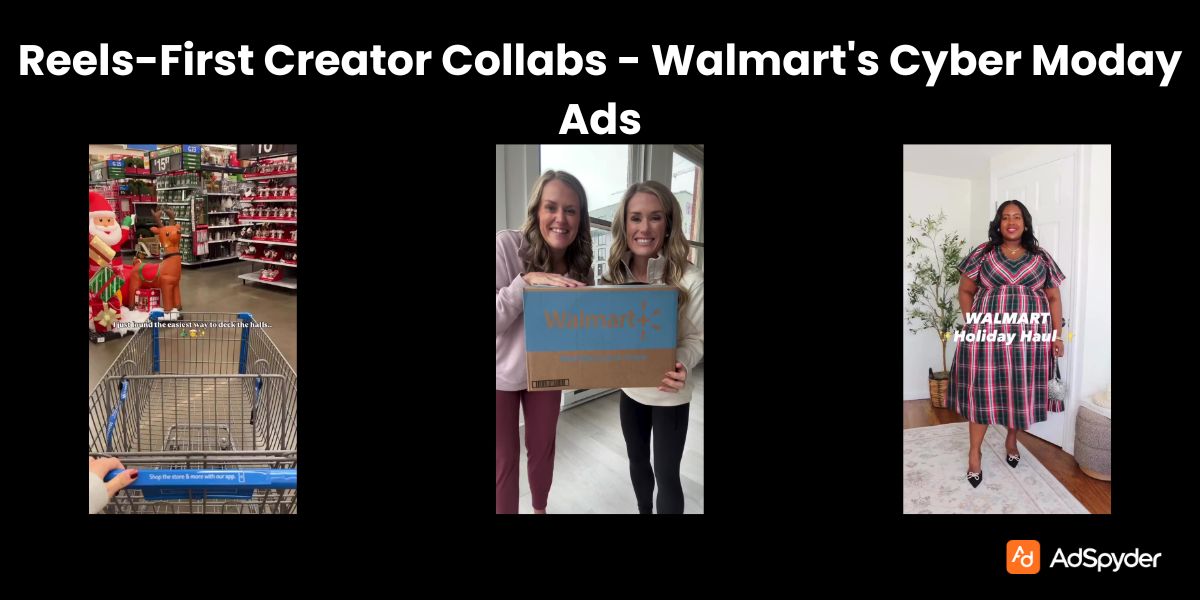
Walmart’s partnerships with creators produced some of its most viral Cyber Week ads. These ads mirrored native reel trends, making them feel authentic rather than corporate.
Why it worked:
-
Creator-native editing style increased watch time
-
Leveraged reel trends and holiday shopping challenges
-
Younger shoppers respond strongly to influencer-led discovery
-
High potential for organic amplification
Marketing takeaway:
Fit the tone and language of the platform—Cyber Monday ads don’t need to be overly polished to perform.
3. Dynamic Product Carousel Ads

Across social platforms and Walmart Connect, dynamic ads showed shoppers personalized carousels based on browsing behavior, trending products, and real-time pricing shifts.
Why it worked:
-
Personalized content dramatically increased CTR
-
Multiple items per impression maximized product exposure
-
Hyper-relevant ads reduce wasted impressions
-
Perfect fit for Cyber Monday’s rapid-changing availability
Marketing takeaway:
Dynamic product recommendations should be a core layer of any retail Cyber Monday ad strategy.
4. Flash Deal Countdown Ads
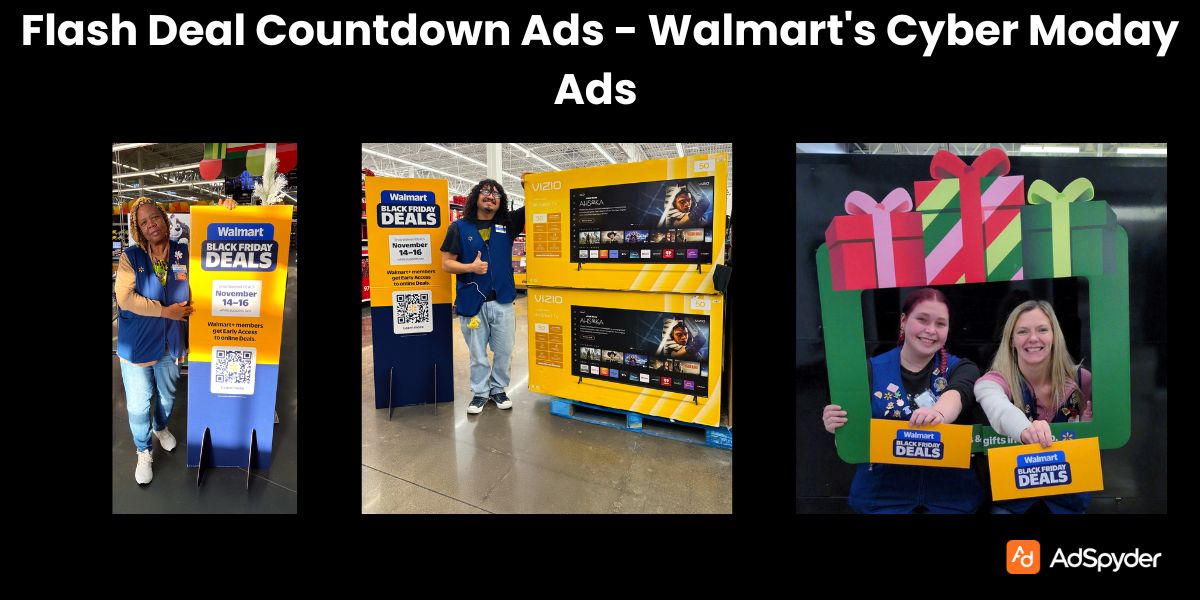
Walmart ran a series of ads featuring countdown timers, “deal dropping soon” tags, and hourly limited-time offers—especially on mobile and app placements.
Why it worked:
-
Urgency drives immediate action, especially during Cyber Week
-
Appeals to deal-hunters who respond to scarcity
-
Perfect for retargeting audiences on the verge of conversion
-
Timer-led designs boost click-through and tap-through rates
Marketing takeaway:
Urgency isn’t a gimmick—it’s one of the most effective conversion boosters for holiday advertising.
5. App-Exclusive Push Notification Ads
Cyber Monday push notifications from the Walmart app acted as “micro-ads” reaching high-intent shoppers. Notifications promoted early access deals, flash drops, and category-specific promotions.
Why it worked:
-
90%+ open rates during peak shopping hours
-
Creates a direct, high-priority communication channel
-
Helps Walmart own the shopper journey outside traditional ad platforms
-
Drives repeat visits and app usage
Marketing takeaway:
Treat your app as a core channel—push notifications are among the highest-return placements during Cyber Week.
6. Influencer-Integrated “Shop With Me” Videos
Walmart collaborated with creators to film haul videos, store walks, and Cyber Week product highlights across YouTube, Instagram Reels, and TikTok.
Why it worked:
-
Adds an authentic, user-driven lens to holiday shopping
-
Influencers bridge the gap between browsing and buying
-
Walmart can repurpose content across ads and owned channels
-
Social proof improves trust—critical for high-traffic events
Marketing takeaway:
Integrate influencer content directly into your Cyber Monday ad mix for credibility and reach.
Core Components of Walmart’s Cyber Monday Ad Campaigns
Walmart’s approach is structured, data-backed, and intentionally multi-layered. Marketers can extract a lot of insight from how these campaigns unfold.
1. Multi-Wave Campaign Structure
Walmart never waits for Cyber Monday day to begin promotions. Their advertising strategy typically includes:
1: Teaser Ads (Early November)
-
Awareness-focused social media ads
-
Video teasers and countdown graphics
-
Soft messaging emphasizing “early access” and “members-only perks”
2: Black Friday Ads (Mid–Late November)
-
More aggressive messaging
-
Heavy use of search and on-site sponsored placements
-
Targeted display ads reminding shoppers to plan early
3: Cyber Monday-specific Ads (Late November / 48 hours prior)
-
High-frequency retargeting
-
Push notifications via the Walmart app
-
Dynamic creatives tied to categories that historically convert strongly
4: Post-Cyber Monday (Retention ads)
-
FOMO messaging: “Last chance to save”
-
Re-engagement ads
-
Inventory-led dynamic ads for remaining stock
This multi-wave structure ensures Walmart stays top of mind throughout the entire holiday shopping period.
2. Cross-Channel Media Mix
Walmart uses an incredibly diverse set of channels, creating a surround-sound effect for the consumer.
Retail Media (Walmart Connect)
-
Sponsored product ads
-
Sponsored brand placements
-
On-site display inventory
-
Personalized recommendations
This is one of Walmart’s greatest competitive advantages — few retailers have first-party data on such a massive scale.
Social Media Advertising
Walmart deploys:
-
High-reach Instagram & Facebook campaigns
-
TikTok ad creatives geared toward younger audiences
-
Pinterest ads targeting shoppers with holiday intent
Search Advertising
Search ads increase during Cyber Week, especially for:
-
Branded queries (“Walmart Cyber Monday”)
-
High-intent categories (TVs, appliances, etc.)
-
Competitor search terms
Video & Streaming Ads
Walmart invests heavily in:
-
YouTube pre-roll
-
Connected TV (CTV) ads
-
Short-form vertical videos
This mirrors strategies seen in Target’s Cyber Monday Ad Campaigns, which also rely heavily on YouTube and TikTok for awareness.
App-Based Ads & Push Notifications
Walmart’s mobile app is a huge conversion channel.
Expect:
-
Exclusive “app-only” creative
-
Flash alerts
-
Notification-driven urgency messaging
In-Store Digital Screens
Even though Cyber Monday is mostly online, Walmart leverages stores to cross-promote online sales.
3. Creative Format Innovations
Walmart does not rely solely on standard ad formats — they experiment aggressively with creative types.
Episodic Video Ads / Advertainment
Short ads that tell a story across multiple placements, designed to entertain while promoting offers.
Dynamic Carousels
Used on social platforms and within Walmart Connect to push category-specific ads.
Countdown Timers & Urgency Cues
These increase click-through rates by creating real-time pressure.
Ad Personalization
Walmart’s access to purchase behavior and browsing data enables:
-
Category personalization
-
“Products you might like” creatives
-
Ads dynamically tied to trending categories
This level of personalization is a key differentiator compared with competitors like Kohl’s Cyber Monday Ad Campaigns.
4. Data-Driven Pricing & Targeting
Walmart uses real-time:
-
Inventory data
-
Price adjustments
-
Competitive benchmarking
-
Customer segmentation
-
Multi-touch attribution
This enables smarter bidding, targeted audiences, and dynamic ad creatives.
Machine-led optimization ensures ads shift budget toward the most responsive categories — something we also see in Best Buy’s Cyber Monday Ad Campaigns, especially for tech-heavy segments.
Competitive Landscape — How Other Retailers Advertise Cyber Monday
Walmart does not operate in a vacuum. Understanding how competitors structure their campaigns strengthens your analysis.
Target’s Cyber Monday Ad Campaigns
Target invests heavily in:
-
Family-friendly creative
-
Community and value-driven messaging
-
Bright holiday-themed video ads
-
Social-first branding, especially on TikTok and Instagram Stories
Their tone is more lifestyle-driven compared to Walmart’s value-driven positioning.
Kohl’s Cyber Monday Ad Campaigns
Kohl’s leverages:
-
Kohl’s Cash rewards heavily
-
Loyalty ads and personalized coupon placements
-
Retail media integrations and circular-style digital flyers
Their ads push stackable savings, unlike Walmart’s streamlined pricing.
Best Buy’s Cyber Monday Ad Campaigns
Best Buy’s ads focus on:
-
High-tech visuals
-
Gigantic category takeovers
-
Manufacturer-supported co-branded ads
-
Expert positioning within the electronics segment
They use aggressive retargeting and precise category-based ad sequencing.
What Brands Can Learn — Best Practices for Cyber Monday Ad Campaigns
These lessons apply whether you’re a massive retailer or a smaller e-commerce brand.
1. Start Campaigns Early & Use a Multi-Wave Rollout
Teasers → Early Access → Black Friday → Cyber Monday → Post-holiday.
2. Use a Full-Funnel Media Mix
Awareness (video, social) → Consideration (display, search) → Conversion (retargeting, sponsored placements).
3. Optimize for Mobile-first Consumers
Vertical video, responsive landing pages, faster load speeds.
4. Leverage First-Party Data
Retailer CRMs, loyalty programs, and on-site behavior data improve targeting dramatically.
5. Sync Ads With Inventory & Pricing Systems
Avoid promoting out-of-stock items or expired offers.
6. Use Strong Creative Hooks
Urgency cues, storytelling, holiday thematic branding.
7. Monitor Real-Time Performance
Adjust bids and budgets continuously during high-volume traffic hours.
These are truly the best practices for cyber monday ad campaigns — proven across retail giants.
Pitfalls & Challenges for Cyber Monday Advertising
Even top retailers face challenges during Cyber Week.
-
Ad fatigue due to overexposure
-
Inventory mismatches causing poor CX
-
Attribution noise from multi-channel consumer journeys
-
Higher CPM/CPC costs during peak season
-
Lagging landing pages that hurt conversion
A well-prepared advertising plan mitigates these risks with testing, automation, and cross-team communication.
Quick Audit Checklist — Is Your Cyber Monday Ad Strategy Ready?
-
Is your messaging consistent across channels?
-
Do you have a multi-phase plan?
-
Are your creatives mobile-first?
-
Do you have backup creatives for inventory shifts?
-
Have you built remarketing audiences in advance?
-
Is your attribution model set for multi-channel analysis?
-
Are landing pages tested for speed and clarity?
Conclusion — Why Ad Strategy Matters More Than Discounts
Walmart’s success during Cyber Monday is not just about offering lower prices — it’s about how effectively they advertise those prices across channels. Their multi-wave rollout, data-backed targeting, creative experimentation, and competitive positioning show why Walmart dominates the holiday retail landscape.
For any brand preparing for Cyber Monday, studying Walmart’s ad strategy — alongside Target’s, Kohl’s, and Best Buy’s Cyber Monday ad campaigns — provides a roadmap to building smarter, more effective holiday advertising.
FAQs — Walmart’s Cyber Monday Ads
1. How does Walmart advertise during Cyber Monday?
Walmart uses a multi-wave strategy combining social ads, retail media, search, video, app notifications, and influencer content.
2. When do Walmart’s Cyber Monday ads begin?
Most ads begin 48–72 hours before Cyber Monday, with teasers launching even earlier.
3. Which channels does Walmart prioritize for Cyber Monday advertising?
Walmart relies heavily on TikTok, YouTube, Connected TV, search ads, Walmart Connect placements, and mobile app alerts.
4. Are Walmart’s Cyber Monday ads personalized?
Yes — Walmart uses first-party shopper data to serve dynamic, personalized creatives and product recommendations.
5. What makes Walmart’s ad creatives successful?
Story-driven videos, influencer collaborations, urgency cues, and dynamic product ads deliver both engagement and conversions.
6. How does Walmart use its app in Cyber Monday advertising?
Through app-only offers, push notifications, and personalized recommendations designed to boost repeat visits.
7. What can brands learn from Walmart’s Cyber Monday ad strategy?
Start early, use multiple channels, personalize creatives, integrate influencers, and maintain real-time optimization based on inventory and performance.