

Creative Co-branding is no longer just a trend — it has become one of the most powerful growth strategies in modern marketing. When two brands purposely join forces, they combine strengths, audiences, expertise, and creative energy to accomplish what neither could do alone.
Whether it’s launching a limited-edition product, developing a signature customer experience, or producing a storytelling campaign, co-branding sits at the intersection of creativity and collaboration in marketing. It transforms simple partnerships into breakthrough moments that shape perception, expand reach, and create cultural impact.
In this guide, we explore what co-branding really means, how successful collaborations work, the different types of brand partnerships, and exactly how brands can plan, launch, and optimize a co-branded initiative.
What Is Co-Branding?
Co-branding is a strategic partnership where two or more brands work together to develop a shared product, experience, or campaign. This isn’t just “logo sharing.” It’s a structured form of brand collaboration designed to blend the strengths of each partner and produce added value for both audiences.
Co-branding is used for:
-
Reaching new demographics
-
Elevating brand image through association
-
Accelerating innovation
-
Creating buzz through unexpected pairings
-
Reducing production and marketing costs
Modern co-branding often includes digital experiences, limited drops, social media collaborations, and content-driven campaigns — making it a flexible tool for diverse industries.
Types of Co-Branding — Choosing a Format That Fits Your Goal
Different co-branding structures support different strategic outcomes. Here are the most effective types:
1. Ingredient / Component Co-Branding
This happens when one brand’s product becomes an essential component of another’s. It enhances credibility and communicates superior quality instantly.
Why it works:
Consumers trust recognizable components. The ingredient brand gains visibility, while the host brand gains authority.
Examples:
-
Premium tech parts in electronics
-
Performance materials used in outdoor gear
2. Complementary Co-Branding
Two brands with products that naturally pair together create a unified offering. This increases convenience, improves customer experience, and multiplies cross-selling opportunities.
Why it works:
Both brands enhance each other’s value. Consumers get a seamless, enriched experience.
3. Same-Category or Joint-Venture Co-Branding
Two brands from the same industry collaborate to create a shared product or collection. These often generate massive cultural buzz.
Why it works:
The partnership blends innovation with mutual brand equity, creating hype and freshness within an established category.
4. Sponsorship or Endorsement Co-Branding
A brand aligns with a celebrity, influencer, sports team, or personality. This form of partnership leverages personal connect and cultural influence.
Why it works:
It taps into loyal fan bases and unlocks emotional pull, while brands gain a recognizable face to humanize their message.
5. Digital & Content Co-Branding
Brands collaborate to create digital experiences such as:
-
Co-branded videos
-
Webinars
-
Social media series
-
Joint landing pages
-
Podcasts
-
Newsletter features
Why it works:
This form of co-branding is cost-efficient, scalable, and perfect for audience engagement and thought leadership.
Why Creative Co-Branding Works — Key Benefits & Value Drivers
When co-branding is done strategically, both brands benefit significantly.
1. Expanded Reach & Audience Sharing
A well-matched partnership allows each brand to access the other’s loyal customer base. This increases exposure at zero additional acquisition cost.
2. Shared Costs, Reduced Risk
Brands share:
-
Production costs
-
Marketing budgets
-
Talent resources
-
Creative assets
This reduces financial pressure while increasing campaign value.
3. Stronger Brand Credibility
Partnering with a respected brand reinforces trust. It signals quality, meaning, and reliability — especially valuable for younger or emerging brands.
4. Faster Market Entry & Product Acceptance
Co-branding can accelerate adoption because customers trust the familiar partner brand.
5. Innovation Through Collaboration
Two creative teams bring diverse ideas. These hybrid insights often unlock unique concepts that neither team would ideate independently.
6. Increased Differentiation in Competitive Markets
Memorable co-branding campaigns generate conversation, virality, and category differentiation.
Brands that embrace collaboration in marketing often stand out more than those who operate solo.
What Makes a Great Co-Branding Partnership?
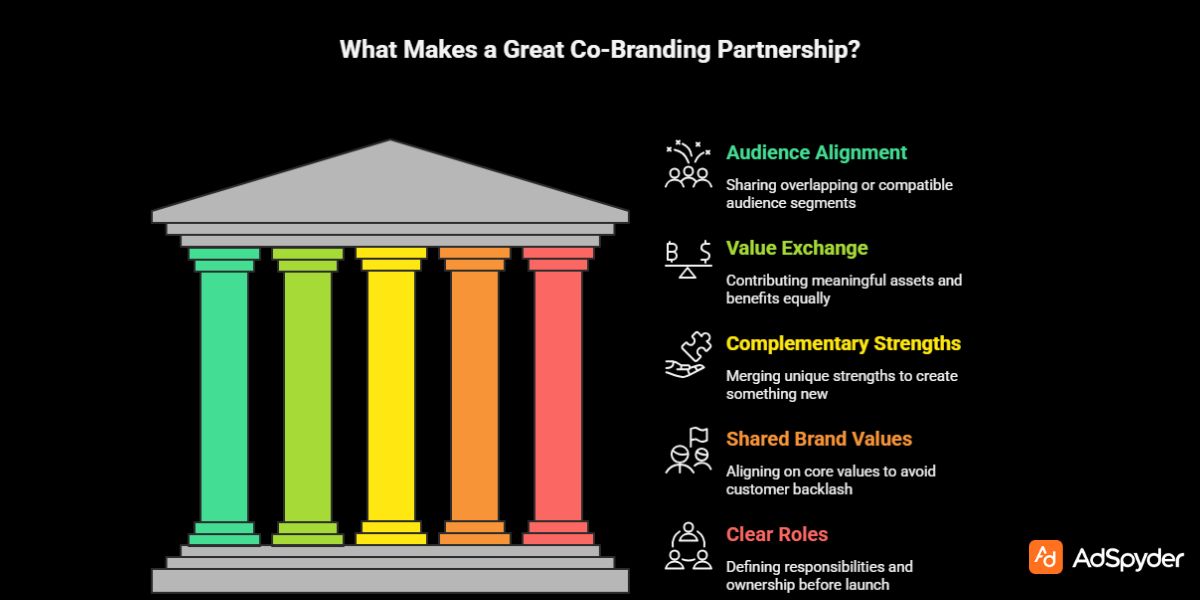
Successful brand partnerships don’t happen by accident — they’re built on alignment, clarity, and complementary strengths.
1. Audience Alignment
The two brands must share overlapping audiences or compatible segments. If their demographics clash, the partnership feels disconnected.
2. Value Exchange That Makes Sense
Each brand must contribute something meaningful:
-
Technology
-
Creative assets
-
Visibility
-
Expertise
-
Distribution channels
If one brand benefits far more than the other, the partnership becomes unbalanced.
3. Complementary Strengths
The best partnerships merge strengths, such as:
-
Innovation + mass production
-
Luxury + affordability
-
Utility + lifestyle
-
Credibility + creativity
This combination creates something new and worth talking about.
4. Shared Brand Values
If values clash (e.g., sustainability vs. mass consumerism), customers notice — and backlash can follow.
5. Clear Strategic & Creative Roles
Before launch, document:
-
Who owns creative direction
-
Who manages production or logistics
-
How the co-branded product is positioned
-
Revenue or cost-sharing terms
-
IP ownership
This clarity is crucial for navigating successful collaboration with brands.
Co-branding increases communication, thereby increasing the market share and recognition as tradies seek partnerships with other brands in their target market.
Creative Co-Branding Success Stories — Why They Worked
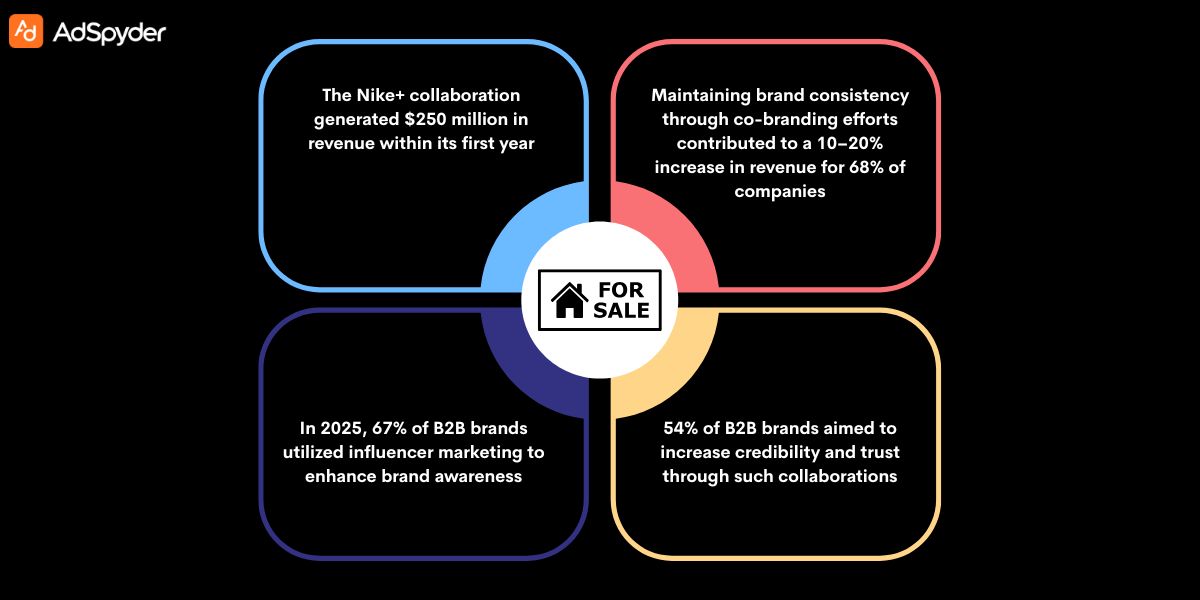
Below is a structured way to highlight lessons from successful partnerships:
| Partnership | Co-Branded Output | Why It Worked |
|---|---|---|
| Fashion × Retail Brand | Limited-edition clothing line | Affordable luxury + mass accessibility |
| Tech Brand × Lifestyle Brand | Smart accessories | Function meets style for everyday use |
| FMCG × Entertainment Franchise | Themed product line | Built-in audience excitement & nostalgia |
Each example succeeded because it aligned product fit, audience needs, and brand energy — the three essentials of brand collaboration.
Common Pitfalls & Risks — What to Avoid in Co-Branding
Even strong brands can fail at co-branding if they ignore these risks:
1. Poor Fit Between Brands
A mismatch in tone, values, or audience results in confusion or negative sentiment.
2. Misaligned Expectations
If one brand expects viral impact while the other expects long-term strategic value, tension arises.
3. Brand Dilution
Too much overlap in messaging, colors, or identity can make either brand feel overshadowed.
4. Operational / Creative Gaps
Slow approvals, lack of communication, or unclear responsibilities delay launches.
5. Overdependence on Partner Reputation
If the partner faces controversy, both brands suffer.
Planning and Executing a Creative Co-Branding Campaign (Step-by-Step)
A well-executed co-branding project requires structured planning. Here’s a complete roadmap:
1. Identify Your Objective
Define whether you want:
-
Market expansion
-
Brand repositioning
-
Increased credibility
-
Product innovation
-
Sales lift
-
Audience diversification
2. Shortlist Potential Partners
Look for brands with:
-
Shared values
-
Audience overlap
-
Complementary strengths
-
Good cultural reputation
-
Compatibility in aesthetics and tone
This evaluation is essential for navigating successful collaboration with brands.
3. Define the Value Exchange
Ask:
What does each brand uniquely bring to the table?
This could include:
-
Technology
-
Manufacturing
-
Brand name
-
Creative expertise
-
Marketing channels
-
Retail distribution
4. Develop the Joint Value Proposition
Clearly articulate:
-
What the collaboration stands for
-
What problem it solves
-
Why it matters for both audiences
This becomes the north star for the entire campaign.
5. Clarify Roles, Deliverables & IP Rights
Document:
-
Creative direction
-
Production timeline
-
Marketing responsibilities
-
Budget contributions
-
Intellectual property usage
This prevents misunderstandings later.
6. Build the Co-Branded Product or Campaign
This stage includes:
-
Product design
-
Packaging
-
Landing page creation
-
Co-branded visuals
-
Social, video, and ad assets
Ensure both brands’ identities shine without overpowering each other.
7. Coordinate a Unified Launch Strategy
A synchronized go-live across:
-
Social channels
-
Email newsletters
-
PR
-
Paid ads
-
Influencer partnerships
-
Retail or eCommerce
This maximizes reach and impact.
8. Track Performance & Optimize
Monitor KPIs such as:
-
Engagement
-
Sales
-
Sentiment
-
Conversion rate
-
Traffic sources
-
ROI
Use insights to refine future brand partnerships.
When Co-Branding Isn’t the Right Fit
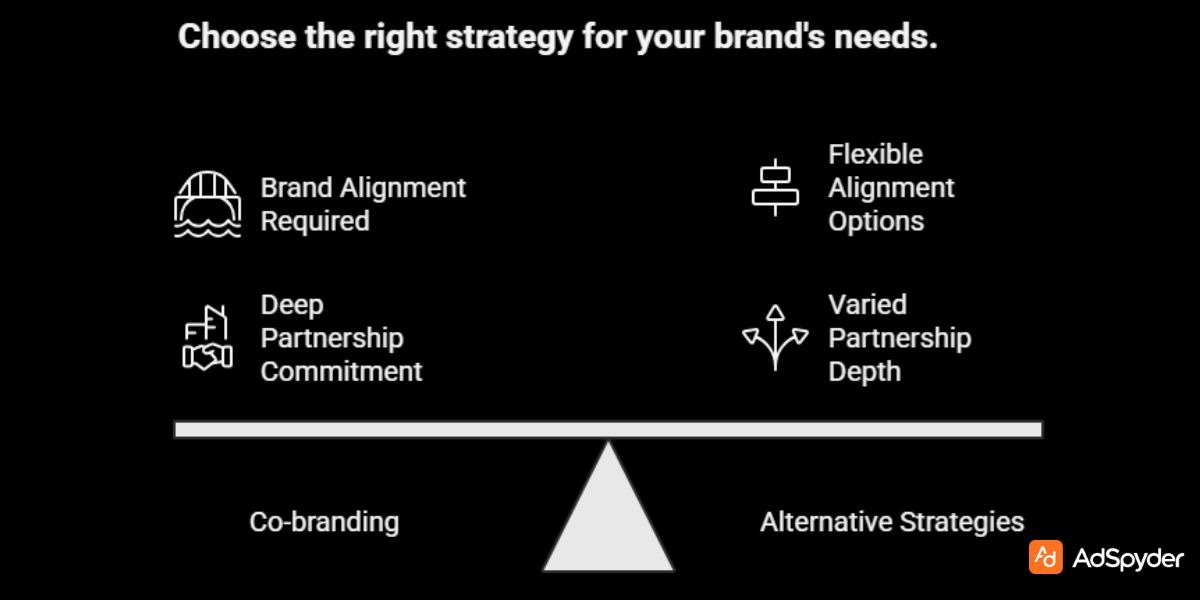
Co-branding works best when both brands gain. But in some cases, it’s more strategic to explore alternatives.
Consider alternative strategies such as:
-
Co-marketing campaigns
-
Affiliate or influencer partnerships
-
Sponsorships
-
Licensing deals
-
White-label products
-
Solo creative campaigns
If objectives or values don’t align, it’s better to avoid the partnership entirely.
Quick Co-Branding Checklist
Use this list to verify partnership readiness:
-
Do the audiences overlap meaningfully?
-
Are the brands’ values compatible?
-
Is the value exchange balanced?
-
Are roles clearly defined and documented?
-
Is the creative direction unified?
-
Do both brands share marketing responsibilities?
-
Are the KPIs measurable and mutually agreed upon?
FAQs — Creative Co-Branding
What is co-branding in simple terms?
Co-branding is when two brands team up to create a product or campaign that benefits both audiences.
How is co-branding different from co-marketing?
Co-branding involves shared products or creative output, while co-marketing involves shared promotional efforts.
What makes co-branding successful?
Strong audience alignment, complementary strengths, shared values, and clear roles.
How do brands choose co-branding partners?
Brands evaluate audience fit, values, reputation, creative synergy, and the value each partner offers.
What industries benefit most from co-branding?
Tech, food & beverage, fashion, automotive, entertainment, retail, and lifestyle brands.
Can small businesses use co-branding?
Yes — small brands often gain credibility and visibility through local or niche partnerships.
What risks should brands be aware of?
Brand dilution, mismatch, operational misalignment, or negative association from partner reputation.
Conclusion — Why Co-Branding Still Works Today
Co-branding remains one of the most effective strategies for creating breakthrough moments in modern marketing. It combines creativity, strategic thinking, and meaningful brand collaboration, turning two distinct identities into something new, bold, and impactful.
Whether you’re aiming to elevate brand image, penetrate a new market, innovate rapidly, or spark cultural buzz, co-branding helps you do more with less — and do it better with the right partner.
When brands align values, share goals, and communicate clearly, co-branding becomes more than a partnership — it becomes a competitive advantage.