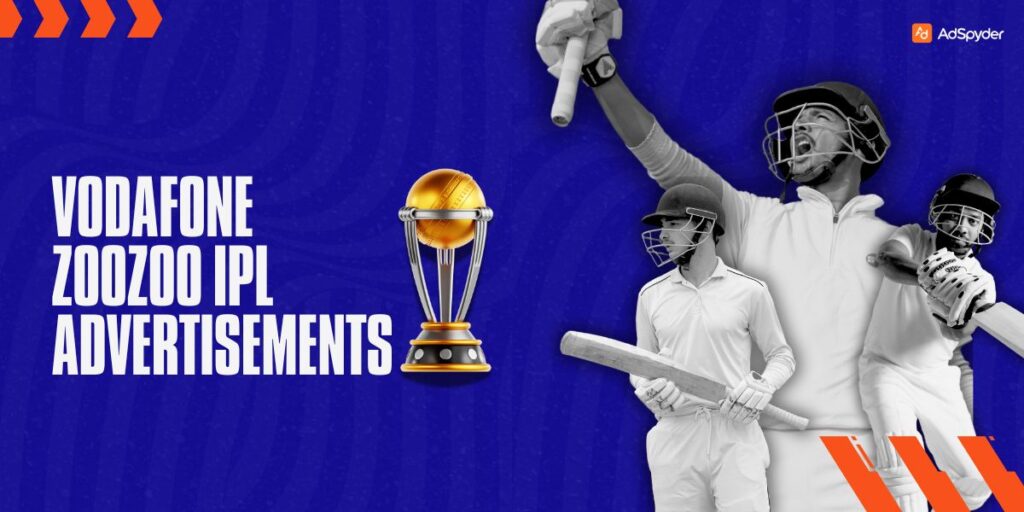
Few Indian ad icons have achieved what the Vodafone ZooZoo IPL advertisements did: instant recognition, repeatability across dozens of storylines, and a cultural footprint that outlived the season it was built for. The brilliance wasn’t just “cute characters.” It was a distribution-first campaign designed for the IPL’s attention economy—short bursts, daily novelty, and a consistent brand voice that made complex services feel simple.
In this guide, we’ll break down the Vodafone ZooZoo ad campaign with a modern lens: why it worked during IPL, how the creative system was built, what it teaches today’s IPL advertising campaigns, and how brands can replicate the pattern using better targeting, creative testing, and competitor intelligence.
What are Vodafone ZooZoo IPL Advertisements?
ZooZoos were quirky white characters Vodafone introduced during IPL Season 2 (2009) to promote value-added services (VAS) in a way that was instantly understandable—even when the product itself wasn’t.
They communicated in playful gibberish, used expressive body language, and delivered one clear idea per spot. The result: high recall, low explanation cost.
- They simplified tech features: VAS became “scenes” instead of explanations.
- They created repeatable formats: same world, new storyline daily.
- They fit IPL viewing behavior: short attention windows + frequent ad breaks.
If you’re studying modern IPL storytelling, compare how today’s brands create recurring characters and bits—like the tone shifts you see in Cred IPL ads, where humor + repetition becomes a recognizable “series,” not a one-off film.
Why IPL was the perfect stage for Vodafone ZooZoo IPL Advertisements
IPL isn’t a normal media property. It’s a high-volume attention marketplace where brands fight for recall in minutes, not months.
Vodafone understood that in IPL, the winner isn’t the brand with the deepest message—it’s the brand with the clearest repeating pattern.
- Ad breaks are frequent: you need a “hook in 2 seconds.”
- Viewers are multi-screening: visual storytelling beats long dialogue.
- Momentum matters: daily novelty keeps the audience waiting for the next spot.
That “daily novelty” approach is still visible in today’s IPL categories. Look at
Dream11 IPL ads—many of them work because they compress a complete message into a simple, repeatable structure (setup → punchline → CTA).
The Vodafone ZooZoo IPL Advertisements Campaign System (not just a set of ads)
A common mistake when analyzing ZooZoos is focusing only on “how funny they were.”
The real unlock was the campaign system—a structure that allowed Vodafone to produce many ads without losing clarity.
| System layer | What Vodafone standardized | Why it mattered in IPL |
|---|---|---|
| Brand world | Same characters + visual style | Instant recognition in seconds |
| Message format | One feature → one story | Low cognitive load, high recall |
| Creative cadence | Many short films, rotated constantly | Stops “ad fatigue” during the tournament |
| Humor logic | Visual comedy, minimal language | Works across regions and languages |
| Post-view action | Clear Vodafone association + service cue | Better memory-to-intent conversion |
This is why ZooZoos became bigger than “one viral ad.” They were a content engine.
And when you look at any curated list of Top IPL ads, the winners typically share that same DNA: recognizable structure + fresh executions.
Creative Mechanics that Made Vodafone ZooZoo IPL Advertisements Go Viral

The “viral” label can feel vague, so let’s translate ZooZoo success into mechanics you can reuse for IPL advertising campaigns.
- One-laugh clarity: you understand the joke and the point instantly.
- Visual universality: the gag works without language.
- Micro-story structure: setup → conflict → payoff in 15–25 seconds.
- Character consistency: the “brand asset” is the cast, not a single film.
- Feature dramatization: the service becomes a scene, not a specification.
ZooZoos also built a unique advantage: they were brand-safe humor.
That’s a hard balancing act in IPL, where everyone tries to “go viral” and ends up blending together.
A modern parallel is how some mass brands lean into light, family-friendly narratives—like the broad appeal strategies you often notice in Parle IPL ads, where simplicity is the conversion strategy.
The takeaway: the best “IPL ads” aren’t the most complicated. They’re the most repeatable.
Lessons for IPL advertisers today (what Vodafone ZooZoo IPL Advertisements teach in 2026)
IPL has evolved. Digital is bigger, targeting is sharper, and competition is extreme.
But ZooZoos still matter because they teach a timeless rule: attention is rented, memory is earned.
1) Build a “series,” not a single ad
A standalone ad can spike attention. A series compounds attention. ZooZoos were episodic: same world, new idea.
This is why brands that feel “everywhere” during IPL usually run multiple creatives with a shared pattern.
2) Keep the message count to one
IPL viewing is noisy. If an ad tries to sell three benefits, it sells none. ZooZoos: one feature, one story, one punchline.
Even today, the best-performing IPL spots typically do one job: drive downloads, drive consideration, or drive recall.
3) Match creative to the media moment
IPL is not “TV.” It’s a live-event environment where energy swings fast.
Ads that mirror the moment—humor, hype, celebration, rivalry—fit better and get remembered.
That means IPL campaigns are increasingly designed for cross-channel replay: TV + YouTube + reels + influencers + retargeting.
So while ZooZoos were born on TV, the principle scales even better today: build a creative asset that works as a short clip, a meme, a reel, and a cutdown.
How to Apply the Vodafone ZooZoo IPL Advertisements Playbook to your Next IPL Campaign

Here’s a practical, modern workflow you can run—whether you’re a D2C brand, fintech app, ecommerce marketplace, or a service category.
Think of it as “ZooZoo logic” with 2026 tooling.
Step 1: Choose one emotion + one action
ZooZoos were almost always “one emotion” (surprise, joy, confusion, relief) + “one action” (activate a service, try a feature).
Do the same: decide what you want the viewer to feel, and what you want them to do immediately after.
Step 2: Build 4–8 ads using one repeatable structure
The most scalable IPL strategy is not “one big film,” it’s a pack of ads with the same DNA.
Example structure: Problem → funny exaggeration → simple product cue → CTA.
Once you have the structure, you can produce multiple variations faster and reduce fatigue.
Step 3: Borrow category patterns, not exact scripts
Study what’s already winning in the category—then make your own variant.
That’s why competitive libraries matter: you’re looking for repeating hooks, offers, and formats across brands.
Tools like AdSpyder speed up this “pattern mining” so you don’t rely on memory or guesswork.
- Find repeated hooks: what messages brands reuse during IPL weeks.
- Track formats: meme-style, celebrity-led, UGC-like, animated, story-based.
- Improve cutdowns: build 6s/10s/15s versions without losing clarity.
- Test faster: compare variations and iterate weekly, not monthly.
Step 4: Retarget the “warm IPL audience” with a different message
IPL ads are often top-of-funnel—huge reach, quick recall. The real ROI comes when you retarget those engaged viewers with a sharper offer or a clearer product demo.
This is why modern IPL campaigns behave like funnels: the IPL spot earns attention, and digital follow-ups earn conversion.
Key Statistics (IPL ad context in numbers)
FAQs: Vodafone ZooZoo IPL advertisements
Why were Vodafone ZooZoo ads so successful?
What did ZooZoo ads promote?
How did IPL help the ZooZoo campaign?
Are ZooZoos animated or real actors?
What’s the biggest lesson for IPL advertising campaigns today?
How can brands avoid ad fatigue during IPL?
How can AdSpyder help with IPL campaign planning?
Conclusion
The Vodafone ZooZoo IPL advertisements weren’t a lucky viral moment—they were a repeatable system engineered for IPL. The campaign proved that in high-noise environments, the winners are the brands that simplify, repeat smartly, and build a recognizable creative universe. If you’re building your next IPL burst, don’t chase novelty for its own sake—build a series, keep the message count to one, and use digital retargeting to convert the attention you earned.