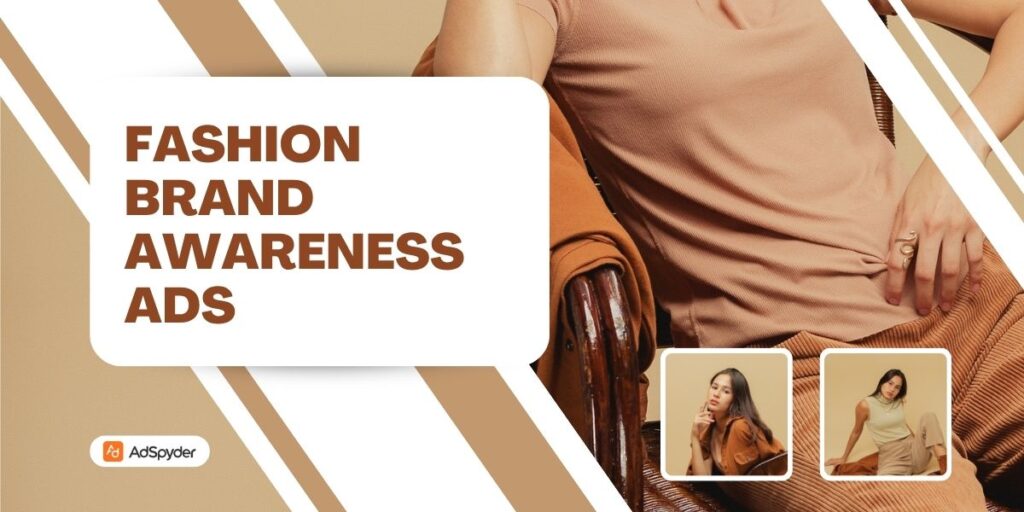
Fashion is bought with the eyes, justified with identity, and shared with culture. That’s why fashion brand awareness ads aren’t “top-of-funnel fluff”—they’re the engine that makes your performance campaigns cheaper, your launches faster, and your brand harder to ignore.
In this guide, you’ll learn how to run fashion brand awareness advertising that actually pays off: the creative frameworks that build memory, the channel mix that scales reach, and a set of fashion brand awareness campaign examples you can use for inspiration. You’ll also get a practical measurement setup so your awareness work connects to real sales outcomes.
What Are Brand Awareness Ads for Fashion Brands?
Brand awareness ads for fashion brands are campaigns designed to increase recognition, recall, and preference—so that when shoppers see your product again (or search later), your brand feels familiar and worth clicking.
- Awareness builds memory: “I’ve seen this brand before. It’s my style.”
- Consideration builds evaluation: “Let me check sizing, quality, reviews.”
- Conversion closes the sale: “I’m ready—ship it.”
Awareness doesn’t mean “no CTA.” It means the CTA is light and the goal is future demand: profile visits, saves, follows, branded searches, and repeat exposure that reduces buyer hesitation later.
Why Fashion Brand Awareness Ads Work So Well
Fashion is emotionally driven and socially influenced. Buyers don’t just ask “Is this a good deal?” They ask: Does this fit my identity? Will it look good on me? Is this brand credible?
- Lower future CAC: familiar brands win more clicks at the same bid.
- Higher conversion confidence: proof and repeated exposure reduce “fit risk.”
- Faster launch velocity: drops perform better when the audience is warmed.
- Better creative learning: awareness campaigns quickly reveal which stories stick.
This matters even more if you’re running multi-channel growth. For example, teams often pair top-of-funnel storytelling on Meta with intent capture on search. If you want the conversion side locked, align awareness with Google ads for apparel sale so branded demand turns into measurable revenue.
Key Fashion Awareness Statistics (Why the Attention Race Is Heating Up)
Fashion Brand Awareness Ads Framework: Story → Signals → Scale → Sustain

Most brands fail at awareness because they treat it like “pretty ads.” A stronger approach is a system with four layers:
| Layer | What you build | Output you want |
|---|---|---|
| Story | 1 clear identity + 1 signature promise | Memorable positioning |
| Signals | Proof: UGC, creators, reviews, press | Trust + curiosity |
| Scale | Repeatable formats across placements | Efficient reach |
| Sustain | Seasonal drops + always-on retargeting | Compounding demand |
Notice the order: story first, then proof. If your visuals are beautiful but your identity is unclear, you get likes—not loyalty.
Creative That Builds Memory: 8 Concepts That Work in Fashion Brand Awareness Ads
Great fashion brand awareness campaign examples are rarely random. They repeat a recognizable “look” and a simple message. Use these concepts as a creative menu:
1) Signature silhouette
Show one shape your brand owns (oversized blazer, wide-leg denim, draped saree, minimal dress) across multiple scenes. Memory comes from repetition.
2) “Get ready with me” (GRWM) as a brand format
GRWM works because it’s relatable and proof-led. Use it to anchor “how it fits,” “how it moves,” and “what it matches.”
3) Outfit formulas
Provide styling shortcuts like “3 ways to wear,” “work → dinner,” or “capsule wardrobe picks.” This positions your brand as helpful, not just trendy.
4) Culture-first storytelling
Fashion ads go viral when they feel culturally relevant. Hook into real life moments: wedding season, festival looks, office outfits, travel fits.
5) Texture and detail obsession
Macro shots of fabric, stitching, fall and drape, pockets, lining—this builds perceived quality. Beauty brands do this well; borrow the approach from high-converting beauty product ads and translate it to apparel details.
6) Creator proof clips (15–25 seconds)
Turn creator try-ons into short “proof clips”: fit check, size chosen, comfort, compliments received. Keep it raw and specific.
7) Values and craft (without preaching)
If sustainability, ethical sourcing, or local craft are real differentiators, show the process: cutting table, embroidery, tailoring, quality checks.
8) “Unexpected crossover” inspiration
Fashion and beauty often win with the same creative DNA: clean lighting, tight product focus, and a strong hero shot. If you want ideas for how brands
make Instagram visuals feel premium, study the pacing and structure used in Instagram ads for skincare products and apply it to apparel lookbooks and try-ons.
Channel Playbook for Fashion Brand Awareness Ads: Where Fashion Awareness Wins in 2026
The best channel mix depends on your price point and audience. But most fashion brands get strong results using a three-part system:
Meta for discovery, video platforms for culture, and search for demand capture.
1) Meta (Instagram + Facebook): Reach + Repetition
Meta is still a powerhouse for fashion storytelling because you can scale reach and repeat your signature look. Build a simple structure:
Reels for discovery, Stories for frequency, and carousels for detail.
If you want tactical setups (campaign objectives, ad formats, creative testing cadence), align your awareness work with Facebook ads for clothing brands
so your brand story stays consistent while performance teams optimize lower-funnel results.
2) Local awareness: boutiques and community gravity
If you have a physical store (or you’re building a neighborhood reputation), awareness is often your highest-ROI lever. Use geo-targeted Reels,
creator partnerships in your city, and “visit us this weekend” hooks that highlight new arrivals.
For a structured approach—radius targeting, event-based promos, and store-first creatives—borrow ideas from local boutique advertising.
3) Short-form video platforms: Culture + creator momentum
Short-form video builds awareness because it spreads: trend formats, outfit transitions, “day in my life,” and styling hacks. Your job is to
build a repeatable format, then partner with creators who already speak your audience’s aesthetic.
4) Google Search + Shopping: Make awareness measurable
When awareness works, branded search grows. Capture it with clean brand campaigns, category campaigns, and Shopping feeds that match how shoppers search.
The easiest way to connect top-of-funnel storytelling to sales is to build a shared reporting view where branded search lift is a key signal.
If you’re building that connection now, the conversion structure inside Google ads for apparel sale pairs perfectly with an awareness-first creative engine.
Fashion Brand Awareness Ads Examples (What to Copy—Strategically)

You don’t need to copy the exact visuals of big brands. Copy the mechanics: a strong concept, consistent casting, and distribution across formats.
Here are example patterns pulled from recent fashion campaign roundups and case studies.
Several top campaigns in 2024 leaned into portraiture—simple frames, iconic casting, strong styling—so the brand looks timeless. The takeaway:
reduce clutter and let the styling do the talking. Make the creative instantly recognizable even without a logo.
Social campaigns that invite participation can outscale traditional ads—because customers distribute it for you. The takeaway: design a
simple prompt (try-on, styling challenge, unfiltered photos, “wear it your way”) and reward the best submissions with features, giveaways,
or creator partnerships.
Many digital campaigns win by committing to a format: a recurring video style, a recurring character, or a recurring editing rhythm. The takeaway:
if your top ad is performing, don’t just make “another ad.” Make Episode 2, Episode 3, and Episode 4—so memory compounds.
After you build awareness, don’t waste the warm traffic. Convert it with structured sequencing and audience splits—the same logic used in retargeting ads for fashion shoppers.
Measurement & Reporting in Fashion Brand Awareness Ads: Proving Awareness Without Killing Creativity
Awareness works best when you measure the right signals—without forcing it to behave like direct response.
Build reporting across three layers: reach, engagement, and demand lift.
- Reach + frequency: are the right people seeing you often enough to remember?
- Video quality: 3-second views, ThruPlays, completion rate (and saves/shares).
- Brand demand lift: branded search growth, direct traffic, profile visits.
- Down-funnel assist: retargeting CPA trend, conversion rate trend over time.
The simplest way to connect awareness → sales
Run awareness on Meta, then monitor:
(1) branded search impressions/clicks on Google,
(2) direct traffic,
(3) conversion rate improvement in retargeting audiences.
If those three move in the right direction, your awareness is doing its job—even if first-click ROAS looks “low.”
FAQs: Fashion Brand Awareness Ads
What are fashion brand awareness ads?
Which platform is best for fashion brand awareness advertising?
What’s a good KPI for awareness ads?
How long should a fashion awareness campaign run?
Do awareness ads work for small brands and boutiques?
What creative works best for brand awareness ads for fashion brands?
How do I turn awareness into sales?
Conclusion
The best fashion brand awareness ads don’t chase trends—they build memory. Start with a clear identity and a repeatable creative format, layer in proof through creators and UGC, and distribute across Meta + short-form video + search so awareness becomes measurable demand. Then sustain it with sequencing that converts warm traffic into buyers. When you run awareness as a system—not a vibe—your brand becomes easier to recognize, easier to trust, and easier to choose.