

Creative fatigue is one of the most expensive, least visible problems in wellness paid campaigns. Ads don’t suddenly “stop working”—they quietly lose relevance as audiences see the same visuals, hooks, and offers too often. Engagement drops, CPAs rise, and even strong fitness digital marketing strategies begin to stall. This guide explores how fitness brands can combat creative fatigue using smarter fitness retargeting campaigns, competitor intelligence, and creative lifecycle analysis—without constantly reinventing the wheel.
Why Creative Fatigue Hits Fitness Retargeting Campaigns Faster Than Most Industries
Fitness advertising is inherently visual and aspirational. Transformation stories, class energy, and lifestyle cues drive performance—but they also wear out quickly. Audiences scroll fast, notice patterns, and tune out repetition.
For gyms and wellness brands running always-on ads, this creates a constant pressure to refresh creatives while maintaining consistency.
This is where many teams struggle:
- Limited internal creative resources
- Guesswork around what to refresh and when
- No visibility into competitor creative cycles
To solve this sustainably, creative decisions must be driven by data—not intuition.
Understanding Fitness Retargeting Campaigns Through Performance Signals
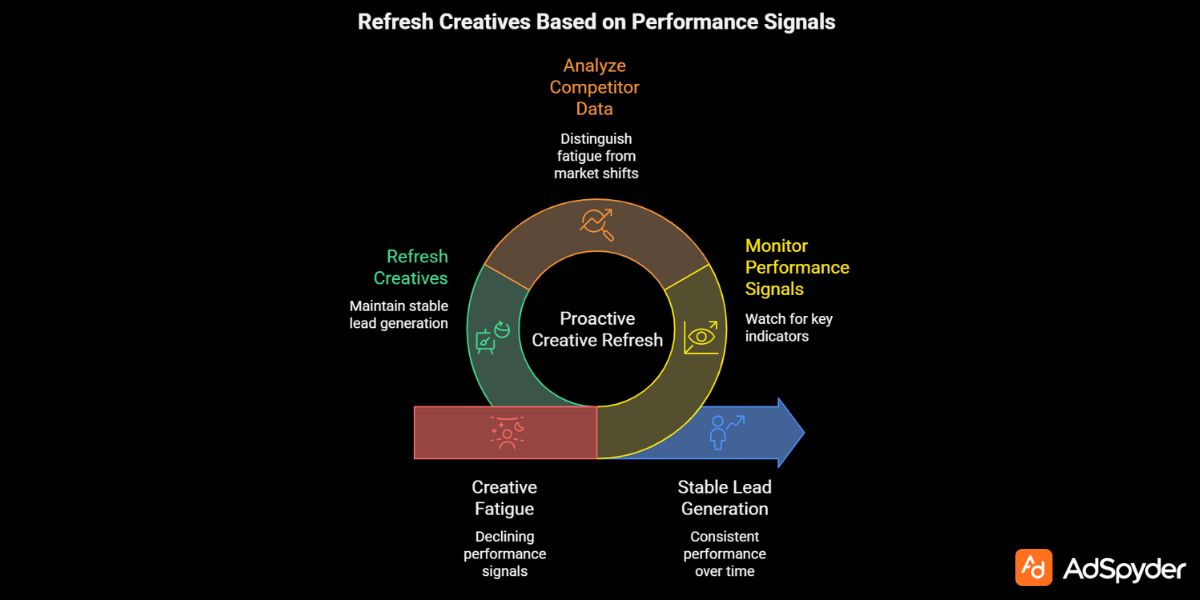
Creative fatigue isn’t subjective. It shows up clearly when you look at the right signals across social media ads for fitness and retargeting campaigns.
Before changing anything, marketers should watch for:
- Rising frequency with declining CTR
- Stable impressions but falling conversion rates
- Increased CPA without targeting changes
- Engagement shifting to comments like “seen this already”
By pairing these signals with competitor analysis from ad performance analytics insights, teams can distinguish between true fatigue and broader market shifts.
Fitness brands that proactively refresh creatives based on performance signals—not panic—are far more likely to maintain stable gym lead generation over time.
Why Fitness Retargeting Campaigns are the Frontline Defense Against Creative Fatigue
Creative fatigue impacts cold audiences first—but retargeting is where fatigue becomes most costly. Retargeted users see ads more often, making repetition especially risky.
However, fitness retargeting campaigns also offer the biggest opportunity for creative efficiency. These audiences already know your brand; they don’t need to be reintroduced—only re-motivated.
Effective retargeting creative typically shifts away from:
- Broad transformation promises
- Generic brand awareness visuals
And toward:
- Social proof and testimonials
- Objection handling (price, time, confidence)
- Program breakdowns and expectations
- Urgency-driven offers
Brands that rotate retargeting creatives based on creative lifecycle data—instead of arbitrary timelines—often see 2–3x higher conversion rates compared to static retargeting ads.
To operationalize this, link retargeting strategy to historical ad data and alerts so creative refreshes are triggered by performance decline, not guesswork.
Using Competitor Creative Lifecycles to Refresh Smarter
Most teams assume competitors are constantly launching “new” ads. In reality, high-performing fitness brands reuse concepts—changing angles, visuals, or hooks while keeping the core message intact. Here’s where AdSpyder for fitness brands help you stay on top of your ad campaigns.
By analyzing competitor ad histories through the times, marketers can see:
- How long specific creatives run
- Which formats are refreshed most often
- When offers are swapped versus visuals
This insight enables a more strategic refresh approach:
- Keep winning offers, refresh visuals
- Keep visuals, rotate hooks
- Repurpose concepts across platforms
Instead of burning time brainstorming from scratch, teams adapt proven structures into compliant, brand-safe variations—strengthening their fitness industry ad strategy.
AI-Powered Creative Velocity in Fitness Retargeting Campaigns
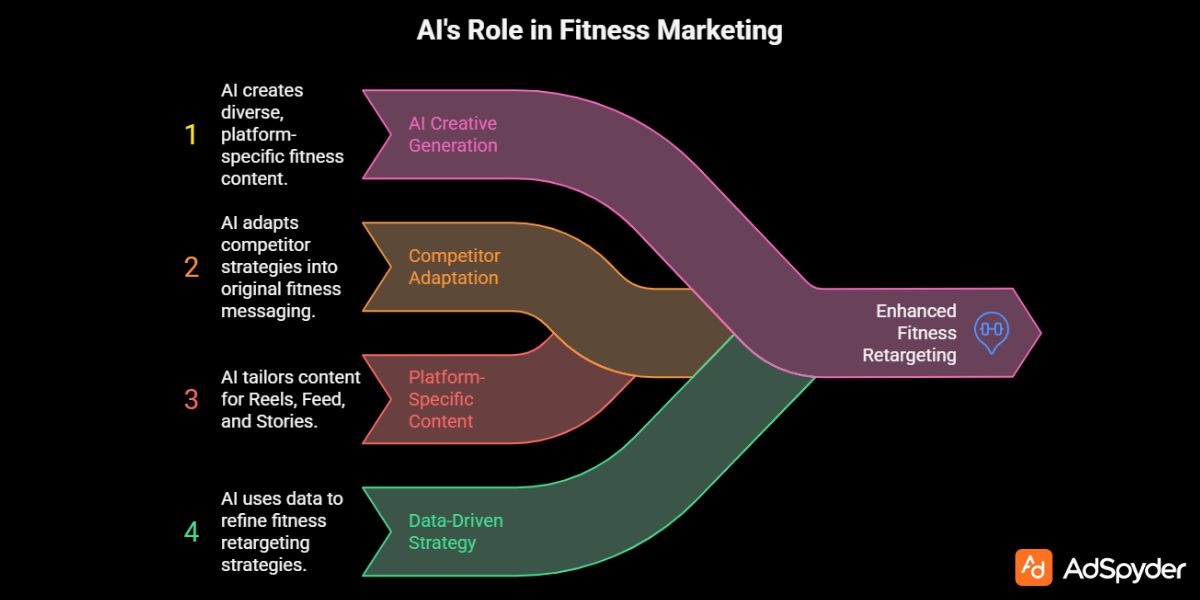
Speed matters when fatigue sets in. Delayed refreshes directly translate into wasted spend.
Modern teams increasingly rely on AI to:
- Generate multiple copy variations from a single concept
- Adapt competitor-inspired structures into original messaging
- Produce platform-specific creative (Reels vs. Feed vs. Stories)
Importantly, AI doesn’t replace strategy—it accelerates execution. When guided by real-world performance data and health and wellness advertising trends, AI helps teams test faster while staying grounded in what already works.
Fitness marketers using AI-supported workflows allows them to respond to fatigue before performance collapses.
Aligning Creative Refresh with Funnel Intent
One major cause of fatigue is misalignment—not repetition. Ads fail when they show the wrong message to the wrong audience stage.
Creative should evolve as prospects move through the funnel:
- Awareness creatives inspire and attract
- Consideration creatives educate and reassure
- Retargeting creatives remove friction and prompt action
By mapping creative types to funnels, marketers can see where drop-offs occur and refresh only what’s necessary—protecting budget while improving conversion efficiency.
This alignment is critical for sustainable gym PPC advertising, especially when campaigns scale.
Conclusion
Creative fatigue isn’t a failure—it’s a signal. It tells you when audiences are ready for a new angle, a clearer message, or stronger proof. Fitness brands that treat fatigue as a data problem, not a creative crisis, maintain momentum even in saturated markets.
By combining competitor creative intelligence, AI-powered execution, and funnel-aware fitness retargeting campaigns, wellness marketers can refresh smarter, reduce wasted spend, and keep paid ads for fitness classes performing consistently over time.
FAQs: Creative Fatigue & Fitness Retargeting Campaigns
What is creative fatigue in fitness advertising?
Creative fatigue occurs when audiences repeatedly see the same ads and engagement declines.
How fast does ad fatigue happen in wellness paid campaigns?
Often within 7–14 days for high-frequency social campaigns.
Why does retargeting fatigue faster than cold ads?
Retargeting audiences see ads more often, accelerating saturation.
How often should fitness retargeting ads be refreshed?
Based on performance signals—not fixed timelines—but typically every 2–4 weeks.
Can AI help prevent creative fatigue?
Yes. AI accelerates variation testing and refresh cycles when guided by performance data.
Should offers or visuals be refreshed first?
Usually visuals first; offers should change only when performance declines or seasonality shifts.
How do competitor ads help with creative refresh?
They reveal proven formats, angles, and refresh patterns already validated in your market.