
Fitness marketing doesn’t stand still. Platforms evolve, audience expectations shift, and creative norms change faster than most teams can react. Brands that win don’t chase every new tactic—they analyze health and wellness advertising trends to decide what to adopt, what to ignore, and what to double down on.
This guide shows how to turn trend analysis into a sharper fitness industry ad strategy—grounded in competitor intelligence, performance data, and funnel clarity—so your fitness digital marketing stays effective even as the market crowds.
Why Health and Wellness Advertising Trends Matters More
Fitness is both aspirational and practical. Audiences want results and reassurance. That tension makes trends powerful—but also risky—when copied blindly.
Recent industry reporting shows:
- Short-form video now accounts for upto 70% of social engagement in wellness categories
- Ad costs rise fastest in markets where messaging becomes homogeneous
- Brands aligned with current creative norms see higher engagement, but only when paired with relevance and clarity
Trends should inform your strategy—not replace it. The smartest teams treat trends as signals, not shortcuts.
This is why competitive context—outlined in How AdSpyder Helps Fitness Brands—is essential before acting on any new direction.
Separating Real Advertising Trends from Surface-Level Noise
Not every popular format or hook is worth adopting. A true trend shows up across:
- Multiple competitors
- Multiple platforms
- Sustained campaign duration
When reviewing health and wellness advertising trends, look for patterns like:
- Repeated angles (transformation, flexibility, accountability)
- Consistent formats (UGC video, studio walkthroughs, testimonial reels)
- Stable offers (trial classes, starter programs, limited-duration pricing)
Using insights allows marketers to filter out one-off experiments and focus on what’s repeatedly validated in the market.
This prevents trend-chasing and supports a more resilient gym PPC advertising.
Creative Health and Wellness Advertising Trends Shaping Modern Fitness Digital Marketing
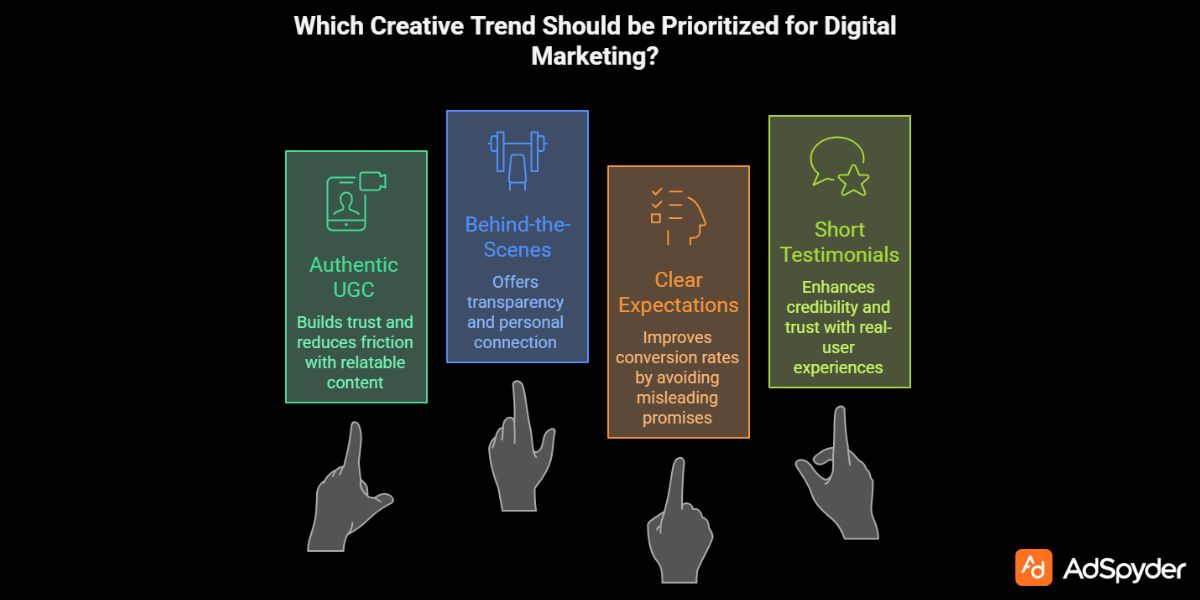
Across platforms, several creative directions have proven staying power—not because they’re flashy, but because they reduce friction and build trust.
The most durable creative trends include:
- Authentic UGC-style video over polished studio shoots
- “Day in the life” or behind-the-scenes gym content
- Clear expectation-setting (who it’s for / who it’s not for)
- Short testimonials embedded directly in ads
Before the bullets, it’s worth noting: ads that set expectations clearly often convert better than exaggerated promises. Studies consistently show that misleading or overly aspirational ads drive clicks—but lower long-term conversion rates.
To execute these trends at scale, many brands rely on AI to adapt proven formats quickly without sacrificing originality.
Health and Wellness Advertising Trends: Messaging to Influence Gym Memberships
While visuals attract attention, messaging drives action. In saturated markets, subtle shifts in language often separate winners from losers.
Current messaging patterns in gym membership promotion emphasize:
- Outcomes framed around lifestyle (energy, confidence, consistency)
- Flexibility over intensity (options vs. obligation)
- Community and coaching support over solo effort
- Transparency in pricing or commitment length
These trends reflect broader consumer behavior. Research shows modern buyers are more likely to convert when ads reduce perceived risk rather than amplify urgency alone.
To see how these messages convert post-click, connect trend analysis with funnels to ensure your landing pages reinforce—not contradict—your ads.
Platform-specific trends and what they mean for strategy
Trends don’t apply equally everywhere. What works on TikTok may underperform on other social media ads for fitness or Google.
High-level patterns include:
- TikTok favors authenticity, imperfection, and education
- Instagram rewards aesthetic consistency and community cues
- Facebook remains strong for fitness retargeting campaigns and local trust-building
- Search ads benefit from clarity and intent alignment
Rather than duplicating creatives across platforms, smart teams adapt core concepts to each environment. This is where ad performance analytics insights help identify which formats resonate per channel—so spend follows results, not assumptions.
Competitive Health and Wellness Advertising Trends Analysis
Most gyms react to trends after performance drops. Leaders monitor trends continuously—especially competitor behavior.
Ongoing analysis reveals:
- When competitors shift angles seasonally
- Which offers persist during high-CPC periods
- How messaging evolves as markets saturate
Using historical ad data and alerts, teams can respond early—refreshing creatives, adjusting offers, or reallocating budget before costs spike.
This proactive approach strengthens gym lead generation while protecting margins.
Turning Health and Wellness Advertising Trends Insights Into Action
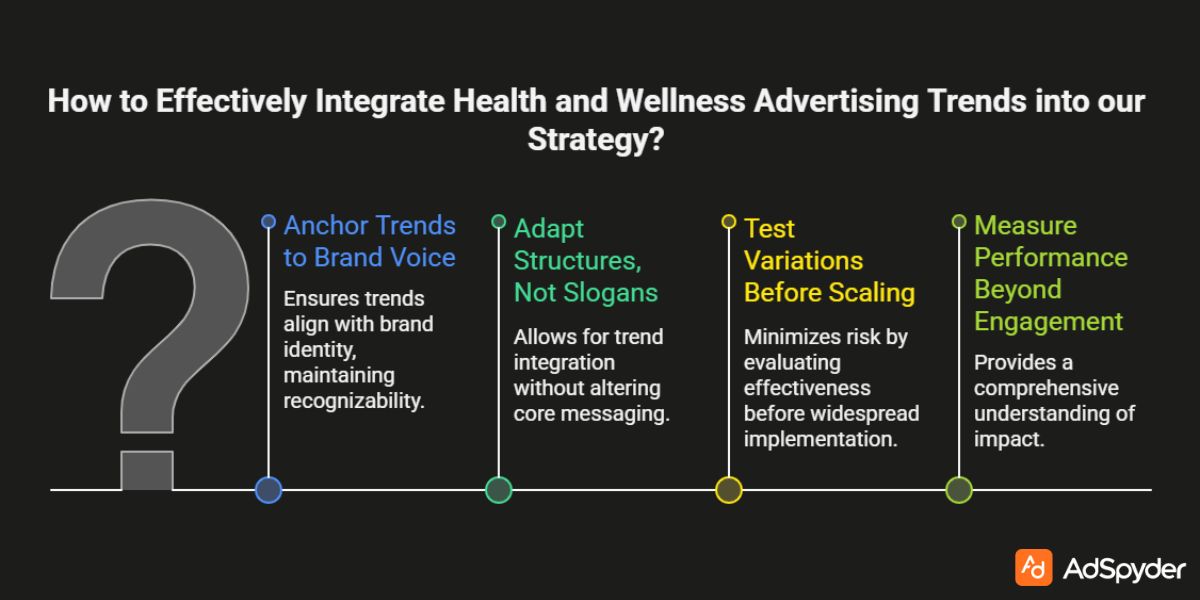
The goal isn’t to look like everyone else. It’s to look current while staying recognizable.
To do this well:
- Anchor trends to your brand voice
- Adapt structures, not slogans
- Test variations before scaling
- Measure performance beyond engagement
When trends are filtered through brand clarity and performance data, they enhance—not dilute—your positioning within the fitness industry ad strategy.
Conclusion
Analyzing health and wellness advertising trends isn’t about copying competitors—it’s about understanding what today’s audiences expect and where attention is flowing. Trends provide context, but strategy determines outcomes. Paid ads for fitness classes that balance trend awareness with intent-driven targeting and funnel alignment stay competitive without constant reinvention.
By combining competitive intelligence, creative performance data, and structured experimentation, marketers can evolve confidently. That’s how fitness digital marketing remains effective—even as platforms, formats, and expectations continue to change.
FAQs: Health and Wellness Advertising Trends
What are health and wellness advertising trends?
They are recurring patterns in creative, messaging, offers, and formats that perform consistently across the market.
How often should fitness brands review ad trends?
At least monthly, with weekly checks in competitive markets.
Are trends the same across all platforms?
No. Each platform rewards different creative behaviors and audience expectations.
Should gyms copy competitor ads directly?
No. Use competitor ads for structure and insight, not duplication.
Do trends impact gym lead generation?
Yes. Aligning with current expectations improves engagement and conversion rates.
How do trends affect CPA?
Relevant trends can lower CPA; overused trends can increase competition and costs.
How can I test trends without risking budget?
Test small variations first, monitor performance signals, then scale what works.