Starting a store for dropshipping on Shopify is one of the fastest ways to test products and build an ecommerce brand without holding inventory. You focus on product selection, storefront, and marketing—while a supplier handles packing and shipping.
This guide breaks down how to start dropshipping on Shopify step-by-step: choosing a niche, setting up your Shopify dropshipping store, sourcing suppliers, pricing for profit, and scaling with ads and retention. If you’re a beginner, you’ll also learn how to avoid the common mistakes that drain ad budgets and create chargebacks.
What Is Shopify Dropshipping?
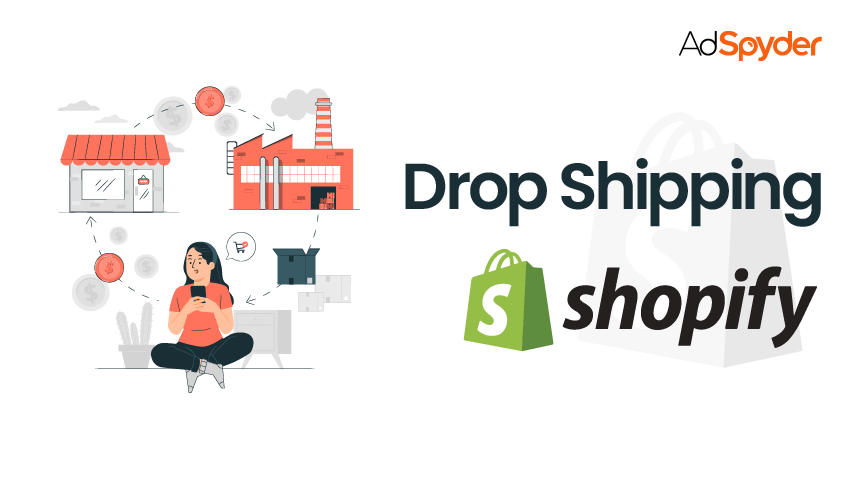
Dropshipping is a business model where you sell products on your ecommerce store, but your supplier fulfills the order (packing + shipping) directly to your customer. With Shopify, you can build a storefront quickly, connect supplier apps, and automate order routing—making it one of the most popular ways to start a dropshipping business.
- Customer buys from your Shopify store.
- Your app/supplier receives the order details automatically.
- Supplier ships to the customer with tracking.
- You keep the profit (selling price − product + shipping + fees + ads).
If you’re debating “ecommerce vs dropshipping,” the biggest difference is inventory risk. Traditional ecommerce buys stock upfront; dropshipping trades that risk for thinner margins and supplier dependency. Your job becomes marketing + trust + customer experience.
| Model | Best for | Main risk | What to optimize |
|---|---|---|---|
| Dropshipping | Testing products fast, low upfront spend | Supplier quality + shipping times | Product validation + ads + trust |
| Traditional ecommerce | Brand building with inventory control | Unsold stock + cash flow | Forecasting + logistics + retention |
| Print-on-demand (POD) | Customized products with “brand feel” | Production times + quality consistency | Designs + creatives + offer framing |
Step 1: Pick a Niche and Validate Products
Most beginners fail because they pick products based on “what looks cool” instead of what sells repeatedly. If you want to learn how to dropship on Shopify profitably, start with validation.
- Clear problem → clear benefit (before/after is obvious)
- Room for margin (you can price higher than commodity stores)
- Low refund risk (size issues, fragile items, misleading claims = danger)
- Multiple angles for creatives (UGC, demos, comparisons, bundles)
Product validation checklist (use before building the whole store)
- Search demand: people actively search for it (or its problem)
- Ad proof: competitors are spending on it for weeks (not 2 days)
- Price acceptance: similar products sell at your target price point
- Shipping reality: tracking, reasonable delivery times, consistent packaging
For creative inspiration, studying Instagram ad campaigns that win across niches can help you understand hooks, pacing, and offer framing that drive clicks.
| Validation signal | What “good” looks like | What to avoid |
|---|---|---|
| Competitor ads | Same product promoted over time with multiple creatives | One-off viral spikes; no repeat spend |
| Offer structure | Bundle, free shipping threshold, clear guarantee | Complicated discounts and hidden fees |
| Refund risk | Simple, durable products with predictable expectations | Sizing-heavy apparel without strong size support |
| Delivery experience | Tracked shipping + realistic timelines on site | No tracking / unclear fulfillment responsibilities |
Step 2: Set Up Your Store for Dropshipping on Shopify (Fast + Clean)

If you’re searching for how to set up Shopify store for dropshipping, here’s the priority order: store foundation → trust pages → product page → checkout.
- Brand basics: store name, domain, logo, brand colors
- Navigation: Home, Shop, Track Order, Contact, FAQs
- Trust pages: Shipping policy, Returns, Privacy, Terms
- Payments: enable your main payment methods + test checkout end-to-end
- Tracking: install analytics + pixels before running ads
What a high-converting product page includes
- Benefit-led headline (what changes for the buyer)
- Short “why this works” explanation + 3–6 bullet benefits
- Social proof: reviews, UGC, real photos
- FAQ block covering shipping time, returns, sizing, warranty
- Clear CTA + payment badges + delivery expectations
If your store has an eco angle (recycled packaging, sustainable materials, ethical sourcing), use video to show it. Shoppers trust what they can see—especially when you apply video in sustainability marketing to demonstrate proof instead of making vague claims.
Step 3: Choose Suppliers and Shopify Dropshipping Apps
Your supplier is your real business partner. Bad suppliers create late shipments, poor packaging, and refund floods. Good suppliers keep customers happy even when you scale fast.
- Tracked shipping + consistent delivery timelines
- Stable inventory (or clear backorder rules)
- Quality control (photos match actual product)
- Fast support when orders go wrong
- Clear return / replacement handling
Apps you’ll likely need (start lean)
- Product import + fulfillment automation: your main dropshipping app
- Reviews / UGC: collect trust signals and reduce purchase anxiety
- Email/SMS retention: welcome flows, abandoned cart, post-purchase
- Support: helpdesk or chat for faster resolution
Pro tip: do a “supplier test order” before you scale ads. Buy your own product, track delivery time, check packaging quality, and review what the customer sees.
| Decision | What to measure | Pass criteria |
|---|---|---|
| Shipping speed | Order → delivered time + tracking reliability | Consistent estimates; low “stuck in transit” rate |
| Product quality | Materials, durability, accuracy vs listing photos | Low defect probability; minimal “not as described” risk |
| Support speed | Response time, dispute handling, replacements | Fast replies + clear processes |
| Return handling | Return address, refund timeline, damaged goods policy | Predictable outcomes + no “ghosting” |
Step 4: Pricing and Profit Margins (So Ads Don’t Destroy You)
Pricing is the real engine of a Shopify dropshipping store. If your margin is weak, your ads become unscalable. That’s why you should calculate profit using landed cost (product + shipping + transaction fees + app costs) and then decide your “maximum allowable CPA” (what you can afford to pay to acquire a customer).
Margin boosters that don’t feel scammy
- Bundles: 2-pack, 3-pack, “family set”
- Upsells: add-on accessories, extended warranty, premium version
- Free shipping threshold: “Free shipping over $X”
- Post-purchase offers: one-click “upgrade your order”
Step 5: Marketing Your Shopify Dropshipping Store (Paid + Organic)
Learning how to start Shopify dropshipping is easy. Scaling it is the hard part—and that comes down to creative, targeting, and retention.
Paid ads: what works best for beginners
For most new stores, Meta (Facebook/Instagram) is the fastest channel to test offers because you can iterate creatives quickly. Your biggest lever is not targeting—it’s creative volume. Track what matters (CTR, CVR, CAC, AOV) and create new variants weekly.
To improve decision-making, build a simple dashboard around Instagram ad metrics such as CTR, CPC, add-to-cart rate, conversion rate, and ROAS—then compare creative performance against those benchmarks.
- Problem → demo → result (fast pacing)
- UGC review: “I didn’t expect this to work, but…”
- Comparison: old way vs new way
- Bundle framing: “best value set”
- Trust framing: shipping clarity + guarantee + easy returns
| Channel | Best use | Common beginner mistake |
|---|---|---|
| Meta Ads (FB/IG) | Fast creative testing + scaling winners | Running 1–2 ads for weeks with no new creatives |
| TikTok Organic/Ads | UGC-style discovery and trend leverage | Polished “brand ads” that feel like commercials |
| Google Search | Capture high intent for problem-solving products | Sending cold search traffic to weak product pages |
| Email/SMS | Increase LTV, recover carts, reduce reliance on ads | No automated flows; only occasional broadcasts |
How AdSpyder helps you test offers faster
When you’re new, you don’t have “creative instincts” yet—you need patterns. With AdSpyder, you can study competitor ads, see which hooks repeat, and map offer structures (bundles, free shipping thresholds, guarantees). That means fewer random tests and more “educated experiments.”
Step 6: Operations, Trust, and Customer Experience in Dropshipping on Shopify

The fastest way to kill a dropshipping business is to scale ads before your operations can handle refunds, delivery issues, and support volume. This is why your “backend” matters as much as your creatives.
- Clear delivery timelines (don’t promise impossible shipping)
- Transparent return policy + simple process
- Order tracking page + proactive “where is my order?” updates
- Fast support (even if the answer is “here’s what we’re doing next”)
Have a plan for the “bad week”
Every store hits a moment where shipping delays spike or a supplier batch has defects. When that happens, the winners communicate clearly and protect trust. If you want a practical framework for handling brand issues, apply the principles of crisis management with video marketing—short, transparent updates reduce chargebacks and keep customers calm.
Scale with systems (not stress)
- Create canned responses for common tickets (shipping, tracking, returns)
- Track refund reasons weekly and fix the root cause
- Use post-purchase emails to set expectations (“what happens next”)
- Test every offer with a small budget before scaling
Key Dropshipping & Shopify Statistics (Quick Snapshot)
FAQs: How to Start Dropshipping on Shopify
Is Shopify good for dropshipping beginners?
How much money do I need to start dropshipping on Shopify?
What is the best way to choose a dropshipping product?
How do I price products for dropshipping?
Do I need a niche store or a general store?
How do I reduce refunds in dropshipping?
What should I track to know if my store is working?
Conclusion
If you want to master how to start dropshipping on Shopify, focus on the real levers: validated products, clean storefront trust, reliable suppliers, margin-safe pricing, and a consistent creative testing system. Keep your first version simple, test fast, fix what customers complain about, and scale only when operations can keep up.