Creative fatigue is one of the most overlooked problems in spa digital marketing. Many spa brands focus heavily on launching campaigns but neglect what happens after ads have been live for weeks. Performance slowly declines, costs rise, and bookings drop—not because demand disappears, but because audiences stop noticing the ads. To sustain results from paid ads for spa services, spas must treat creative refresh as a core part of their spa marketing strategy, not an afterthought.
What Creative Fatigue Looks Like in Paid Ads for Spa Services
Creative fatigue occurs when the same audience repeatedly sees the same ad, causing engagement and conversion rates to fall. In wellness paid campaigns, this often happens faster than expected due to smaller local audience pools.
Typical signs include:
- Rising CPA despite stable targeting
- Declining click-through rates
- Lower booking completion after clicks
- Increased frequency without lift in conversions
Industry performance studies show that ad creatives often begin to decline after 3–6 weeks in competitive local markets, especially for visually driven categories like spas and wellness.
Recognizing fatigue early is critical to protecting local spa advertising efficiency.
Why Seasonal Spa Promotions Outperform Static Offers
Spas operate in a naturally seasonal business environment. Demand fluctuates around:
- Holidays and long weekends
- Wedding and festive seasons
- Weather changes
- New Year and wellness reset periods
Seasonal spa promotions align ads with real-world motivation, making them feel timely rather than repetitive. Even small creative shifts—new headlines, visuals, or offers—can reset performance.
Seasonality also provides a natural framework for refreshing creatives without constant reinvention.
Structuring a Creative Refresh System in Paid Ads for Spa Services

Before listing tactics, it’s important to frame this correctly: refreshing ads does not mean starting from zero each time.
High-performing spa brands use a structured refresh system:
- Preserve winning angles
- Rotate visuals and messaging
- Adapt offers to seasonal context
A practical refresh framework looks like:
- Core service stays the same
- Visuals change every 3–4 weeks
- Headlines rotate based on intent (luxury, deal, convenience)
- CTAs adapt to urgency (“Book this weekend”, “Limited slots”)
This approach keeps massage spa paid advertising effective while avoiding unnecessary creative waste.
Using Competitor Insights to Refresh Paid Ads for Spa Services
Many spas refresh creatives reactively—only after performance drops. Competitive ad intelligence allows proactive refreshes.
By tracking competitor ads, spa marketers can:
- See how often competitors rotate creatives
- Identify which offers are being reused
- Spot seasonal messaging trends early
- Avoid copying fatigued formats
This intelligence-driven approach supports faster iteration and prevents repeating mistakes already made by competitors.
Marketers can use AdSpyder for Smarter Spa Digital Marketing, where refresh decisions are based on data, not instinct.
Seasonal Creative Angles That Work in Paid Ads for Spa Services
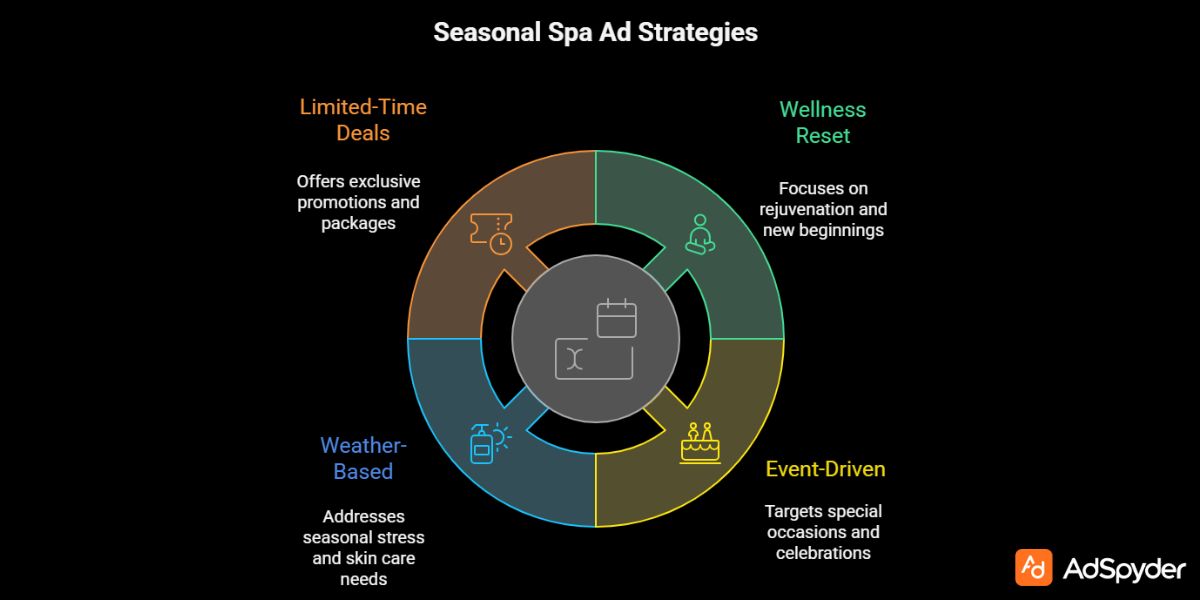
Before listing angles, note this: creative fatigue isn’t always about visuals—it’s often about message relevance.
Effective seasonal angles include:
- Wellness Reset Angle
Ideal for New Year, post-festival periods, and lifestyle change moments. - Event-Driven Angle
Weddings, vacations, or milestone celebrations. - Weather-Based Angle
Stress relief during monsoons, skin care during summer/winter. - Limited-Time Deals Angle
First-time offers, bundled packages, or weekday specials.
Rotating these angles keeps best spa deals feeling fresh, even when promoting the same core services.
Refreshing Creatives Across Google and Social Platforms
Creative fatigue manifests differently by channel.
For Google Ads for spas:
- Refresh headlines and descriptions
- Rotate value propositions
- Adjust sitelinks and extensions
- Swap visuals more frequently
- Test new hooks in the first 3 seconds
- Rotate testimonials and UGC-style content
While search ads fatigue slower, social platforms demand more frequent creative updates due to high exposure frequency.
Balancing refresh cadence by channel helps maintain efficiency without overproduction.
Measuring Creative Fatigue in Paid Ads for Spa Services
The best time to refresh is before CPA spikes.
Monitor these early indicators:
- CTR declining week over week
- Frequency exceeding 2.5–3.0 on social
- Stable impressions with falling conversions
- Increased cost per lead without targeting changes
Brands that refresh creatives proactively can maintain up to 35–40% more engaged clicks, preserving funnel efficiency even as spend scales.
This insight links directly to optimizing your spa lead generation funnel, where creative relevance influences booking completion.
FAQs: Paid Ads for Spa Services
What is creative fatigue in spa advertising?
It’s when repeated exposure to the same ad reduces engagement and conversions.
How often should spa ads be refreshed?
Typically every 3–6 weeks, sooner in competitive markets.
Do spa promotions cause brand dilution?
Not if positioned as limited-time or seasonal value offers.
Are visuals or copy more important to refresh?
On social, visuals first; on search, headlines and offers.
Can competitor ads help prevent fatigue?
Yes. They show what’s trending and what’s overused.
Do seasonal ads perform better than evergreen ads?
Often yes, because relevance increases engagement.
How do I know when to refresh ads?
Watch CTR, CPA, and frequency trends—not just spend.
Conclusion
Creative fatigue doesn’t mean your offer stopped working—it means your audience stopped noticing it. By planning structured refresh cycles and aligning creatives with seasonal intent, spas can keep spa promotions effective without constant reinvention.
When creative refresh is driven by data and competitor insight, wellness paid campaigns stay profitable, relevant, and scalable—completing a sustainable system for long-term spa growth.