Press releases have evolved dramatically in the last decade. They are no longer just media updates or product announcements; when crafted strategically, they become powerful SEO assets. An optimized press release can help a brand earn authoritative backlinks, increase online visibility, drive referral traffic, and strengthen its digital footprint. This guide will walk you through what press release for SEO is, why it matters, and how to create SEO-optimized press releases that get discovered, ranked, shared, and syndicated.
But writing and optimizing a press release for SEO isn’t the same as writing a traditional PR announcement. Search engines value clarity, structure, keywords, linking best practices, and genuine newsworthiness. With the right approach, a press release can support your overall search engine strategy while enhancing your credibility in the industry.
What Is Press Release for SEO?
Press Release for SEO refers to the practice of structuring and optimizing press releases to perform well in search engines, earn backlinks, and improve online visibility. It combines traditional PR writing with modern SEO techniques such as keyword targeting, link optimization, formatting for readability, and distributing the content to credible platforms.
A well-optimized press release achieves two things simultaneously:
- It informs journalists, stakeholders, and audiences about newsworthy events, such as product launches, company milestones, or partnerships.
- It creates additional opportunities for organic visibility, especially by earning high-authority backlinks from credible news outlets, industry blogs, or media syndicators.
Unlike typical blog posts, press releases offer unique SEO advantages because they often get published on websites with very high domain authority—something hard to replicate with ordinary content.
Why Press Releases Still Matter for SEO
Press releases used to be overused and abused as link-building shortcuts. But in the modern SEO landscape, they remain valuable when executed correctly.
Here’s why:
1. Editorial Backlinks Still Matter
High-authority news sites, industry publications, and niche outlets can link back to your site. These links carry strong SEO value because they come from reputable sources.
2. Increased Brand Credibility
A press release that appears on a trusted publication automatically increases audience trust, which strengthens your brand presence and can influence user behavior (clicks, searches, branded queries).
3. Higher Search Visibility
A well-optimized press release can rank for keywords related to your announcement. It may show up on Google News, in search snippets, or through syndication across dozens of platforms.
4. Discovery by Journalists
Journalists and bloggers often search for industry news online. An optimized press release increases your chances of being cited in future articles—generating additional organic backlinks over time. Press releases for healthcare companies are mainly used by journalists to cover latest news in the health section, which is read by many worldwide.
5. Faster Indexing
Press releases are often crawled quickly by search engines due to the authority of distribution platforms. Your brand announcements get indexed fast and gain visibility sooner.
Press releases aren’t a magic bullet for SEO—but when used strategically, they amplify your brand’s overall digital presence.
Benefits of Press Releases for SEO
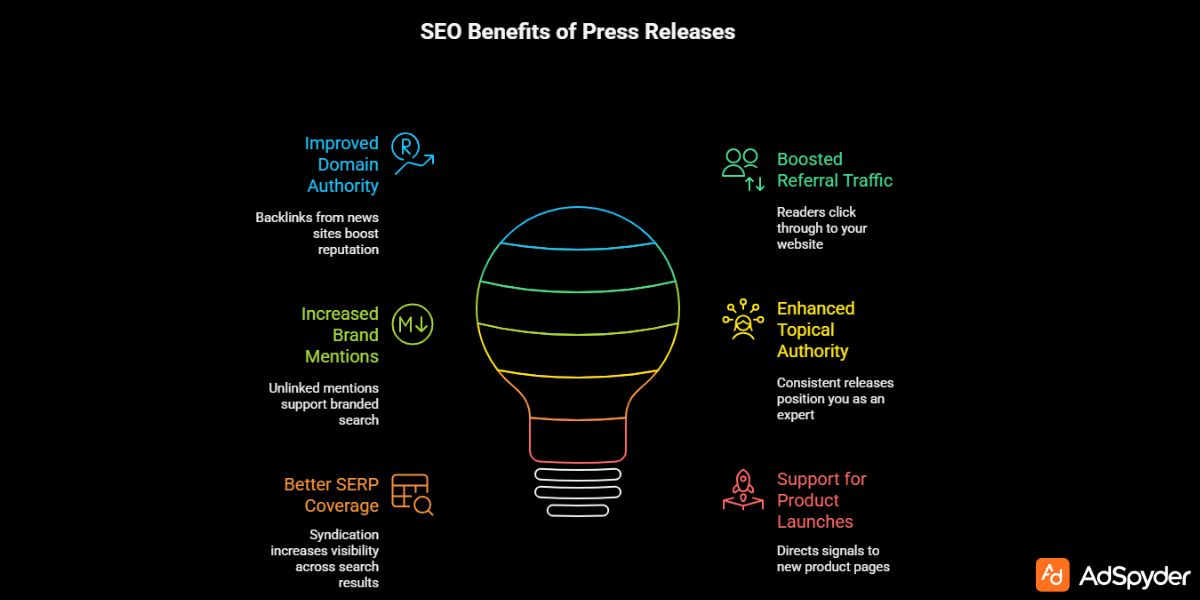
Press releases provide multiple advantages when woven into your content and SEO strategy:
Improved Domain Authority
Backlinks from credible news websites boost your overall domain reputation and can positively influence your ability to rank for competitive keywords.
Boosted Referral Traffic
Readers who discover your release on PR platforms can click through to your website, explore your product, or follow you on social media.
Increased Brand Mentions
Even unlinked mentions support branded search growth and signal authority to search engines.
Enhanced Topical Authority
Publishing press releases consistently about product updates, innovations, or industry moves positions your website as an authoritative source in your niche.
Better SERP Coverage
A single press release can bring multiple results across search engines through syndication, giving your brand more visibility across the results page. Digital public relations marketing are focused towards making the brands known online.
Support for Product Launches & Announcements
Press releases help new product pages and landing pages gain traction by directing authoritative signals toward them.
Press releases work best when they complement—not replace—your ongoing SEO, content marketing, and digital PR strategy.
Anatomy of a Press Release for SEO
Structuring your press release correctly is crucial for search and audience engagement.
Here’s the ideal format:
1. Headline (H1)
Should be:
- Clear, concise, and keyword-rich
- 60–80 characters
- Action-oriented
- Describing the news, not hype
Example:
“AdSpyder Launches AI-Powered Ad Intelligence Tool for Real-Time Competitor Tracking”
2. Subheadline (Optional but Recommended)
Provides additional context or clarifies what the announcement means.
This is also a great place to add secondary keywords naturally.
3. Dateline
Includes city + date.
Helps search engines and journalists understand timeliness.
4. Lead Paragraph (The “5Ws” Block)
Should answer:
- Who
- What
- When
- Where
- Why
This is the most critical part of your entire press release and must include your primary keyword naturally.
5. Body Paragraphs
Expand on the announcement with:
- Features
- Benefits
- Background information
- Context on the industry
- Prior initiatives
- Additional data
Each paragraph should be 2–4 lines for readability.
6. Quotes (From Leadership or Stakeholders)
Quotes help humanize the announcement and improve credibility.
They also tend to get picked up by journalists, increasing your chance of syndication.
7. Supporting Details
Include data, research findings, or customer impact to strengthen the narrative.
8. Call to Action (CTA)
What should readers do next?
- Visit the website
- Access a product page
- View a demo
- Download a resource
Use only one or two CTAs—avoid spamming links.
9. Company Boilerplate
A standard paragraph describing the company and its mission.
This section can safely include keywords about your industry.
Keyword Optimization in Press Release for SEO
Keyword optimization is key to making your press release searchable without over-optimizing it.
Choose a Primary Keyword
Examples:
- “press release SEO”
- “product launch press release”
- “startup funding announcement”
- “AI marketing tool launch”
Place it in:
- Headline
- First paragraph
- One body section
- Boilerplate (naturally)
Add Supporting (Semantic) Keywords
Such as:
- “news announcement”
- “company update”
- “brand launch”
- “media alert”
- “digital announcement”
These help Google understand the topic contextually.
Avoid Keyword Stuffing
The language should be natural, journalistic, and newsworthy. This, when done right, makes press releases to boost your brand’s visibility online.
Optimizing for keywords should enhance—not undermine—the clarity of your message.
Related – Press Releases to Boost Your Brand’s Visibility
Link Placement & Anchor Text Strategy in Press Release for SEO
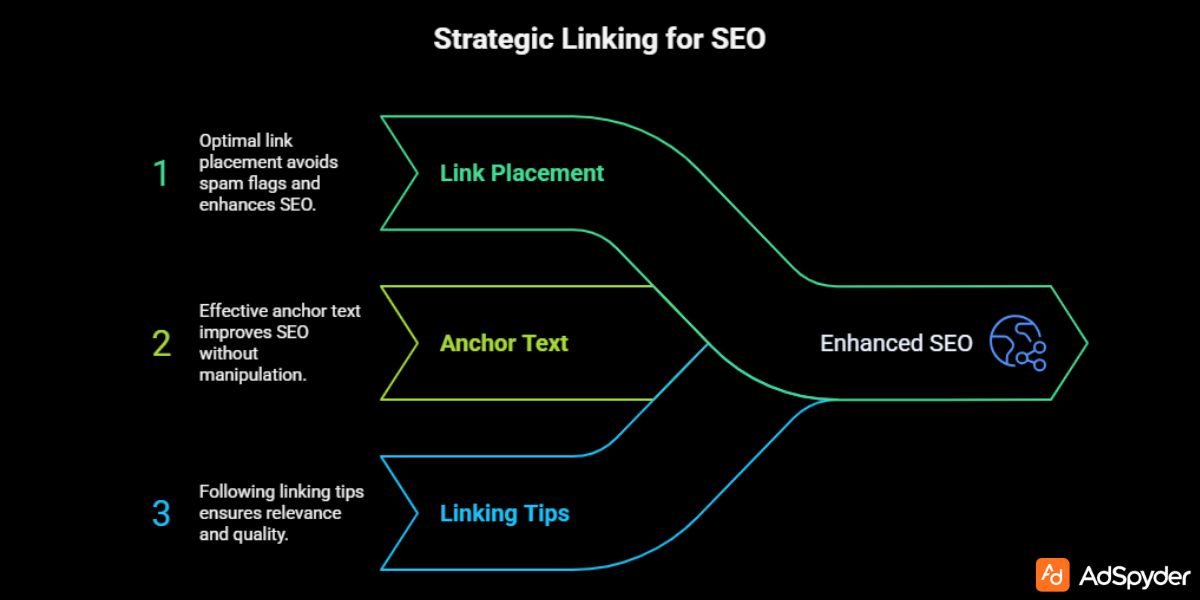
Links inside press releases must follow best practices to avoid being flagged as spammy.
Where to Put Links
- 1 link in the first half (usually to a product page or announcement page)
- 1 link in the boilerplate (to homepage)
- Optional: 1 link to supporting materials (blog post, landing page, documentation)
Best Anchor Text
- Branded anchors (“AdSpyder”)
- URL anchors (https://…)
- Generic anchors (“Learn more”)
Avoid keyword-rich anchors like “best AI tool for ads.”
These look manipulative and may be discounted.
Linking Tips
- Never exceed 2–3 links in total
- Only link to high-quality pages
- Keep links relevant to the announcement
Strategic linking strengthens SEO while staying compliant with PR distribution guidelines.
Formatting for Readability & Visibility: Press Release for SEO
Search engines reward content that is structured and easy to read.
Improve formatting by including:
Short Paragraphs
2–3 lines each.
Press releases are scanned, not read thoroughly.
Bullet Points and Lists
Use lists for features, updates, milestones, or event details.
Meaningful Subheadings
Include H2s and H3s that summarize each section.
Quotes
Quotes break monotony and often get reused in external publications.
Strong Opening Sentences
The first 2–3 lines determine whether journalists continue reading.
Multimedia (Optional)
Embedded images, product screenshots, or videos (if hosted on your site) can increase engagement.
These formatting upgrades improve user experience and indirectly support SEO.
How to Distribute a Press Release for SEO: Maximum Impact
An optimized press release is only helpful if people see it.
Distribution affects reach, backlinks, and visibility.
1. Newswire Distribution
Send to platforms like:
- PRWeb
- BusinessWire
- GlobeNewswire
- PR Newswire
They have high domain authority and increase your chances of coverage.
2. Niche or Industry Publications
Target industry-specific sites—these often give more relevant backlinks and interested audiences.
3. Journalist Outreach
Emailing journalists directly can lead to editorial articles and stronger backlinks than automated syndication.
4. Company-Owned Channels
Post the press release on:
- Your website
- Blog
- LinkedIn
- Twitter
- Email newsletter
- Product update page
This increases traffic and gives search engines more signals.
5. Communities and Forums
Announce updates in platforms like:
- Reddit
- Hacker News
- Indie Hackers
- Industry-specific communities
This expands organic reach and discussion.
The more targeted and strategic your distribution, the greater the SEO and PR return.
Examples of High-Performing Press Release for SEO
Use examples to help readers visualize structures.
Example: SaaS Product Launch Press Release
Headline:
AdSpyder Introduces Real-Time AI-Powered Ad Intelligence Platform for Marketers
Lead Paragraph:
AdSpyder, a leading competitive intelligence platform, today announced the launch of its new AI-powered tool designed to help marketers analyze competitor ads across multiple platforms in real time.
Key Features:
- Real-time API monitoring
- Multi-platform ad visibility
- Audience and keyword insights
- Exportable competitor reports
Quote:
“Our goal is to democratize ad intelligence,” said the CEO. “This launch brings enterprise-level insights to marketers everywhere.”
CTA:
Learn more at: https://example.io/product
Example: Funding Press Release
Headline:
AdSpyder Secures $5 Million Seed Funding to Expand Global Ad Intelligence Capabilities
Details:
Include investor information, product plans, market impact, quotes from founders and investors, and future roadmap.
These examples help readers replicate optimized structures.
Common Mistakes to Avoid in Press Release for SEO
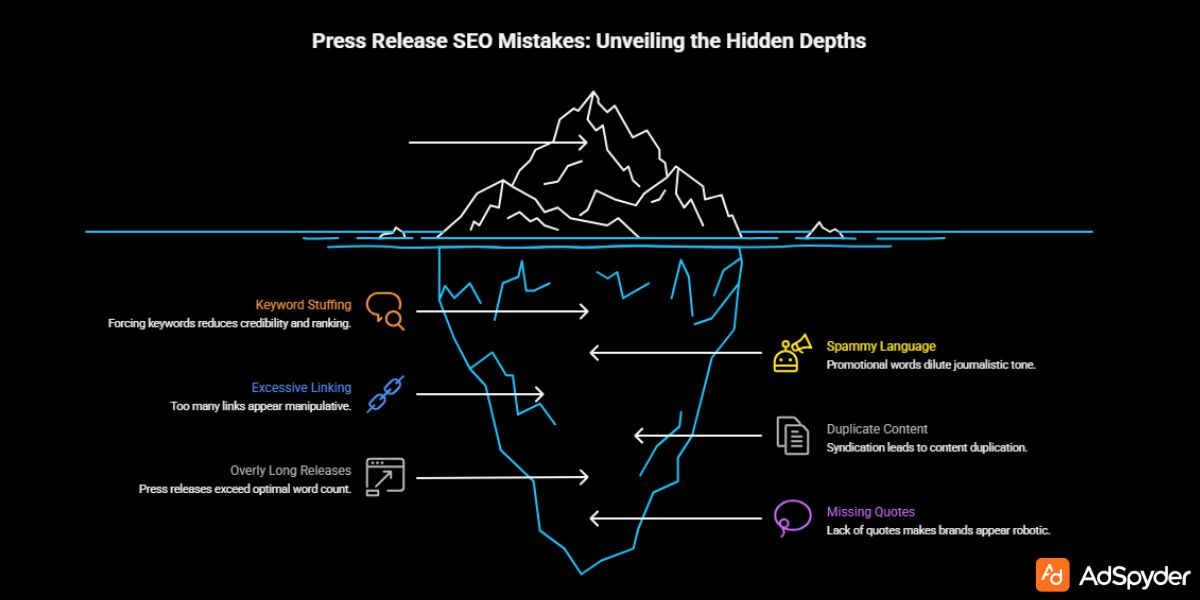
Avoid these pitfalls to ensure your press release helps rather than harms your SEO:
Writing Non-Newsworthy Content
Search engines and journalists ignore press releases that aren’t genuinely newsworthy.
Keyword Stuffing
Forcing keywords reduces credibility and may lower ranking potential.
Using Spammy, Promotional Language
Words like “best,” “revolutionary,” or “guaranteed” dilute journalistic tone.
Adding Too Many Links
More than 2–3 links looks manipulative; distribution networks may reject the release.
Publishing Duplicate Content
If syndication leads to duplication, ensure your website hosts the canonical version. Press release templates for quick PR wins are ideal, but make sure your content is diverse and avoid plagiarism.
Creating Overly Long Press Releases
Stay between 400–600 words for maximum impact and readability.
Not Providing Quotes
Quotes add personality and authenticity—brands that skip them look robotic.
Press Release for SEO: Checklist
Before you publish, ensure your press release meets these criteria:
Headline
- Includes main keyword
- 60–80 characters
- Clearly states the news
Lead Paragraph
- Contains 5Ws
- Secondary keyword naturally included
Body
- Clear structure
- Benefits and features explained
- Contains one quote
Links
- 1–2 contextual links
- No keyword-stuffed anchors
Formatting
- Bullet points
- Short paragraphs
- Subheadings
Distribution
- Published on company channels
- Submitted to newswires
- Sent to journalists
This checklist ensures your press release is optimized both for search and for media pickup.
FAQs: Press Release for SEO
Do press releases still help with SEO?
Yes. When optimized, they earn authoritative backlinks, improve visibility, and drive traffic.
How many links should an SEO press release include?
No more than 2–3. Use branded or natural anchors.
Can press releases help my website rank?
They support your SEO strategy indirectly by boosting authority, visibility, and brand signals.
Should I include keywords in the headline?
Absolutely—this improves relevance for search engines and journalists.
How long should SEO-optimized press releases be?
Typically 400–600 words, though news-heavy announcements can be longer.
Do syndicated press releases count as duplicate content?
Not in a harmful way, but your website should host the canonical version for best SEO benefits.
Conclusion: Press Release for SEO
Press releases remain a powerful tool for SEO when used strategically. By combining newsworthy content, optimized structure, keyword placement, clean formatting, and smart distribution, brands can turn every press release into an asset that improves rankings, builds authority, and strengthens visibility.
When integrated into a broader SEO strategy, press releases can support link-building, enhance topical relevance, and create lasting brand impact across search engines and media platforms.