

Gambling advertising is evolving fast — and so is the responsibility that comes with promoting betting, casinos, or online gaming platforms. Regulators, advocacy groups, and consumers are increasingly aware of the risks associated with gambling, which means advertisers must learn how to market ethically, transparently, and with harm-minimisation in mind. Responsible gambling ads are not just a legal requirement. It’s a trust-building strategy that helps brands grow sustainably, reduces risk, and protects vulnerable audiences.
Whether you’re planning display campaigns, refining LinkedIn ad strategies, running content-led promotions, or exploring location based gambling ad strategies, this guide will help you promote gambling responsibly and compliantly.
What Is Responsible Gambling Advertising?
Responsible gambling advertising refers to marketing that promotes gambling services in a safe, transparent, and ethical way. This means ensuring that ads do not target vulnerable individuals, do not include manipulative tactics, and do not imply unrealistic outcomes.
At its core, responsible gambling advertising protects:
-
Minors
-
People with gambling vulnerabilities
-
Individuals susceptible to misleading or emotionally driven messaging
It’s a fundamental part of maintaining industry integrity and long-term customer trust.
Why Responsible Gambling Ads Matter
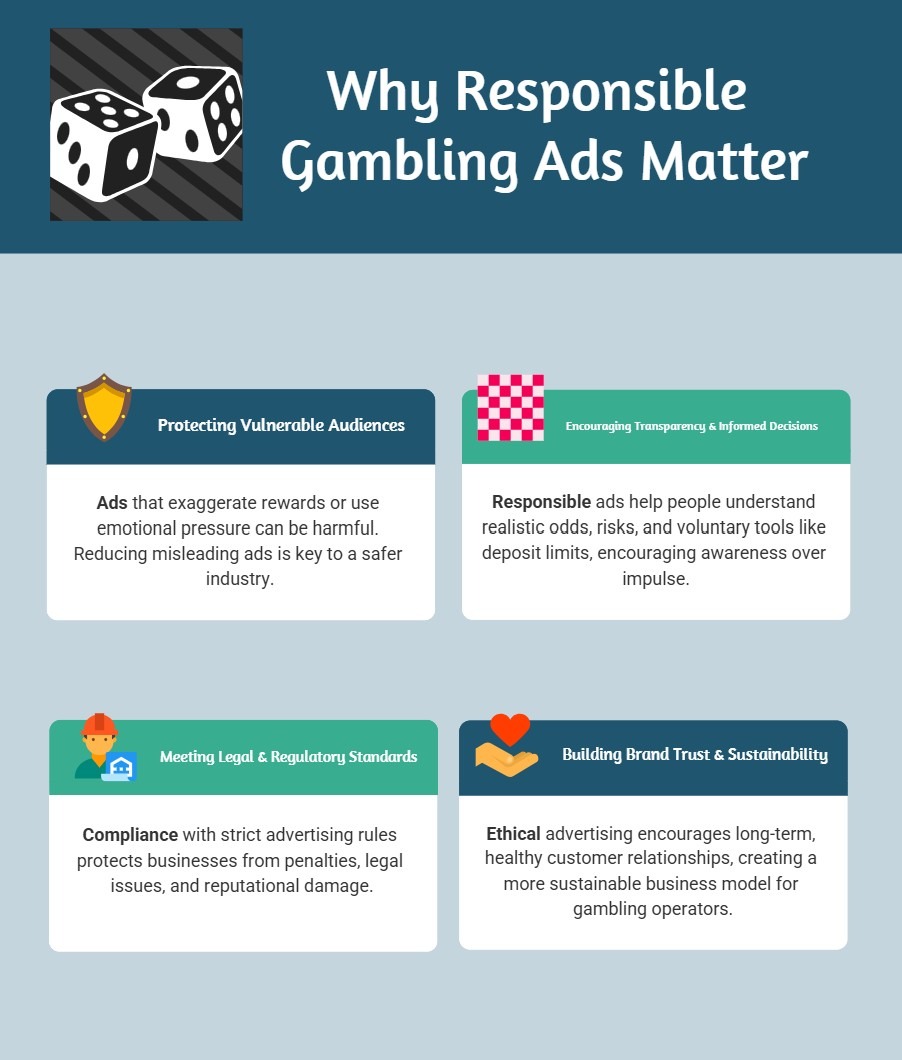
1. Protecting Vulnerable Audiences
Gambling can be addictive and harmful when not carefully managed. Ads that exaggerate rewards, imply financial rescue, or use emotional pressure can lead to harmful outcomes. Reducing the prevalence of misleading gambling ads is the first step toward a safer industry.
2. Encouraging Transparency & Informed Decisions
Responsible ads help people understand:
-
Realistic odds
-
Risks associated with gambling
-
Voluntary tools like deposit limits or cooling-off periods
The goal is to help users gamble with awareness, not impulse.
3. Meeting Legal & Regulatory Standards
Most regions enforce strict advertising rules for gambling. Compliance protects your business from:
-
Revenue penalties
-
Legal consequences
-
Licensing issues
-
Reputational damage
Using measurable performance frameworks like google ad campaign metrics helps ensure campaigns stay compliant and effective.
4. Building Brand Trust & Sustainability
Ethical advertising reduces short-term exploitation and encourages long-term, healthy customer relationships — a more sustainable business model for any gambling operator.
Core Principles for Ethical Gambling Advertising
Truthfulness & No Misleading Claims
Ads must never:
-
Promise guaranteed wins
-
Imply gambling is a way to solve financial issues
-
Exaggerate or glamorize success
Transparency builds trust — something many industries, including sectors like video marketing for nonprofits, have used effectively.
Clear Risk Disclosures
Responsible ads clearly communicate:
-
“18+” or legal-age guidelines
-
Risk warnings
-
Help resources and helplines
-
Terms and conditions for bonuses
Risk information should be visible, readable, and not hidden behind animations or distractions.
Avoid Targeting Minors or Vulnerable Individuals
This means:
-
No youth-focused imagery
-
No cartoon or gaming-style characters that appeal to children
-
No placement where minors form a significant portion of the audience
Prominent Responsible Gambling Messages
Ads should feature:
-
“Play Responsibly” badges
-
Self-exclusion links
-
Deposit limit reminders
-
Support services
These help create a safe and informed environment for gamblers.
3. Required Responsible Messaging
Many regions require visible disclaimers or support links like:
-
“Gambling involves risk”
-
“Play responsibly”
-
Self-exclusion options
Operators must integrate these into all campaigns, including dynamic or automated ads.
Regulatory Standards & Industry Codes
Regulations differ between countries, but most frameworks align around three core principles:
1. Age Gating / Audience Restrictions
Platforms should use:
-
Verified age-based targeting
-
Placement controls
-
Content filters
Whether you’re advertising through social ads, search ads, or newer formats like google shopping ads, ensuring adult-only targeting is essential.
2. Content Restrictions
Regulations commonly forbid gambling ads from:
-
Suggesting gambling will make someone rich
-
Framing gambling as a cure for stress or loneliness
-
Associating gambling with success, attractiveness, or status
-
Using influencers who appeal to minors
3. Required Responsible Messaging
Many regions require visible disclaimers or support links like:
-
“Gambling involves risk”
-
“Play responsibly”
-
Self-exclusion options
Operators must integrate these into all campaigns, including dynamic or automated ads.
Best Practices for Responsible Gambling Ads
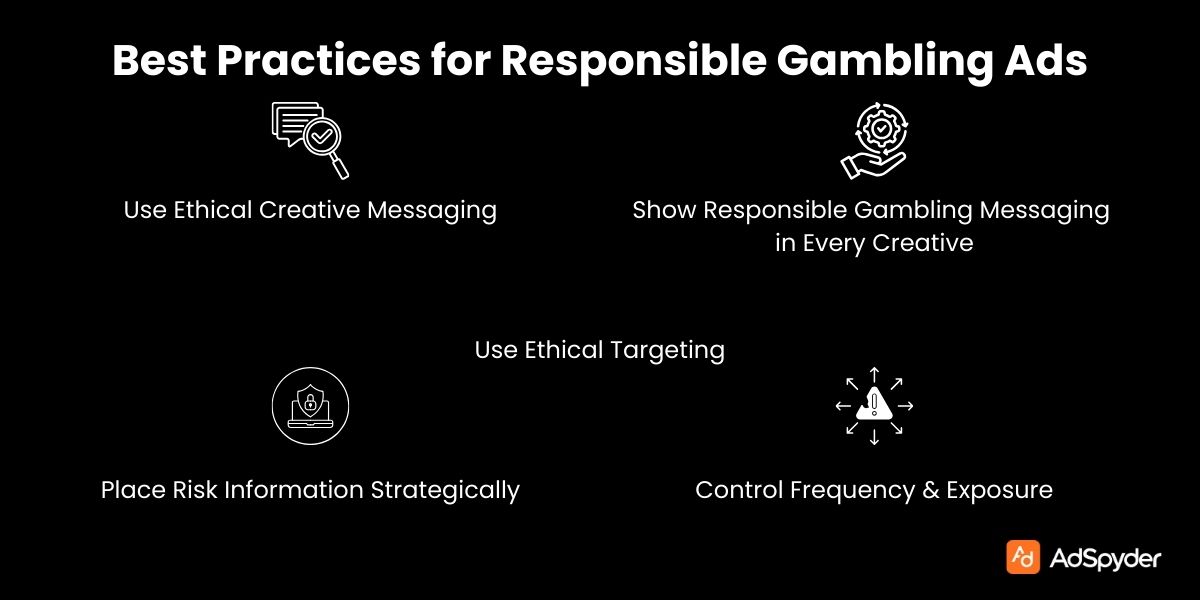
Use Ethical Creative Messaging
Instead of glamorizing big wins or luxury lifestyles, focus on:
-
Entertainment value
-
Community engagement
-
Educational content
-
Realistic expectations
Show Responsible Gambling Messaging in Every Creative
Example placements:
-
Banners
-
Video lower thirds
-
Landing page headers
-
End cards
-
Audio callouts
Place Risk Information Strategically
Don’t hide disclaimers. Include them prominently in:
-
Video ads
-
Display creatives
-
SMS promotions
-
Social posts
Control Frequency & Exposure
Gambling ads shown too frequently can create undue influence. Use frequency caps and monitor exposure with robust google ad campaign metrics dashboards.
Use Ethical Targeting
Ensure your campaigns do not:
-
Target high-risk audiences
-
Exploit behavioral vulnerabilities
-
Over-retarget users who have opted out
Balancing Business Goals With Ethical Advertising
Responsible gambling advertising helps brands:
-
Maintain long-term customer loyalty
-
Reduce support costs related to harm
-
Avoid negative press or regulatory action
-
Build an ethical reputation in a sensitive industry
Ethical advertising is increasingly valued — a trend mirrored across industries such as video marketing for nonprofits, where trust and integrity shape audience engagement.
Challenges & Criticisms of Responsible Gambling Ads
1. Normalizing Gambling Among Youth
Even when ads follow rules, exposure may still normalize gambling behavior. Brands must avoid any youth-aligned trends, sounds, or visuals.
2. Difficulty Ensuring All Creatives Stay Compliant
Automated ad systems (e.g., auto-resizing banners, dynamic creatives) can unintentionally crop or hide disclaimers.
3. Mixed Effectiveness of Warning Messages
Risk disclosures only work if they’re readable, designed well, and placed prominently.
Responsible Gambling Ads Checklist
Compliance & Targeting
- Age gates applied correctly
- Audience filters exclude minors
- Clear risk disclaimers
Creative Standards
- No glamorization of winnings
- No unrealistic promises
- Avoid misleading gambling ads tactics
User Support
- Self-exclusion links
- Deposit limit prompts
- Help service info
Campaign Management
- Frequency caps applied
- Audience exclusions set
- Performance tracked through google ad campaign metrics
Conclusion
Responsible gambling advertising isn’t just a legal expectation — it’s a critical part of building an ethical, sustainable gambling ecosystem. By following clear guidelines, focusing on transparency, and avoiding manipulative messaging, brands can protect users while still achieving their marketing objectives.
Whether you’re optimizing LinkedIn ad strategies, refining search and display campaigns, or experimenting with location based gambling ad strategies, responsible communication ensures your brand grows the right way — with fairness, safety, and long-term trust.
FAQs — Responsible Gambling Ads
What is responsible gambling advertising?
It’s marketing that promotes gambling safely by avoiding misleading claims, protecting vulnerable audiences, and including clear risk and support messages.
Why do gambling ads need responsible messaging?
Responsible messaging prevents harm, ensures transparency, and helps brands comply with strict regional advertising regulations.
What are examples of misleading gambling ads?
Ads that promise guaranteed wins, glamorize wealth, or imply gambling solves financial problems are considered misleading and non-compliant.
Who should gambling ads avoid targeting?
Minors, vulnerable individuals, high-risk audiences, and anyone who has opted out or self-excluded from gambling platforms.
What information must be included in responsible gambling ads?
Risk warnings, age restrictions, disclaimers, help resources, and responsible gambling messages like “Play Responsibly.”
How can advertisers ensure compliance with regulations?
Use age gating, frequency caps, clear disclaimers, ethical messaging, and monitor performance using tools like google ad campaign metrics.
How often should advertisers review their gambling creatives?
Creatives should be reviewed regularly—especially when launching new formats or using automated tools—to ensure no disclaimers or safety messages are lost.