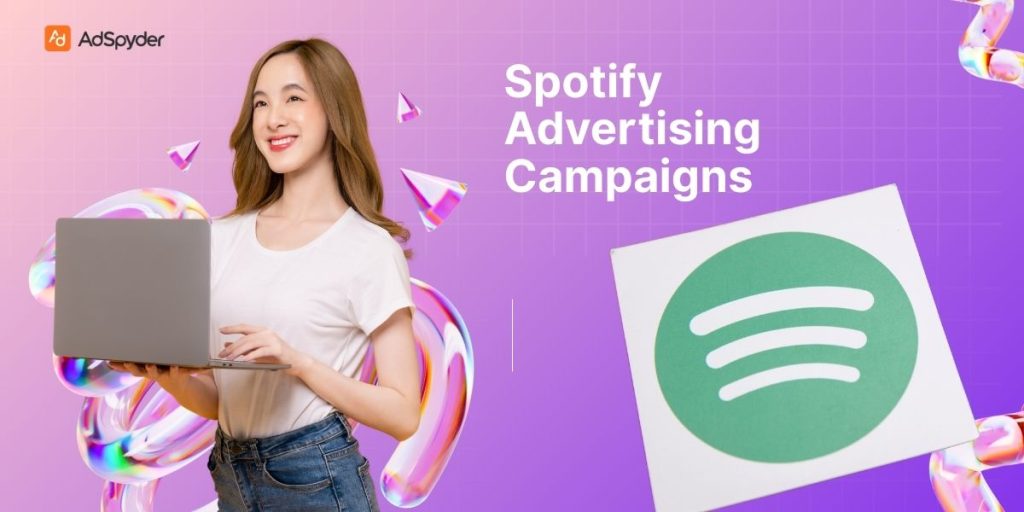
Spotify advertising campaigns work differently than most channels because the “feed” is literally someone’s mood. People don’t open Spotify to browse products—they open it to focus, relax, commute, celebrate, or escape. That’s why a great Spotify marketing strategy doesn’t start with “What do we sell?” It starts with: What moment are we entering, and what feeling do we amplify?
This 2026-ready guide breaks down Spotify adverts, what makes them convert (or get skipped), and how to build a repeatable Spotify promotion strategy that works across awareness, consideration, and performance. You’ll also see Spotify advertising examples you can model, plus a practical Spotify brand strategy approach and a simple Spotify marketing strategy analysis checklist you can apply to your own campaigns.
What Is Spotify Advertising?
Spotify advertising is the set of paid placements that let brands show audio, video, or display experiences to listeners while they stream music and podcasts. The important difference is context: Spotify sits inside a moment. The listener is doing something (working out, studying, commuting), and your ad either fits that moment or it feels like noise.
- Audio = emotion + memory: voice + music hooks stick.
- Podcast = trust + attention: longer listening, higher focus.
- Video/display = action: clicks, installs, signups, and retargeting.
So a strong Spotify marketing strategy is not “run ads on Spotify.” It’s: choose the moment, match the message, and connect the next step (landing page, app store, offer, or retargeting).
Key Spotify Advertising Statistics (Quick Snapshot)
Why Spotify Advertising Campaigns Work (When They’re Built for a Moment)
Spotify is a mood engine. People choose playlists and podcasts to shape their energy. That gives advertisers a rare advantage: you can align your message with what the person is already trying to feel.
- Emotional relevance: messages land better when they match a mood.
- Repeated exposure without fatigue: audio brand cues (voice/music) build familiarity.
- Podcast trust: audiences often “lean in” to longer content and hosts.
- Low-friction discovery: you can introduce a brand while the listener is already engaged.
The common mistake is forcing “hard-sell performance copy” into a soft moment. Spotify promotion strategy works best when you earn attention first and ask for action second.
Spotify Ad Formats (What to Use and When)
Think in funnel roles. Each format has a “best job.” Here’s a practical mapping you can use to plan Spotify advertising examples without overthinking.
| Format | Best for | Message style |
|---|---|---|
| Audio ads | Awareness + recall | Short story + one benefit + one CTA |
| Podcast placements | Trust-building | Education, “why now,” and credibility |
| Video ads | Attention + action | Visual proof, demo, and clear next step |
| Display / overlay | Clicks and reminders | Offer + urgency + simple CTA |
| Sponsored playlists / contextual | Moment-based relevance | “For this mood” positioning |
If you’re picking just one to start: choose audio for brand lift, video for faster clicks, and podcast for deeper trust. Then build retargeting on another channel where the user is ready to act.
Targeting & Audience Strategy in Spotify Advertising Campaigns (Stop Over-Segmenting)

Targeting is powerful on Spotify, but the biggest wins often come from simple segmentation paired with a strong message. Here’s a clean approach that works for most Spotify advertising campaigns.
- Moment targeting: workout, focus, commute, weekend, party, sleep.
- Behavior targeting: music/podcast interests related to your product category.
- Lifecycle targeting: new prospects vs retargeting (site visitors, app installers, CRM audiences).
The targeting rule: if your ad is about a feeling, prioritize moments. If your ad is about a solution, prioritize interest and intent. If your ad is about a deal, prioritize retargeting.
Want a cheat code? Don’t guess what “works.” Study what brands repeat across channels and then translate the winning hook into Spotify-friendly audio. Competitive pattern research is easier when you can see what brands are pushing across their full mix—then you can build a Spotify promotion strategy that matches what’s already converting elsewhere.
Creative Playbook: What to Say in Spotify Advertising Campaigns
Spotify is not a billboard; it’s a soundtrack. Your creative should feel like a natural interruption. The highest-performing Spotify advertising examples usually follow a simple structure:
- Mirror the moment: “On your commute?” “Mid-workout?” “Trying to focus?”
- One benefit: one clear outcome (save time, feel better, learn faster, look better).
- One action: “Try it today,” “Get the app,” “Book now,” “Start free.”
Brand cues matter more than you think
Audio builds memory through repetition: voice, signature phrase, and sound. If you change everything every week, you lose the compounding effect. Keep one stable “brand cue” and rotate the offer or the moment.
Spotify itself is a masterclass in brand cues. If you want a seasonal reference point with clear emotional positioning, review these Spotify ads and note how they anchor on the moment first, then make the product feel like part of the mood.
Spotify Promotion Strategy (A Practical 4-Stage Plan)
A working Spotify promotion strategy is not one campaign. It’s a sequence where each stage has one job. Here’s a simple system you can implement in 30 days.
Stage 1: Seed the promise (Awareness)
Use audio or short video to introduce one message: “Who it’s for” + “what it helps you do.” Avoid heavy features. Your goal is familiarity and relevance.
Stage 2: Prove it (Consideration)
Add proof: reviews, outcomes, a quick demo, or a micro-story. Podcast placements can be powerful here if your product requires trust.
Stage 3: Close with a simple offer (Action)
Retarget listeners who engaged (or clicked) with a clean CTA: trial, discount, bundle, or “book a demo.” Keep landing pages short and frictionless.
Stage 4: Expand the moment (Scale)
When you find a winning “moment + message,” clone it into adjacent moments instead of reinventing everything. Example: “commute productivity” expands to “work focus” and “Sunday reset.”
Spotify Advertising Campaigns Brand Strategy (How Spotify Built a Category Feeling)
A good Spotify brand strategy is built on one idea: Spotify doesn’t sell “music streaming.” It sells identity and moments. That’s why their marketing doesn’t obsess over technical features first—it focuses on how the listener’s life feels with Spotify in it.
- Moment-first messaging: campaigns speak to situations (not specs).
- Personalization as identity: “this is your taste” is a powerful hook.
- Creator + culture loops: Spotify stays close to artists and trends.
- Consistent brand cues: tone, humor, and recognizable design patterns.
- Multi-format storytelling: audio, video, OOH, social—same core idea.
If you want a comparable example of how a brand repeats emotional hooks across channels (and still drives action), breaking down Burger King ads is useful—because it’s another brand that wins through consistent tone, sharp positioning, and repeatable creative series.
Spotify Advertising Campaigns Examples (Templates You Can Copy)
Below are practical Spotify advertising examples you can adapt. Each one ties a moment to a single promise and a clean next step.
Example 1: “Commute reset” (Audio)
Hook: “On your commute right now?”
Benefit: “Make the next 20 minutes calmer / more productive.”
CTA: “Try it today—tap to start.”
Example 2: “Gym push” (Audio + overlay)
Hook: “Mid-workout?”
Benefit: “Fuel your session with a quick boost.”
CTA: “Tap to get the offer.”
Example 3: “Focus session” (Video)
Visual: timer + simple demo (3 steps).
Message: “Do more in the next 30 minutes.”
CTA: “Start free.”
Example 4: “Weekend plan” (Podcast)
Angle: tell a short story about a problem the listener recognizes.
Proof: “Here’s what changed after using it.”
CTA: “Use code WEEKEND.”
Example 5: Travel moment cross-reference (Good for OTAs)
If you’re in travel, Spotify can be a great awareness channel that later converts on marketplaces. Pair Spotify awareness with the booking stage on platforms like
TripAdvisor ads and use campaign sequencing: Spotify for mood + destination inspiration, then marketplace retargeting for booking intent. For hotel and destination marketers, exploring Agoda ad campaigns can also help you see how travel brands convert inspiration into bookings.
Omni-Channel Marketing: Where Spotify Fits Best
Spotify performs best as a top and mid-funnel accelerator that feeds your other channels. The listener hears you in a moment, then later sees you again on social, search, or marketplaces when they’re ready to act.
- Spotify: introduce promise + mood alignment.
- Social: show proof (UGC, testimonials, demos).
- Search: capture intent (brand + category).
- Retargeting: close with offer + urgency.
Measurement & Reporting for Spotify Advertising Campaigns (What to Track Weekly)

Spotify is often used for awareness, so teams measure it incorrectly. Don’t only look for last-click conversions. Build a balanced scorecard:
- Reach & frequency: are the right people hearing you enough times to remember?
- Completion rate: are listeners staying through the audio/video?
- Lift signals: branded search growth, direct traffic growth, save/share behavior (if applicable).
- Retargeting performance: how do Spotify-exposed users convert on social/search?
- Offer performance: which CTA converts best (trial vs discount vs bundle)?
The best reporting habit: review one campaign per week like a “creative audit.” Keep what’s working, then make small controlled changes (one variable at a time).
FAQs: Spotify Advertising Campaigns
What are Spotify advertising campaigns?
Do Spotify adverts work for performance marketing?
What is the best Spotify marketing strategy for beginners?
How do I choose targeting for Spotify advertising?
What makes Spotify advertising examples perform well?
What is a Spotify promotion strategy?
How do I do Spotify marketing strategy analysis?
Conclusion
The best Spotify advertising campaigns don’t interrupt—they harmonize. Build your Spotify marketing strategy around moments, keep the message simple, repeat recognizable brand cues, and connect Spotify exposure to retargeting and search capture. Use the 4-stage Spotify promotion strategy to move from awareness to action, and apply a practical Spotify marketing strategy analysis weekly so you improve through controlled testing. When you combine Spotify’s emotional relevance with clean multi-channel follow-through—like a true omni-channel marketing system—you stop “running ads” and start building a compounding brand engine.