Search remains one of the most powerful channels for capturing ready-to-buy pet owners. When someone types “best orthopedic dog bed” or “grain-free dog food near me,” they’re signaling immediate intent. For brands running Google Ads for pet supplies, keyword strategy directly determines success or wasted spend.
This deep dive explains how to refine pet product marketing keywords using competitor intelligence, improve Quality Scores, and drive scalable pet product lead generation—all while aligning with a broader pet e-commerce advertising strategy.
Why Keyword Precision Matters in Google Ads for Pet Supplies
The pet industry is highly competitive, with CPCs rising steadily across search platforms. Industry data shows that pet-related Google Ads CPCs have increased by over 20% in the last two years, largely due to generic keyword targeting.
Successful pet supplies digital marketing campaigns focus on:
- Intent-driven keywords
- Clear segmentation by product type
- Continuous optimization informed by competitor data
Keyword precision is especially critical for high-margin categories like Dog beds, Dog food, and premium accessories.
Google Ads for Pet Supplies: Understanding High-Intent Search Terms
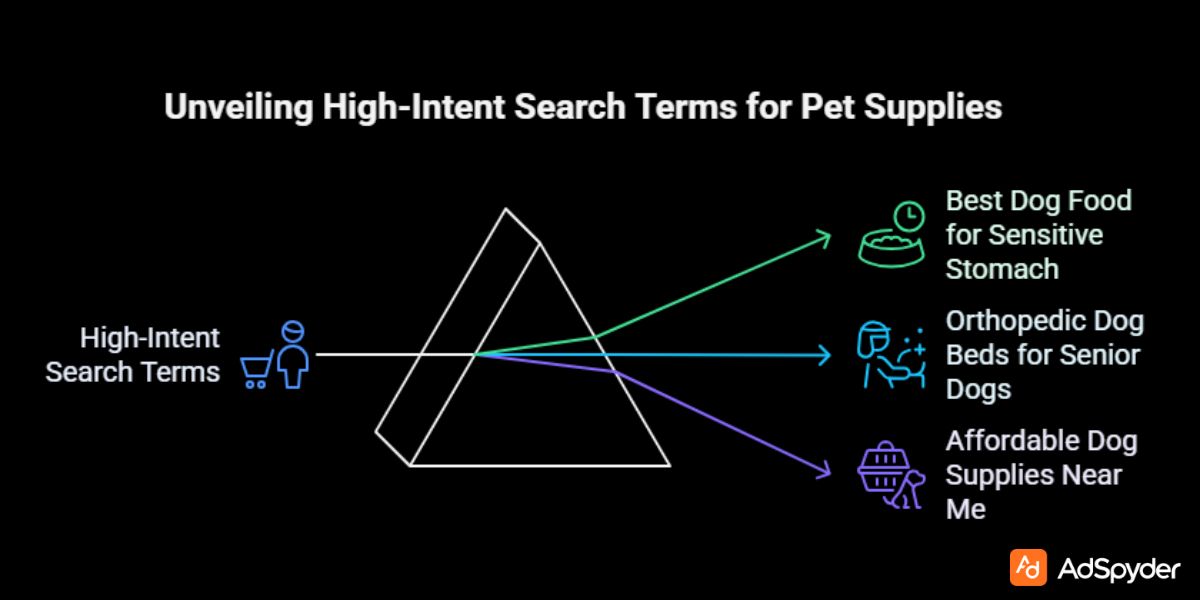
Not all pet-related searches are equal. High-intent pet owners use specific, problem-oriented phrases that indicate purchase readiness.
Examples include:
- “Best dog food for sensitive stomach”
- “Orthopedic dog beds for senior dogs”
- “Affordable dog supplies near me”
By analyzing competitor campaigns, brands can uncover which high-intent pet owner search terms consistently convert—then prioritize them within paid ads for pet products.
This approach complements marketplace strategies such as Amazon ads for pet products, ensuring keyword insights are shared across channels.
Structuring Google Ads for Pet Supplies
Proper campaign structure is essential for controlling costs and improving relevance.
Before launching or restructuring campaigns, brands should separate:
- Branded vs non-branded keywords
- Product-specific keywords (Dog food, Dog beds)
- Problem-solution keywords (joint pain, allergies)
This segmentation improves ad relevance and landing page alignment, which are core principles of high-performing pet e-commerce advertising.
Keyword structure insights can also inform creative messaging used in Facebook ads for pet products, ensuring consistency across search and social.
Analyzing Google Ads for Pet Supplies for Keyword Insights
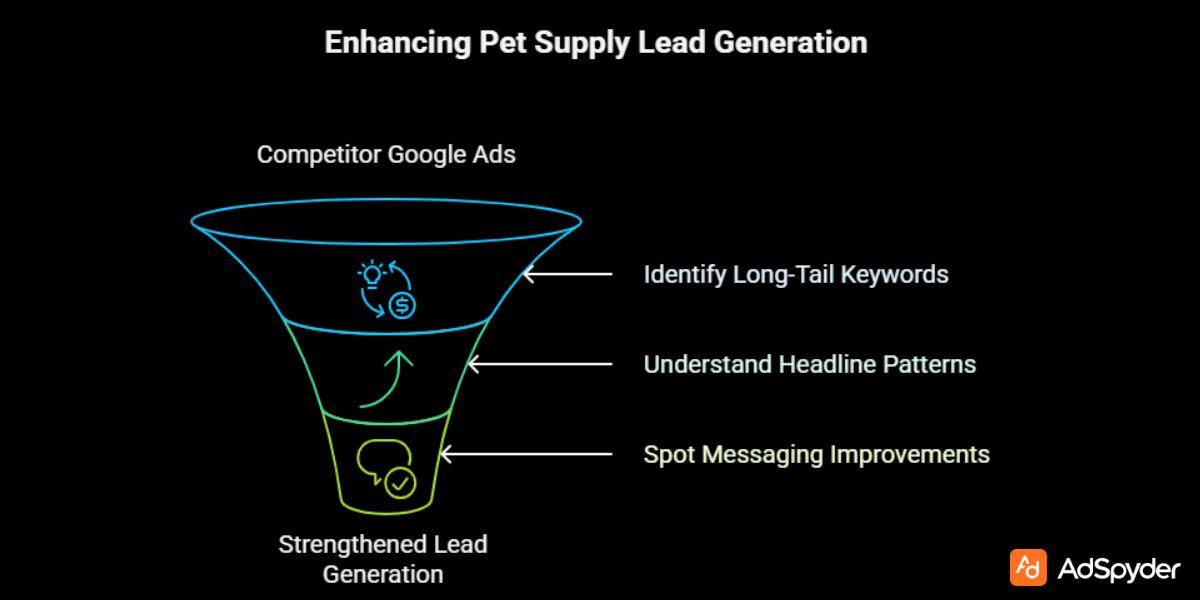
One of the most overlooked advantages in search advertising is competitor keyword analysis.
By reviewing competitor Google Ads for dog supplies, brands can:
- Identify underutilized long-tail keywords
- Understand headline and description patterns
- Spot messaging that improves click-through rate
This intelligence-driven method reduces trial-and-error and strengthens pet product lead generation efforts with proven data.
Optimizing Ad Copy to Match Pet Owner Intent
Keywords alone won’t drive results without relevant ad copy.
High-performing pet search ads typically:
- Address specific pet problems
- Emphasize trust and quality
- Highlight fast shipping or guarantees
For example, ads for Dog beds that mention orthopedic support or vet recommendations tend to outperform generic comfort claims.
This intent-driven copy approach supports conversion optimization strategies for pet subscription box advertising, where clarity and trust are critical for retention-based products.
Reducing CPA Through Continuous Keyword Refinement
Reducing CPA in paid ads for pet products requires ongoing optimization.
Brands should regularly:
- Pause high-cost, low-conversion keywords
- Expand on converting long-tail phrases
- Adjust match types based on performance
Competitor alerts and keyword trend tracking make this process proactive rather than reactive, helping brands stay ahead in crowded auctions.
Localized keyword insights also feed into local pet supplies advertising, where geographic intent plays a major role in profitability.
How AdSpyder Enhances Google Ads for Pet Supplies
AdSpyder for pet product brands supports search advertisers by enabling:
- Analysis of competitor Google Ads for dog supplies
- Keyword-to-campaign mapping across domains
- Monitoring of new keyword launches by rivals
- AI-driven insights to prioritize high-conversion terms
These capabilities integrate seamlessly into a centralized pet e-commerce advertising workflow, ensuring search campaigns remain competitive and efficient.
FAQs: Google Ads for Pet Supplies
Are Google Ads effective for pet products?
Yes. Search ads capture high-intent pet owners actively looking to buy.
What keywords work best for dog supplies?
Long-tail, problem-focused keywords typically deliver the best ROI.
How can I lower CPA in Google Ads for pet supplies?
Refine keywords, improve Quality Score, and align ads with landing pages.
Should I separate Dog food and Dog beds campaigns?
Yes. Separate campaigns improve relevance and budget control.
How often should keywords be reviewed for Google Ads for pet supplies?
Weekly reviews are ideal in competitive pet categories.
Can competitor keyword tracking really help?
Absolutely. It reveals proven terms and reduces wasted spend.
Do local pet keywords convert better?
Yes. “Pet supplies near me” keywords often signal immediate purchase intent.
Conclusion
Google Ads performance is built on precision. When you prioritize pet product marketing keywords that match real buyer intent—and structure campaigns by product and problem—you reduce wasted spend and scale efficiently. Pairing keyword refinement with competitor analysis keeps your strategy fresh as auctions shift.