
Google Ads for spas can be one of the fastest ways to drive bookings—but only when keyword strategy is done right. Many spa brands burn budget chasing generic traffic, while competitors quietly win appointments by focusing on high-intent spa keywords that signal real buying intent.
This guide breaks down how spa businesses can dominate paid search by aligning keyword intelligence, competitor analysis, and funnel relevance—turning clicks into confirmed appointments.
Why High-Intent Keywords Matter in Google Ads for Spas
Not all clicks are created equal. In spa digital marketing, success depends on capturing users who are ready to book—not just browse.
Searches like:
- “spa”
- “massage services”
- “day spa”
often attract low-intent users researching options.
In contrast, high-intent searches such as:
- “Botox Near Me”
- “Hydrafacial Near Me”
- “deep tissue massage spa near me”
indicate urgency and decision-stage behavior. These queries are the backbone of profitable paid ads for spa services.
Spa brands that prioritize intent over volume consistently see stronger spa lead generation and lower acquisition costs.
Understanding the Real Competition in Google Ads for Spas
Most spa marketers underestimate their competition. You’re not just competing with nearby spas—you’re competing with:
- Medical spas
- Dermatology clinics
- Wellness chains
- Boutique solo practitioners
This is why local spa advertising requires more than guesswork. You need visibility into:
- Which competitors are bidding on which keywords
- What ad copy they’re using
- Which landing pages convert best
Using competitor ad intelligence as the foundation of your spa marketing strategy ensures your Google Ads investment goes toward proven demand, not assumptions.
This is where AdSpyder for Smarter Spa Digital Marketing acts as the central hub for uncovering real-world competitive insights.
Finding Cost-Effective High-Intent Spa Keywords
High-intent does not always mean high-cost. Many profitable opportunities exist beyond obvious keywords.
Effective keyword discovery focuses on:
- Service + location combinations
- Long-tail variations with booking intent
- Competitor landing page alignment
Before launching campaigns, spa marketers should analyze keyword behavior across competitor ads to identify gaps in bidding and messaging.
Key signals to prioritize include:
- Repeated use of the same keyword across multiple competitor ads
- Keywords linked to booking-focused landing pages
- Terms paired with urgency language such as “same day,” “appointment,” or “near me”
By focusing on these signals, spa brands can reduce wasted spend while improving conversion likelihood—one of the biggest advantages of Google Ads for spas done correctly.
Aligning Ad Copy with Search Intent in Google Ads for Spas
Even the best keywords fail when ad messaging doesn’t match intent.
For example:
- Users searching “best spa deals” respond to price clarity and limited-time offers
- Users searching “Botox Near Me” respond to credibility, expertise, and safety cues
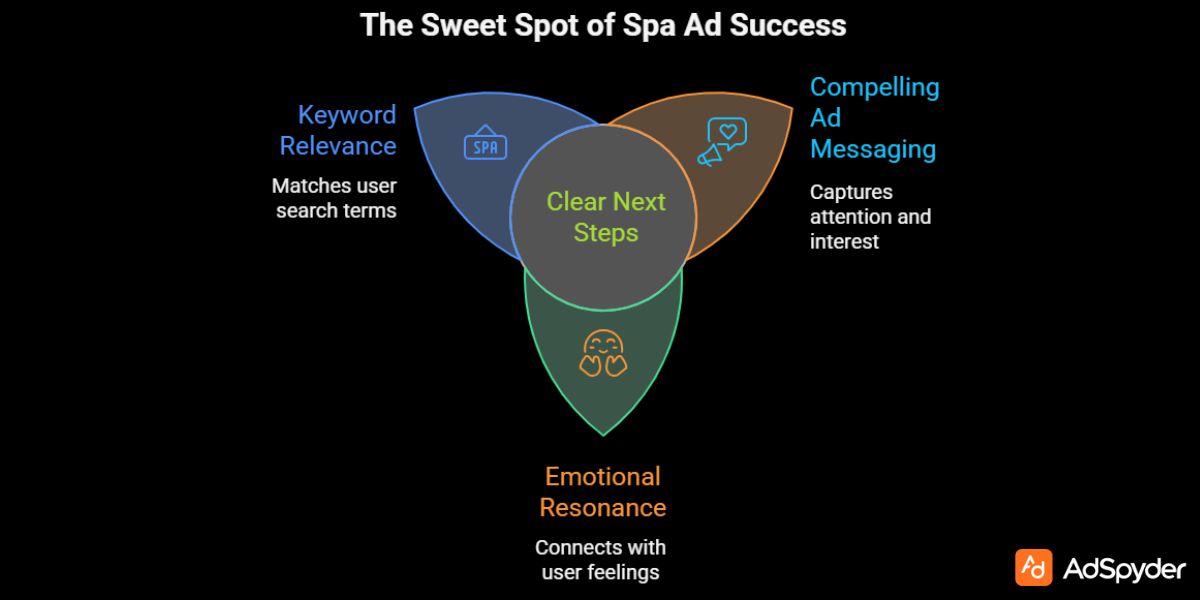
Winning massage spa paid advertising combines:
- Keyword relevance
- Emotional resonance
- Clear next steps
This is where AI-assisted creative generation becomes valuable—especially when trained on real competitor performance data.
Reducing CPA Through Funnel-Relevant Keywords
A common mistake in spa advertising is optimizing only for clicks instead of bookings.
High-performing spa campaigns ensure:
- The keyword promise matches the ad message
- The ad message matches the landing page
- The landing page removes friction from booking
Mapping keywords directly to competitor funnels reveals:
- Which offers convert best
- How competitors structure booking pages
- Where drop-offs occur
This insight helps improve both ad performance and booking rates—critical for creating scalable spa lead generation funnels.
Scaling Local Spa Advertising Without Inflating Costs
As more spas enter paid search, bidding wars become inevitable. Smart brands avoid this by adapting faster—not spending more.
Winning strategies include:
- Monitoring competitor keyword shifts weekly
- Identifying newly launched campaigns early
- Adjusting bids based on seasonal demand
Real-time visibility into competitor activity allows spa marketers to respond before costs spike—especially for competitive searches like “[spa service] near me.”
Measuring Success Beyond Clicks in Google Ads for Spas
Dominating Google Ads for spas isn’t about traffic—it’s about outcomes.
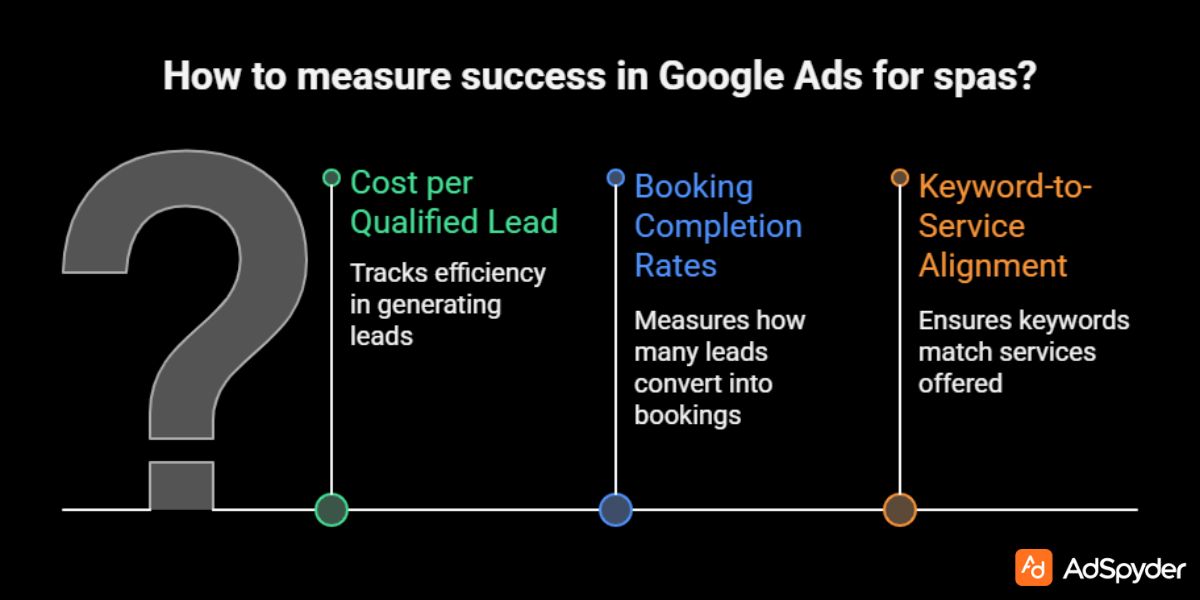
High-performing campaigns consistently track:
- Cost per qualified lead
- Booking completion rates
- Keyword-to-service alignment
Industry benchmarks show that advertisers using intent-aligned keywords and optimized landing pages can reduce CPA by 20–35%, while improving conversion rates by over 30% compared to broad-match campaigns.
This is why top spa brands treat keyword strategy as a living system—constantly refined through data, not assumptions.
FAQs: Google Ads for Spas
What are high-intent spa keywords?
They are search terms that indicate immediate booking intent, such as service-specific “near me” searches.
Are Google Ads effective for spas?
Yes. When paired with intent-focused keywords, Google Ads consistently drive qualified spa leads.
How much should spas spend on Google Ads?
Budgets vary, but focusing on high-intent keywords allows even smaller budgets to perform efficiently.
What’s better: Google Ads or social media ads for spa?
Google Ads capture demand; social media ads for spa generate demand. Both work best together.
How do I reduce wasted ad spend?
Eliminate broad keywords and analyze competitor funnels to focus on converting terms.
Do “near me” keywords really convert better?
Yes. Location-based searches often indicate readiness to book locally.
How often should spa keywords be reviewed?
At least monthly, with weekly checks in competitive metro markets.
Conclusion
When keyword strategy is backed by competitor ad intelligence, spa marketers gain visibility into what is already working in their local market. Analyzing competitor keywords, ad messaging, and funnel structure removes guesswork and allows for faster optimization. This is especially critical in competitive local spa advertising environments where delays translate directly into higher costs.
Ultimately, sustainable spa lead generation comes from treating keyword strategy as an evolving system—not a one-time setup. By continuously monitoring performance, refreshing creatives, and adjusting bids based on real-world competitor data, spa brands can maintain visibility, control CPA, and scale bookings with confidence.