Local intent has reshaped spa digital marketing. When users search for a spa service, they’re rarely browsing for inspiration—they’re looking for a nearby provider they can book quickly. Searches like “Hydrafacial near me” or “massage spa near me” are some of the highest-converting queries in wellness marketing today. This guide explains how spa brands can dominate local spa advertising, capture high-intent demand, and convert proximity-based searches into confirmed bookings.
Why “Near Me” Searches Drive Local Spa Advertising
“Near me” searches signal urgency and proximity—two factors that dramatically increase conversion rates. Google’s local search studies consistently show that a majority of local service searches result in action within 24 hours.
For spas, this means:
- Users are often ready to book the same day
- Price sensitivity is lower than generic searches
- Trust and convenience outweigh brand awareness
This makes “[spa service] near me” keywords essential for predictable spa lead generation, especially in competitive urban markets.
To fully capitalize on this demand, local campaigns must be designed differently from generic paid ads for spa services.
Structuring Local Spa Advertising Campaigns for Intent
Before diving into tactics, it’s important to frame the strategy: local spa advertising is about relevance, not reach. Broad targeting increases costs without improving bookings.
High-performing local campaigns are structured around:
- Tight geographic targeting
- Service-specific ad groups
- Location-aligned landing pages
Instead of running one campaign for all services, break campaigns by:
- Core services (massage, facial, Botox, laser)
- Neighborhood clusters or radius targeting
- High-ticket vs entry-level services
This structure ensures budgets are allocated to searches most likely to convert—an approach closely tied to Google Ads for spas.
Using Location Signals to Win Local Spa Advertising
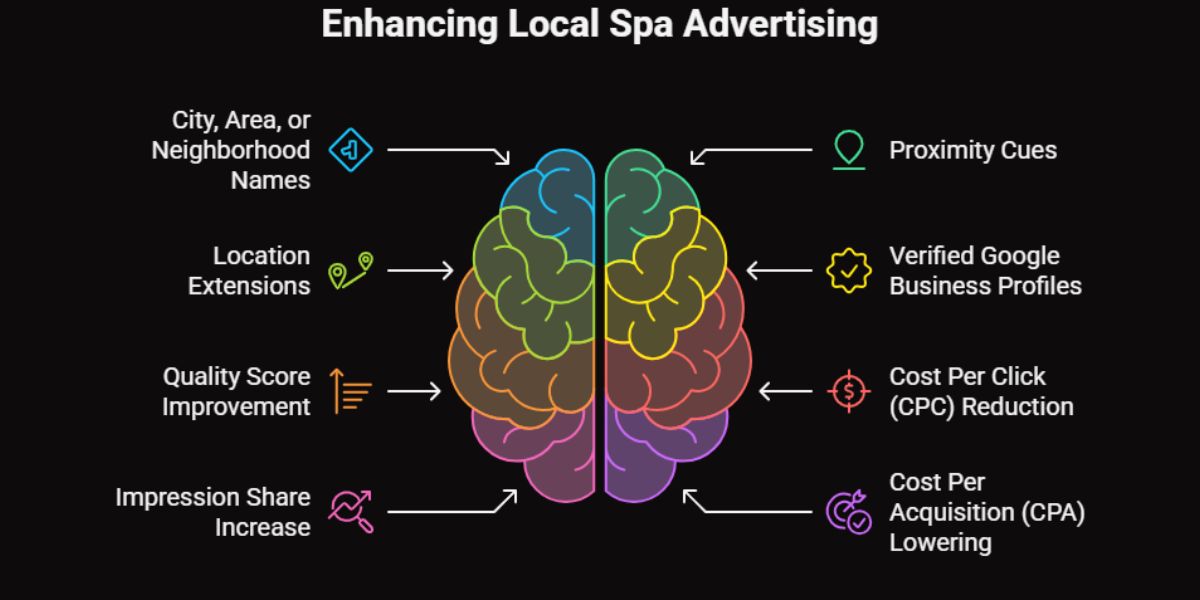
Google evaluates local relevance using multiple signals, not just keywords.
Strong local spa ads reinforce:
- City, area, or neighborhood names in headlines
- Proximity cues like “5 minutes away” or “near Indiranagar”
- Location extensions and verified Google Business Profiles
These signals improve Quality Score, which helps reduce CPC while improving impression share. This is especially critical for competitive searches like “Botox Near Me” or “Hydrafacial Near Me.”
Local relevance is one of the most effective levers for lowering CPA in paid ads.
Local Landing Pages That Convert Intent Into Bookings
Ads, especially local ads should never send traffic to generic service pages. Users searching “near me” expect immediate confirmation that you serve their area.
Before listing best practices, remember this principle: local trust converts faster than brand storytelling.
High-converting local landing pages include:
- Location-specific headlines
- Embedded maps or proximity statements
- Reviews from nearby customers
- Clear booking availability for that location
These pages dramatically outperform generic pages for massage spa paid advertising and medical spa services.
Monitoring Competitor Activity in Local Spa Advertising
Local markets change fast. New offers, seasonal promotions, or aggressive bidding can shift performance within days.
Spa marketers who win locally monitor:
- New competitor campaigns launching in their radius
- Shifts in competitor keyword focus
- Changes in ad messaging or offers
Real-time visibility into these shifts prevents reactive overspending and allows faster tactical responses. This intelligence layer is central to AdSpyder for Smarter Spa Digital Marketing, where local competitor tracking removes guesswork from optimization.
Ad Creative Strategies That Work Best for “Near Me” Searches
Local users don’t want to read—they want reassurance.
Effective ad messaging for local spa searches emphasizes:
- Convenience (“Book today”, “Same-day slots”)
- Trust (“Certified therapists”, “Rated 4.8★ locally”)
- Simplicity (“Easy online booking”)
Avoid generic branding language. Instead, mirror the user’s intent and location directly in the copy.
This approach also helps reduce creative fatigue. Social media ads for spas are greatly benefited by this.
Scaling Local Spa Advertising Without Losing Efficiency
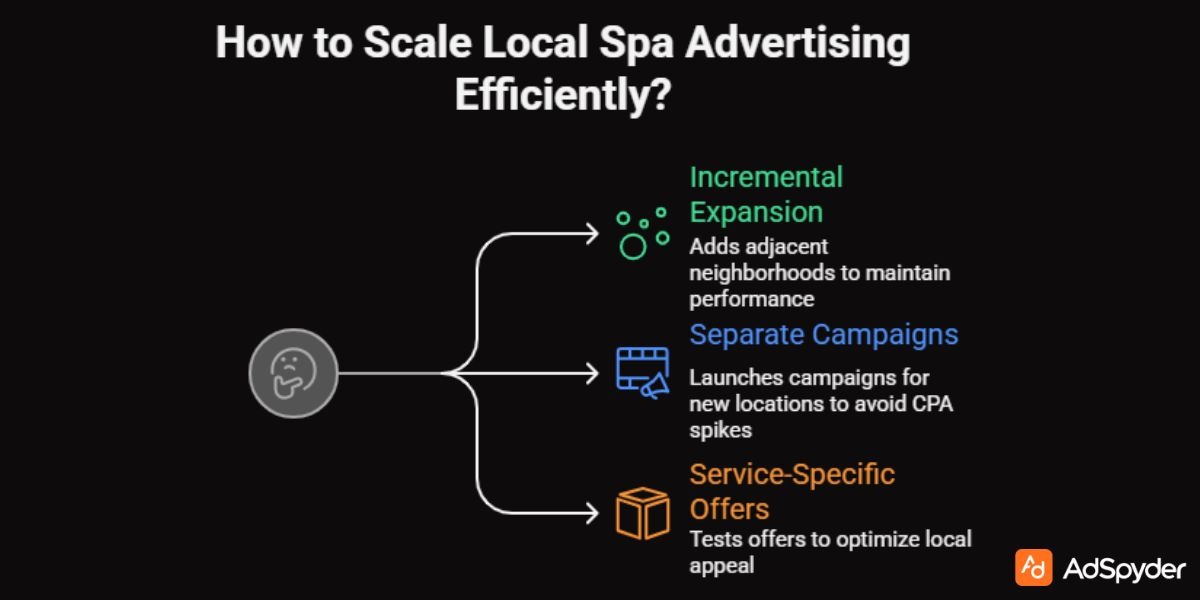
Scaling locally doesn’t mean expanding blindly.
Smart expansion focuses on:
- Adding adjacent neighborhoods incrementally
- Launching separate campaigns for new locations
- Testing service-specific local offers
Brands that scale this way maintain consistent performance across wellness paid campaigns, instead of seeing CPA spike as coverage widens.
Local scalability depends on insight—not spend.
FAQs: Local Spa Advertising and “Near Me” Campaigns
What are “near me” spa keywords?
They are location-intent searches indicating immediate booking readiness.
Do local spa ads convert better than generic ads?
Yes. Local intent searches typically have higher conversion rates and lower CPA.
Should each spa location have its own campaign?
Ideally yes, especially in competitive metro areas.
Are Google Ads better than social ads for local spas?
Google captures demand; social builds awareness. Both work best together.
How important are reviews in local spa advertising?
Extremely important—local trust signals directly impact conversions.
Can local ads work for high-ticket services?
Yes. Services like Botox and Hydrafacial perform well when paired with local credibility.
How often should local campaigns be optimized?
Weekly in competitive areas; monthly in less saturated markets.
Conclusion
Local spa advertising succeeds when proximity, intent, and trust align. By focusing on “[spa service] near me” searches and reinforcing local relevance throughout the spa lead generation funnel, spa brands can consistently convert high-intent traffic into bookings.
When combined with competitor intelligence and ongoing optimization, local campaigns become a reliable growth channel—not a bidding war.