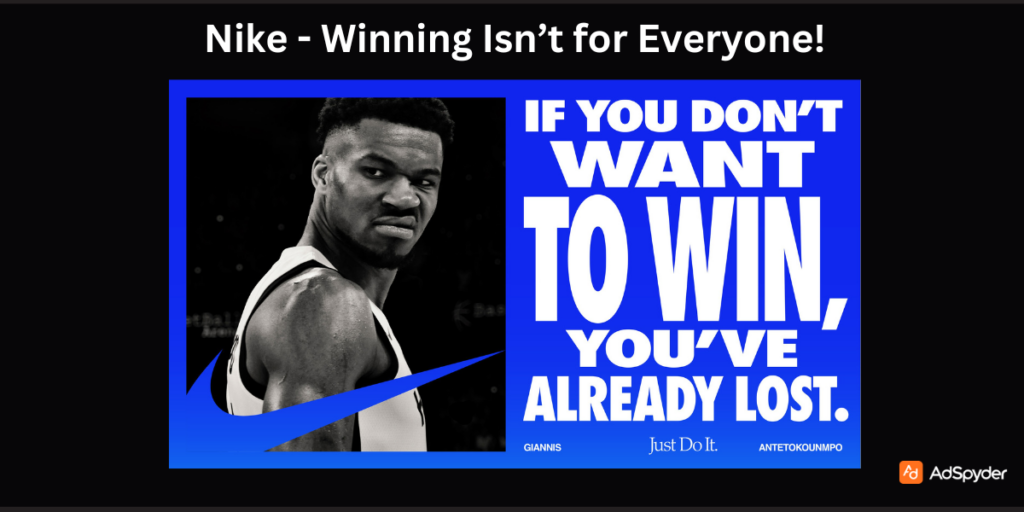
Nike didn’t treat Paris 2024 like a “sports sponsorship moment.” It treated it like a culture moment—and built a campaign that didn’t try to please everyone. The result was a bold Olympics narrative that cut through the noise: Winning Isn’t for Everyone. In this breakdown, you’ll learn what made the Nike 2024 Olympics Ad Campaign work, how it balanced attention + controversy + performance, and how marketers can apply these lessons to their own brands—whether you’re building a local service business or planning a global launch. We’ll also connect the dots to modern video growth, and how to plan distribution across channels.
Nike 2024 Olympics Ad Campaign: What It Was (In Simple Terms)
The Nike 2024 Olympics ad campaign centered on a sharp truth about elite sport: winners are not always “nice.” The creative leaned into the ruthless mindset required to become the best—framed as a challenge to polite, feel-good sports narratives.
- Core message: Winning takes obsession—and that’s okay.
- Creative style: dark humor + honest athlete psychology, not “inspirational fluff.”
- Use of star power: elite athletes as proof, not decoration.
- Goal: reinforce Nike’s brand voice as the “athlete-first” challenger, even at scale.
If you’ve studied punchy brand work like Burger King ads, the pattern is familiar: don’t chase broad approval. Build a point of view that your audience recognizes instantly.
Paris 2024 Reach: Key Numbers That Explain the Opportunity
Why do brands spend so aggressively around the Olympics? Because it’s one of the few moments that still behaves like “global prime time,” even in a fragmented attention economy.
Why Nike 2024 Olympics Ad Campaign Worked (Even When People Debated It)
The biggest mistake brands make in big moments is trying to be “universally liked.” Nike did the opposite. It designed the campaign to be recognizable, repeatable, and aligned with athlete culture. That’s why it cut through.
- A polarizing truth: “To win, you can’t be comfortable.” That tension creates attention.
- Proof-heavy casting: elite athletes don’t just “appear” — they validate the claim.
- Simple memory object: one line that people repeat (“Winning isn’t for everyone”).
- Distribution fit: the message works in 6 seconds, 30 seconds, and long-form edits.
This is why Nike’s creative didn’t need complicated explanations. It was built like a slogan you can remix—and that is how modern campaigns become viral videos in the real world: short, shareable, and debate-ready.
Creative Breakdown of Nike 2024 Olympics Ad Campaign: Hook, Voice, and Storytelling Choices

The creative is a masterclass in storytelling in video marketing: it doesn’t “explain” the brand. It makes you feel the mindset. Here’s what Nike executed extremely well.
1) The hook is uncomfortable (and that’s the point)
Many Olympics ads use unity, hope, and emotion. Nike used something rarer: competitive honesty. That difference makes the first 3 seconds impossible to ignore—especially on platforms that reward retention.
2) The voiceover acts like a “debate generator”
Nike didn’t write “safe.” It wrote lines that people could argue with. That’s not a risk when your brand strategy is built for edge. It’s the engine. The voiceover isn’t just narration—it’s a point-of-view.
3) Sound design matters more than most teams think
The campaign’s tone is carried by pacing, tension, and audio. If you want a practical deep dive on how audio changes perception, study music and sound in video marketing. At this level, sound isn’t “background.” It’s conversion psychology for attention.
4) The edit structure supports multiple formats
A great campaign is designed like LEGO. Nike’s hero story can be split into: 6-second bumpers, 15-second cutdowns, athlete-specific edits, social snippets, and behind-the-scenes versions. That’s how you scale without losing identity.
- Claim: one bold statement your best customers agree with.
- Proof: 3 visuals that make the claim feel “true.”
- Tension line: one sentence people can debate.
- CTA: one action aligned to the story (not forced).
Distribution Playbook from Nike 2024 Olympics Ad Campaign: How Nike Turned a Big Moment into a Multi-Channel Engine
Most brands think “Olympics = TV.” In 2026 reality, Olympics attention is split across TV, YouTube, social feeds, highlights, creator commentary, and search behavior. Nike built a message that can travel across all of it.
1) YouTube becomes a brand home (not just a placement)
If you want to scale video consistently, treat YouTube like an owned channel—not a one-off spend. This is why teams that learn how to create YouTube channel for your brand end up compounding results: each campaign becomes a library asset.
2) Short-form edits keep the story alive daily
Short-form doesn’t replace the hero film—it multiplies it. Daily edits keep the campaign “current” while the hero film holds the meaning. That’s the simplest way to build momentum through the entire event window.
3) Social placements match consumption behavior
If you’re using Meta placements for storytelling, formats matter. For example, full-screen narrative fits well with Facebook Story ads, while feeds are often better for punchy one-liners and proof clips.
4) Competitive monitoring prevents you from going “blind”
During major events, copycat campaigns appear fast. The unfair advantage is to monitor patterns early—especially competitors’ display ads—so you can spot what angles are saturating and pivot to fresher story variations.
A Modern Video System: Nike 2024 Olympics Ad Campaign as a Funnel (Not a Single Ad)
Nike’s best move was treating video like a system: awareness, retention, proof, and reinforcement. If you want a framework for doing this as a brand, build a video marketing funnel that can turn one campaign idea into weeks of outcomes.
Stage 1: Attention (big idea + emotional tension)
Nike used a bold idea that instantly creates tension: “Is wanting to win… bad?” This works because the viewer has to decide. Decision = attention.
Stage 2: Proof (athletes and moments as evidence)
Proof makes a narrative feel real. Nike’s proof is elite athletes and undeniable moments. For most brands, proof can be: before/after, customers, demos, reviews, or behind-the-scenes craftsmanship.
Stage 3: Expansion (role-specific versions)
Winners become templates. Nike can spin the same message for different audiences: athletes, fans, youth, women’s sport, global markets. This is where brands add thought leadership content: explain the idea, show how it works, and earn authority beyond the campaign.
Stage 4: Scale (AI-supported iteration without losing quality)
Big campaigns today ship with many variants. Smart teams use AI in video marketing to speed up editing, localization, captioning, and creative testing—but they keep the “brand spine” consistent.
What Marketers Should Copy from Nike 2024 Olympics Ad Campaign (and What They Should Avoid)

Nike Olympics campaign is not a “copy this exact tone” lesson. It’s a “copy the structure” lesson. Here’s the practical checklist.
What to copy
- One sentence identity: a line that summarizes your belief in 8 words or less.
- Proof-first casting: show people who embody the claim (customers, creators, experts).
- Variant design: build one hero piece + daily cutdowns.
- Distribution planning: decide where it lives, not just where it runs.
What to avoid
- Borrowed controversy: don’t “manufacture edge” if your brand doesn’t own it.
- Message confusion: if your CTA doesn’t fit your story, performance collapses.
- Ignoring reputation risk: big moments amplify praise and criticism.
One more modern reality: targeting and measurement are changing. Brands increasingly prepare for a cookieless advertising world where first-party data, consent, and creative quality matter more than hacks.
How Local Businesses Can Apply Nike 2024 Olympics Ad Campaign Lessons
You don’t need Nike’s budget to use Nike’s structure. The strategy works for local brands when you translate the “big belief” into a local truth. If you’re a service business, start with a location-first growth approach like video marketing for local businesses and pair it with clear geo messaging.
- Belief line: “Results aren’t for everyone—only for people who show up.”
- Proof: 3 customer stories, 3 before/after visuals, 1 expert clip.
- Formats: 1 hero video + 10 cutdowns + 10 proof clips.
- Local strategy: map neighborhoods, use local landmarks, and build trust
If your niche has compliance issues (for example, age-restricted products), your creative and targeting must be built with safeguards. Learn how industries handle this through age verification best practices—because “attention” without compliance can become a business risk fast.
FAQs: Nike Olympics Ad Campaign (Short Answers)
What was Nike’s 2024 Olympics campaign called?
Why did the Nike Olympics campaign stand out?
What’s the biggest lesson for marketers?
How do I make my campaign “Nike-style” without copying Nike?
Where should I run video for the best impact?
How do I avoid backlash if I run a bold message?
How can AdSpyder help with campaigns like this?
Conclusion: The Real Secret Behind the Nike 2024 Olympics Ad Campaign
Nike’s Paris-era creative proved a simple rule: big moments don’t reward “safe.” They reward clarity. The Nike 2024 Olympics Ad Campaign won attention because it took a real belief about elite sport, wrapped it in proof, and shipped it in a format that could scale across TV, YouTube, and social daily. If you want similar impact, build one line people repeat, create proof-led variants, and distribute with a system—not a guess. Pair it with strong video craft, smart iteration using UGC marketing, and be ready for reactions with crisis management. That’s how campaigns become culture.