Social media ads play a very different role in spa digital marketing than search ads. While Google Ads capture existing demand, wellness paid campaigns on social platforms are designed to create demand, build trust, and nudge users toward booking. The challenge for spa brands is ensuring these campaigns generate real returns—not just likes or impressions. This guide explains how spas can structure social media ads for spa services to maximize ROI, control costs, and support long-term spa lead generation funnels.
Understanding ROI in Social Media Ads for Spa Brands
ROI in social advertising is not immediate for most spa services. Users may:
- Save an ad and book later
- Click, leave, and return through search
- Engage multiple times before converting
This makes last-click attribution misleading.
High-performing spa brands evaluate ROI using:
- Cost per qualified lead
- Assisted conversions
- Booking rate by audience type
- Incremental lift in branded and “near me” searches
Industry research consistently shows that users exposed to paid social ads are more likely to convert later through search, making social a key amplifier for Google Ads for spas, not a replacement.
Choosing the Right Platforms in Social Media Ads for Spa
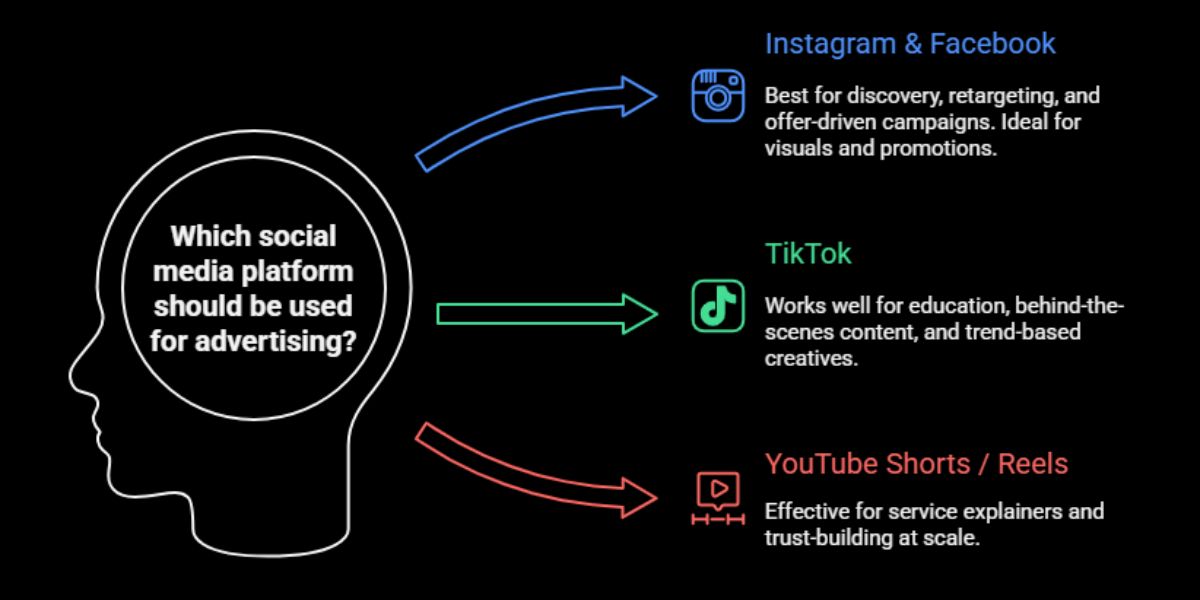
Not every platform serves the same purpose.
Before launching ads, align each platform with a specific funnel role:
- Instagram & Facebook
Best for discovery, retargeting, and offer-driven campaigns. Ideal for visuals, testimonials, and promotions. - TikTok
Works well for education, behind-the-scenes content, and trend-based creatives—especially for younger wellness audiences. - YouTube Shorts / Reels-style formats
Effective for service explainers and trust-building at scale.
Trying to force every campaign onto every platform usually reduces ROI. Focus where your audience already engages.
Audience Strategies That Protect ROI in Social Media Ads for Spa
Targeting mistakes are one of the fastest ways to burn budget.
High-ROI wellness paid campaigns rely on layered audiences:
- Geo-radius targeting around locations
- Interest and behavior signals aligned with wellness intent
- Retargeting of site visitors and ad engagers
- Lookalikes built from booked customers, not just leads
For local spas, narrow targeting often outperforms broad reach—especially when combined with local spa advertising principles.
This audience discipline is critical to sustaining performance as spend scales.
Creative Angles That Convert in Social Media Ads for Spa
Before listing angles, remember this: social users are not searching—they are scrolling. Your creative must stop attention first, then build trust quickly.
High-performing spa creatives usually fall into four categories:
- Luxury and Experience
Focus on ambiance, relaxation, and exclusivity. - Deals and Promotions
Highlight limited-time offers or first-visit incentives. - Specialization and Expertise
Emphasize advanced treatments, credentials, or technology. - Convenience and Accessibility
Promote easy booking, flexible hours, or proximity.
Rotating these angles helps prevent fatigue and keeps massage spa paid advertising effective over time. Digital marketers in the Spa services niche can use AdSpyder for Spa Services and create a comprehensive ad strategy and fresh ads.
Structuring Offers in Social Media Ads for Spa Without Hurting Brand Value
Discounting works—but only when used strategically.
To protect ROI and brand perception:
- Use entry offers (consultations, intro facials)
- Time-limit promotions instead of permanent discounts
- Pair price with value (duration, technology, expertise)
Social ads are especially effective for promoting:
- First-time spa promotions
- Package trials
- Seasonal experiences
These offers warm audiences who later convert through paid ads for spa services or organic channels.
Retargeting: Where Social ROI is Often Won
Many spas judge social ads too quickly because they ignore retargeting performance.
Retargeting campaigns typically:
- Convert at significantly lower CPA
- Shorten the booking cycle
- Improve overall funnel efficiency
Effective retargeting includes:
- Visitors to service pages
- Video viewers (25%+ watched)
- Instagram profile engagers
- Lead form starters who didn’t submit
Measuring ROI in Social Media Ads for Spa
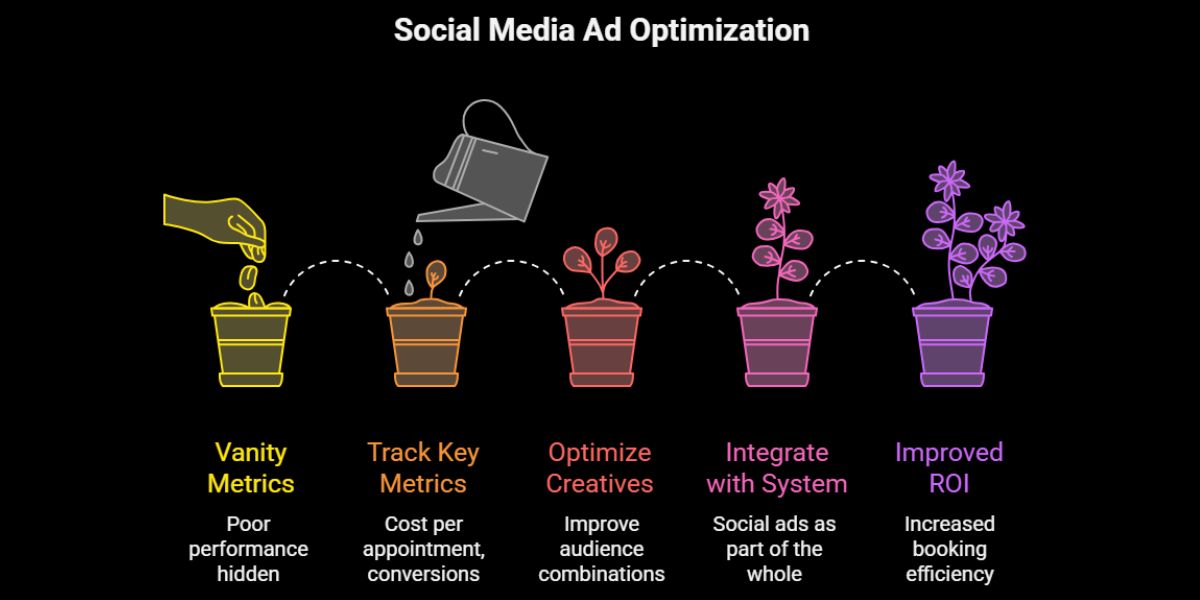
Vanity metrics hide poor performance.
High-performing spa teams track:
- Cost per booked appointment
- Assisted conversions from social
- Frequency vs conversion rate
- Creative-level CPA trends
Industry benchmarks show that businesses actively optimizing creative and audience combinations can achieve up to 40% more engaged clicks, improving downstream booking efficiency without increasing spend.
ROI improves when social ads are treated as part of the system—not a standalone channel.
FAQs
Are social media ads effective for spas?
Yes, especially for awareness, retargeting, and promotions.
Which platform gives the best ROI for spa ads?
Instagram and Facebook lead for most spas, with TikTok growing fast for discovery.
Should spas run ads year-round on social?
Yes, but budgets and offers should adapt seasonally.
Do video ads perform better for spa services?
Generally yes—especially short-form, authentic videos.
How often should spa creatives be refreshed?
Every 3–6 weeks in competitive markets.
Is retargeting necessary for spa ads?
Absolutely. It’s often the highest-ROI campaign type.
Can social ads support local spa advertising?
Yes, especially when geo-targeted and paired with booking CTAs.
Conclusion
Social media ads deliver ROI when they’re aligned with intent, audience behavior, and funnel stage. By using the right creative angles and disciplined targeting, spas can turn wellness paid campaigns into a reliable source of high-quality demand.
When social ads work alongside search and retargeting, they don’t just generate clicks—they amplify bookings across the entire spa marketing strategy.